

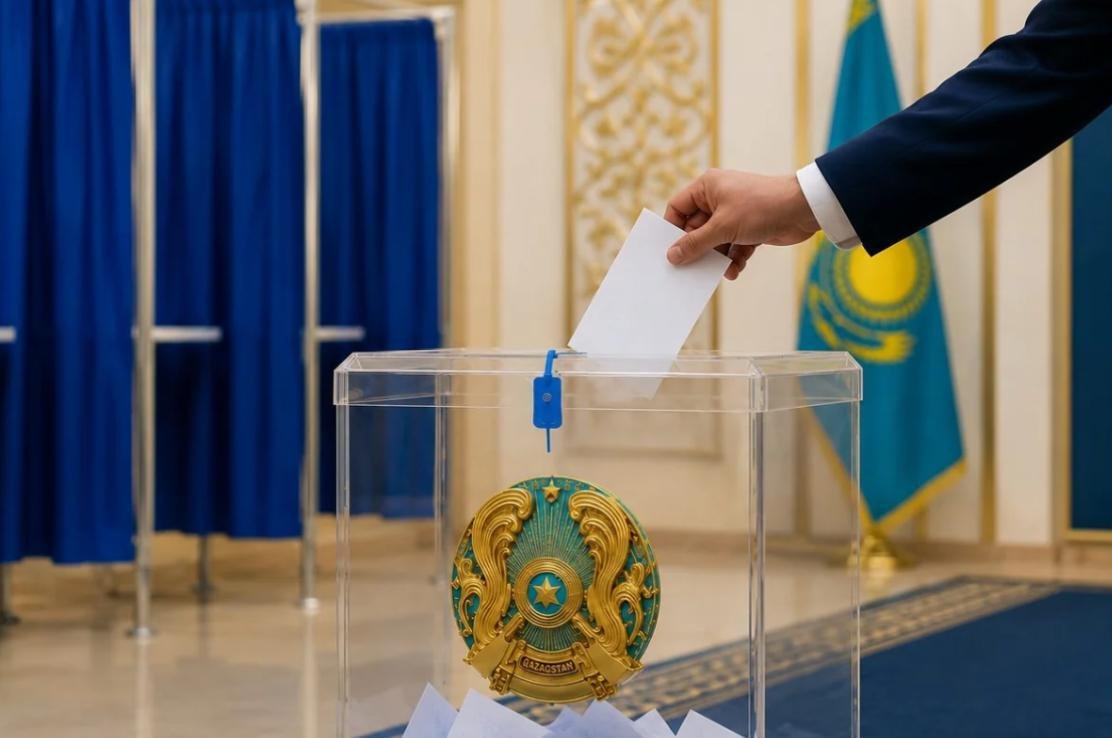
ASTANA — On August 23, Kazakhstan held an election whose significance extends well beyond the ordinary renewal of a legislative body. For the first time, citizens voted for the Kurultai, the country’s new unicameral legislature established under a redesigned constitutional framework.
The election marks a new stage in Kazakhstan’s political transformation. While the constitutional referendum established the foundations of the new system, the August 23 vote has now given that system its first elected institution and moved the reform from constitutional design into practical governance.
According to preliminary figures from Kazakhstan’s Central Election Commission, 9,352,151 citizens, or 74.19 percent of registered voters, participated in the election. A total of 545 candidates representing seven political parties competed for 145 seats in the new legislature.
For Kazakhstan, this was therefore more than another parliamentary election. It was the first practical test of the country’s new political architecture.
Preliminary exit-poll results indicate a decisive lead for the Adilet party. Three separate surveys placed its support at approximately 70–72 percent. The other leading parties — Auyl, Respublica, Ak Zhol and the National Social Democratic Party — were each positioned around or above the five-percent threshold in the preliminary estimates.
The official results will still have to be established by the Central Election Commission, and the exit polls should therefore be treated as an indication rather than a final distribution of seats. Yet the broad consistency of the preliminary surveys already points to a clear political signal.
The electorate has given the new legislature a strong initial mandate. At the same time, the potential presence of several political parties in the Kurultai could provide a broader spectrum of parliamentary representation. This combination — a strong result for one political force alongside the continued presence of several competing political platforms — may become one of the defining features of the new parliamentary model.
For Kazakhstan, which is seeking to combine political stability with institutional reform, that balance will be important.
The turnout deserves particular attention. More than 9.3 million citizens took part in the vote, producing a participation rate of 74.19 percent. For the first election under the new constitutional framework, this represents more than a statistical figure. It is an indication that the institutional changes introduced over the past year have generated significant public engagement.
The sequence of events is particularly important. Kazakhstan first held a nationwide referendum on the new constitutional framework. The new system then entered into force. The August election subsequently gave citizens the opportunity to form the institution responsible for operating within that framework.
In this sense, the process can be viewed as a three-stage transition: public approval of a new constitutional model, its institutional implementation, and the election of a new legislature.
The significance of the August 23 vote therefore cannot be reduced to the allocation of 145 parliamentary seats. It demonstrates that Kazakhstan’s constitutional reform has moved from political design into the sphere of practical governance.
The next stage will be more demanding than the election itself.
The new Kurultai will now have to demonstrate that the institutional structure created by the reforms can function effectively in everyday political life. Its role will extend beyond passing legislation. The quality of its work will determine how effectively the new political system represents different social interests, responds to economic challenges and creates the legislative conditions necessary for long-term development.
The transition to a unicameral model also changes the mechanics of Kazakhstan’s legislative process. Instead of a two-chamber Parliament, legislative authority is now concentrated within a single representative institution. Supporters of the reform see this as an opportunity to make decision-making more coherent and responsive.
But the effectiveness of the new system will ultimately be determined not by its institutional design, but by how it works in practice.
For Kazakhstan, political stability has traditionally been viewed as an important condition for economic development. In the current international environment, however, its significance is becoming broader.
Kazakhstan is operating at the centre of a rapidly changing Eurasian landscape. The transformation of trade and transport routes, the growing importance of the Trans-Caspian International Transport Route, expanding economic ties between Central Asia, China and Europe, and the increasing strategic relevance of the Caspian region are creating new opportunities for the country.
At the same time, Kazakhstan continues to operate in a complex geopolitical environment, maintaining relations with multiple global and regional centres of power.
Under these conditions, domestic institutional predictability becomes part of the country’s international competitiveness.
Investors and international partners look not only at natural resources and geography, but also at the quality of legislation, the stability of institutions and the ability of a state to pursue long-term policies.
This gives the first Kurultai significance beyond domestic politics. If the new legislature can provide more consistent regulation, improve the quality of legislation and respond effectively to economic change, it can become not merely a political institution but part of the broader infrastructure supporting Kazakhstan’s development.
This is also where Kazakhstan’s evolving role in Eurasia becomes relevant.
The country has increasingly sought to position itself as a state capable of connecting different economic and political spaces. That role is based on more than geography. It requires the ability to maintain multiple channels of international cooperation, expand trade links, strengthen regional connectivity and offer partners a predictable institutional environment.
Political modernization therefore acquires a practical dimension.
The new constitutional model and the first Kurultai will ultimately be judged against the same question: can Kazakhstan’s state institutions adapt more effectively to changes taking place both inside the country and across its external environment?
The answer will not emerge on election day. It will be shaped by the performance of the new legislature over the coming years.
The election also attracted international attention. Foreign and international observers were present during the voting process, reflecting Kazakhstan’s effort to subject the formation of its new legislative institution to external observation and assessment.
For a country seeking to strengthen its international position, this dimension matters.
Kazakhstan is increasingly viewed not only as Central Asia’s largest economy, but also as a state seeking a more prominent role in the emerging architecture of Eurasian connectivity. In that context, the functioning of domestic political institutions is becoming increasingly relevant to the country’s external reputation.
The preliminary election result provides the new legislature with a strong starting position. But the political capital generated on August 23 must now be translated into tangible results.
The Kurultai will face several fundamental tests. It will have to produce legislation capable of responding to Kazakhstan’s changing economic and social environment, create space for substantive political debate among the parties represented in the legislature, maintain a connection between legislative priorities and citizens’ expectations, and demonstrate that a unicameral model can improve not only the speed of decision-making but also its quality.
The last point will be particularly important.
A faster legislative process is not, by itself, evidence of successful reform. Its value lies in the ability to combine efficiency with quality, transparency and accountability.
The first Kurultai election has therefore closed one chapter of Kazakhstan’s political transformation while opening another.
The preliminary results point to strong support for Adilet, while several other political parties remain positioned to enter the new legislature. The high turnout indicates substantial public participation in the formation of the new political system.
But the most important outcome of August 23 will not ultimately be the distribution of parliamentary seats.
It will be the character of the Kurultai once it begins its work.
Can it become an effective platform for policymaking? Can it combine political stability with meaningful debate? Can it provide the legislative foundation for the next stage of Kazakhstan’s economic modernization?
The answers to these questions will determine the lasting significance of the current reforms.
For now, one conclusion is clear: Kazakhstan has moved from redesigning its political architecture to testing that architecture in practice.
On August 23, the country elected its first Kurultai. The more consequential part of the reform begins now — with its work.

