• Login
Sunday, July 5, 2026
Geneva Times
  • Home
  • Editorial
  • Switzerland
  • Europe
  • International
  • UN
  • Business
  • Sports
  • More
    • Article
    • Tamil
No Result
View All Result
  • Home
  • Editorial
  • Switzerland
  • Europe
  • International
  • UN
  • Business
  • Sports
  • More
    • Article
    • Tamil
No Result
View All Result
Geneva Times
No Result
View All Result
  • Home
  • Editorial
  • Switzerland
  • Europe
  • International
  • UN
  • Business
  • Sports
  • More
Home Switzerland

Common frog under pressure in low-lying areas of Switzerland

GenevaTimes by GenevaTimes
July 5, 2026
in Switzerland
Reading Time: 10 mins read
0
Common frog under pressure in low-lying areas of Switzerland
0
SHARES
0
VIEWS
Share on FacebookShare on Twitter


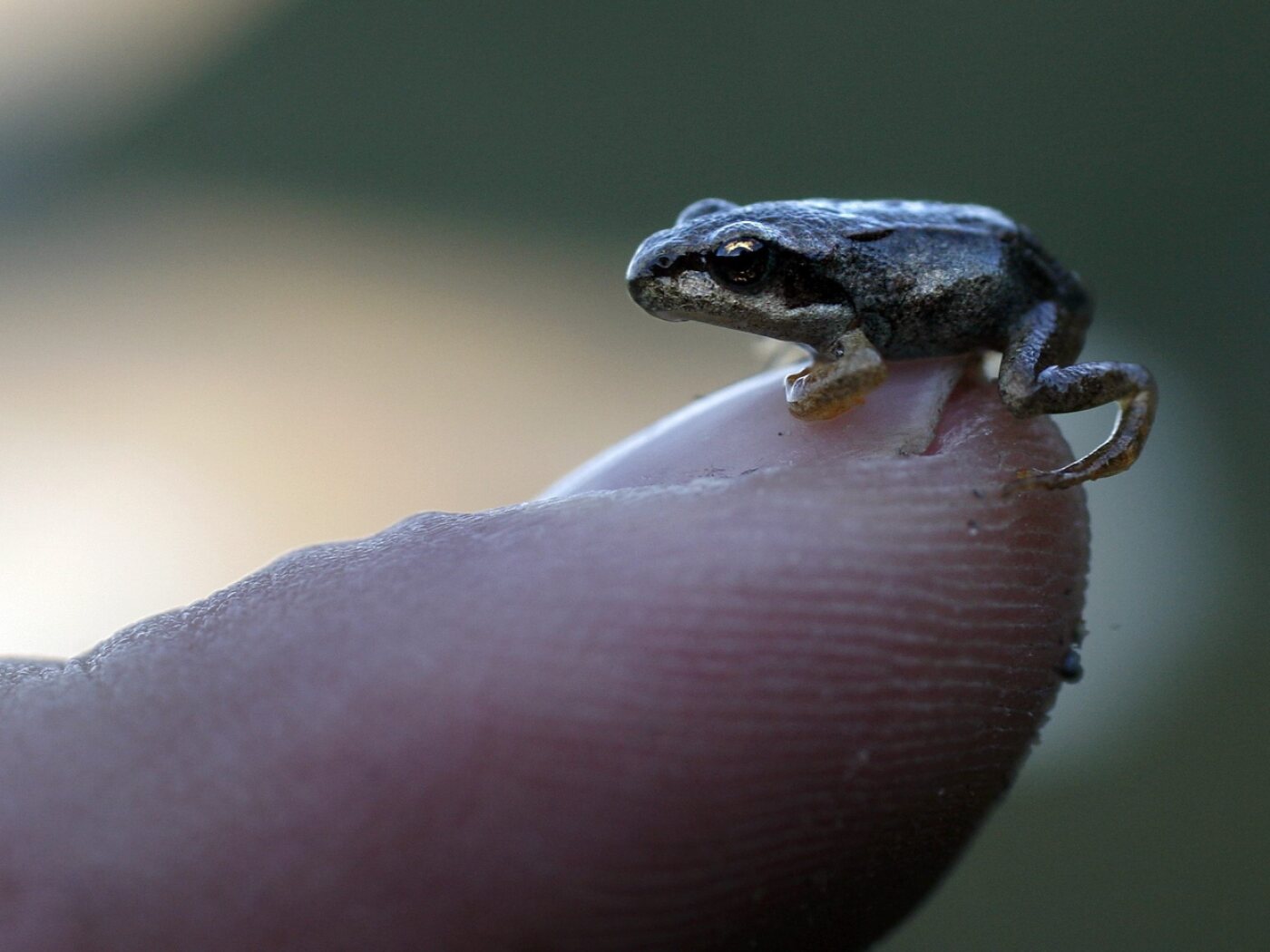
The grass frog is under pressure in low-lying areas

The population of grass frogs in Basel-Country has shrunk by more than three-quarters since 1988.


Keystone-SDA

The common frog is faring worse in the lower-lying areas of Switzerland than previously thought. A long-term study near Basel shows a massive decline, even though dozens of new ponds were created in the study area.


Generated with artificial intelligence.


This content was published on


July 5, 2026 – 12:50

Across Switzerland, the grass frog (also known as the common frog) is not currently considered to be at risk – it is the only frog species in the country in this position. However, according to one expert, this assessment falls short when it comes to low-lying areas: “In my view, the grass frog is endangered in the lower-lying areas of Switzerland,” biologist Urs Tester told the Keystone-SDA news agency.

Since 1988, Tester has been counting the spawn clumps of a grass frog population annually on the Bruderholz, south of Basel. The study area covers around 500 hectares in the Basel-Country municipalities of Bottmingen, Reinach, Oberwil and Therwil.

More
Helvetas is bringing the issue of species protection in North Macedonia to the attention of government ministries and the local population.

More


Swiss diplomacy

Species extinction: how Switzerland is working for global biodiversity 


This content was published on


Jan 11, 2025


What is Switzerland doing to preserve biodiversity in the Global South?


Read more: Species extinction: how Switzerland is working for global biodiversity 


The results, published in the journal Zeitschrift für Feldherpetologie, are clear: between 1988 and 1993, an average of 8,573 spawning clumps were counted. Between 2021 and 2025, the figure had fallen to 2,052. The population has thus shrunk by more than three-quarters.

New ponds provided temporary relief

This decline is remarkable because the number of suitable spawning waters increased significantly over the same period. The number of water bodies rose from 21 to 53, and the total water area from 3,900 to 6,150 square metres. The new ponds helped initially: the number of spawning clumps increased temporarily, whilst it declined in the older ponds. From 2020 onwards, however, the numbers also fell in the newly created ponds.

Tester suspects that climate change is the main cause. The decline must be caused by a factor that has been at work for decades, affects the entire water system and results in both good and bad years, he said: “Of the factors mentioned in the literature, only climate change remains.”

More
The insect situation in Switzerland (in the picture a butterfly) is considered 'worrying'.

More

Biodiversity loss in Switzerland in six graphs


This content was published on


Jul 23, 2024


Biodiversity loss in the Alpine nation is above the world average, and over a third of animal and plant species are endangered. Can the trend be reversed?


Read more: Biodiversity loss in Switzerland in six graphs


Exactly how climate change is affecting the grass frogs remains unclear. One possibility is dry years, during which young frogs find it harder to survive. However, Tester also considers higher water temperatures to be a plausible factor, as they can affect the oxygen content in the water.

Tester cites additional water bodies as a possible conservation measure. In the long term, he argues, Switzerland must retain more water in the countryside. Areas dammed by beavers could also help in this regard.

Translated from German/sub-editing gw

Articles in this story

Read More

Previous Post

LATEST: Catalonia government lifts lockdown as firefighters bring Girona blaze under control

Next Post

Thousand welcome home Cape Verde footballers after stunning World Cup run

Next Post
Thousand welcome home Cape Verde footballers after stunning World Cup run

Thousand welcome home Cape Verde footballers after stunning World Cup run

ADVERTISEMENT
Facebook Twitter Instagram Youtube LinkedIn

Explore the Geneva Times

  • About us
  • Contact us

Contact us:

editor@thegenevatimes.ch

Visit us

© 2023 -2024 Geneva Times| Desgined & Developed by Immanuel Kolwin

Welcome Back!

Login to your account below

Forgotten Password?

Retrieve your password

Please enter your username or email address to reset your password.

Log In
No Result
View All Result
  • Home
  • Editorial
  • Switzerland
  • Europe
  • International
  • UN
  • Business
  • Sports
  • More
    • Article
    • Tamil

© 2023 -2024 Geneva Times| Desgined & Developed by Immanuel Kolwin