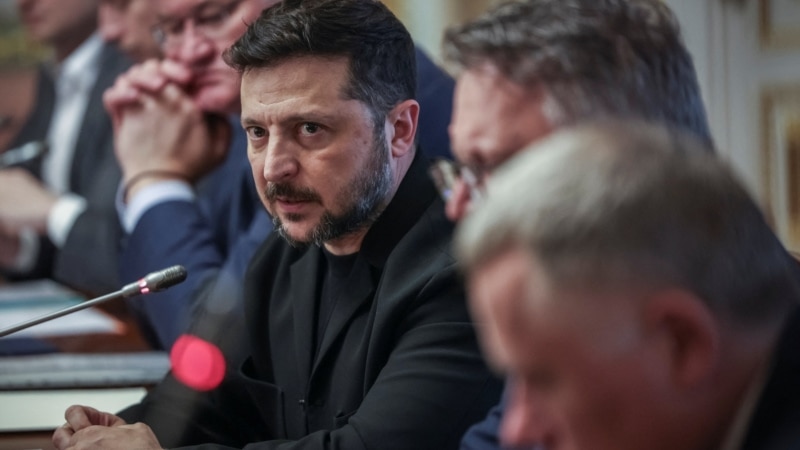
Ukrainian President Volodymyr Zelenskyy warned neighboring Belarus — a close ally of Russia — to remove signaling equipment used by the Kremlin to target Ukraine or, he said, Kyiv would do the job itself.
“What’s the point of saying he [Belarus strongman Aleksandr Lukashenko] doesn’t want to be in the war? Let him remove this equipment, let him switch it off. I think a week will be enough for him to do that,” Zelenskyy told a Kyiv news conference on June 19.
“If he doesn’t do it, we’ll do it,” he said, without elaborating.
Zelenskyy said the signal relay stations were in two Belarusian regions on the border with Ukraine and were used by Russian forces to help with the navigation process during attacks on Ukrainian civilians.
The report could not independently be verified.
Zelenskyy also spoke of Belarus’s oil refining assets, alleging that the country had become a major supplier to Russia and that Lukashenko could put a stop to it.
“Today he is the main supplier, or one of the main suppliers, for the Russian army. Specifically, Lukashenko, specifically Belarus,” Zelenskyy said.
“Can this be stopped? I’m sure it’s within his power. And he’s the one controlling it,” he added.
Kyiv has been stepping up its attacks on Russia’s oil infrastructure and storage sites, often hitting deep inside the country – including near the capital, Moscow – creating shortages in Russia and driving up prices for civilians.
Under Lukashenko, Belarus is Russia’s close military ally and has backed Moscow’s war against Ukraine, providing logistical support and echoing Kremlin threats toward NATO. However, it has not joined Russia in its full-scale invasion launched in February 2022.
Belarus, like Russia, has faced crippling sanctions from the US and the West, although Lukashenko has made efforts to improve ties with Washington, including through the release of some jailed opponents and political prisoners, although many remain behind bars in Belarus.
Lukashenko has held power since 1994. He retained power in the 2020 presidential elections, claiming victory despite widespread claims of fraud from the Belarusian opposition and the West.