


We asked our readers what their favourite Spanish cheeses are to find out if the well-known Manchego came out on top or if other cheeses are more popular.
A total of 34.6 percent of respondents said that Castilla-La Mancha’s famed Manchego was the best Spanish cheese in their opinion.
“Is there any other than Manchego?” wrote one reader.
“Manchego pero hay muchos,” wrote another, while many simply wrote “Manchego” or even posted a picture of their favourite block of Manchego cheese.
READ ALSO: How well do you know your Spanish cheeses?
Don’t miss our journalists’ daily news roundup from Spain
Castilla-La Mancha’s Manchego is one of Spain’s most well known cheeses and sold in supermarkets all over the world. It’s a semi hard cheese made from the milk of the Manchega sheep and has a distinctive zigzag or herringbone pattern on the rind.
It’s a nutty cheese with a tangy aftertaste and is one of 27 cheeses in Spain that has Protected Designation of Origin (DOP) status. You’ll find it on most tapas menus, simply on its own or maybe with a few fried almonds.
Manchego wasn’t the only cheese mentioned by our readers, however, many of you also said that Cabrales was the best. In fact, 19.2 percent of respondents said they preferred this blue Asturian cheese.
“Cabrales is my GOAT,” wrote one, while others simply put “Cabrales”.
This northern Spanish cheese is made from a mixture of unpasteurised cow, sheep and goat milk and also has DOP status. The cheese matures in caves for two to five months, where it gets its blue-green veining. It has an intense, sharp flavour and is often eaten as part of a cheese board paired with walnuts, honey, and apples. It also goes well with Asturian cider.
Another popular cheese in the comments was Payoyo, with 11.5 percent of people claiming that it’s the best.
“Payoyo y cabrales,” wrote one reader.
Payoyo is an artisanal cheese that comes from the Sierra de Grazalema Natural park between the provinces of Cádiz and Málaga in Andalusia and is made from milk of the native payoya goat and the Merino sheep.
It’s a mild, creamy and slightly tangy cheese which pairs well with Ronda wines and is eaten with bread, crackers or fruit such as quince paste.
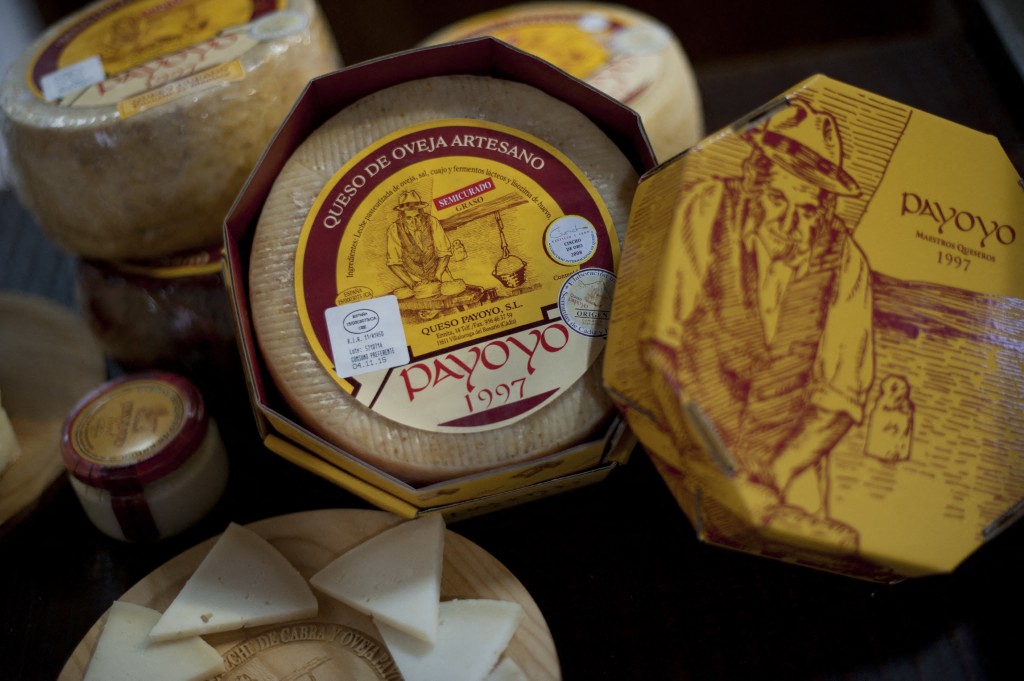
Wheels of Payoyo cheese at the Payoyo Cheese Factory in Villaluenga del Rosario, near Cádiz. Photo: Jorge Guerrero / AFP
Another cheese mentioned was the Basque Country’s Idiazabal, which is made from unpasteurised sheep’s milk and also has DOP status. It’s been made in the region for more than 8,000 years and the method remains virtually unchanged. It’s has an intense rich flavour, which is also described as nutty and buttery.
It’s often eaten with quince jam or served with cider.
Other cheeses mentioned on our post were Flor de Esgueva, Picón Bejes-Tresviso and Tetilla, which are slightly less well known.
Flor de Esgueva is a raw sheep’s milk cheese from Castilla y León and is matured for around seven months.
Picón Bejes-Tresviso is a blue cheese from Cantabria and is made from a mixture of sheep, cow and goat milk. It’s aged in natural limestone caves, which allows mould spores to grow, giving the cheese its signature blue-green veins and pungent smell.
Tetilla cheese is from Galicia and is recognisable due to its distinctive conical, breast-like shape, which it’s named after too. It’s made from cow’s milk from the Galician blonde, Friesian or Alpine brown breeds and has a creamy, mild and buttery flavour.


