


“The Secretary General expresses his concern over the medical condition of Ms. Mohammadi and urges the Iranian authorities to ensure that she receives, at the very least, urgent medical care as required by her health condition,” said UN Spokesperson Stéphane Dujarric during Monday’s press briefing in New York.
Ms. Mohammadi was transferred from prison to a hospital last week and is reported to require specialised treatment for a life-threatening heart condition, he added.
Prison Conditions
In a statement released last week, Volker Türk, the UN human rights chief said that her medical condition has also been compounded by existing chronic medical conditions resulting from extensive years of detention.
Mr. Türk has warned that detention conditions in Iran’s prisons are dire. Detainees suffer from severe overcrowding and acute shortages of food, water, hygiene supplies, medicine and are often denied medical care.
Global attacks on healthcare intensify
Attacks on hospitals, medical staff, and ambulances are continuing amid an uptick in conflict worldwide – and in many cases they have intensified, leading humanitarians warned on Monday.
Such violence has left patients without treatment, exacerbated unsafe childbirth conditions, and cut off entire communities from essential care.
On the 10th anniversary of UN Security Council Resolution 2286 – which calls on combatants to protect healthcare and healthworkers – the International Committee of the Red Cross (ICRC), World Health Organization (WHO), and Médecins Sans Frontières (MSF) are urging States to strengthen protections for healthcare in conflict zones.
Urgent call for action
Under international humanitarian law, all parties to conflict are required to protect medical personnel, facilities, and transport, and to ensure others do the same.
The organizations also stress the importance of tracking these attacks, building on reporting measures introduced by the World Health Assembly through the World Health Assembly Resolution 65.20 in 2012.
To prevent further harm, they call on States to:
- implement existing commitments under Resolution 2286;
- incorporate health care protections into military operations and rules of engagement;
- strengthen national laws safeguarding medical services;
- provide sufficient resources for protection measures;
- pressure all conflict parties to comply with international law;
- investigate attacks and ensure accountability; and
- report regularly on progress and challenges.
The groups warn that without urgent action, attacks on healthcare will continue to undermine humanitarian norms and endanger civilian lives.
High debt servicing disproportionately affects women
A new report from the UN Development Programme (UNDP) finds that rising sovereign debt repayments are driving significant economic and social losses for women across developing countries.
Drawing on data from 85 countries, the report – Who Pays the Price? Gender Inequality and Sovereign Debt – estimates that increased debt servicing resulting from loan agreements between rich and poor nations could result in 55 million job losses for women in the short term and up to 92.5 million in the long term.
Women’s per capita income is projected to fall by 17 percent, while men’s income remains largely unchanged, widening the gender income gap.
As governments prioritise debt repayment, spending on healthcare, social services, and care systems is often reduced. These cuts limit access to essential services and formal employment, increasing women’s unpaid care responsibilities and deepening inequality.
Broader social impacts
The report also links high debt burdens to broader social impacts, including a 32.5 percent rise in maternal mortality and declining life expectancy for both women and men.
UNDP officials warn that these trends risk reversing development progress, especially as global crises, such as conflict, inflation and energy instability, further strain government budgets.
The report calls on governments and financial institutions to incorporate gender analysis into borrowing and debt management decisions, protect spending on social and care infrastructure and prioritize employment, human development, and gender equality over austerity measures.
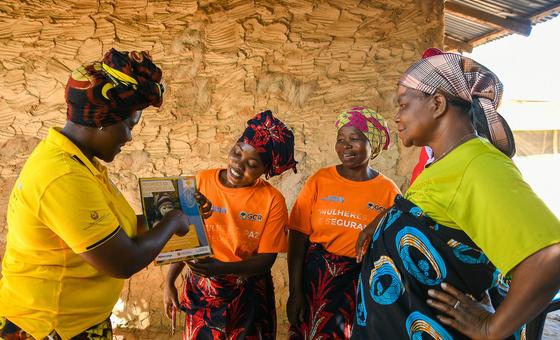
Mozambique: UN allocates $98 million to deliver life-saving aid amid compounding crises
The United Nations has released nearly $98 million in emergency funding to support communities in Mozambique affected by conflict and climate-related disasters during 2026.
Ongoing violence in northern regions continues to displace families and disrupt livelihoods, while severe flooding and cyclones in central and southern provinces have destroyed homes, contaminated water sources, and damaged essential services.
The funding includes $83.3 million from the Eastern and Southern Africa Humanitarian Fund and $14.5 million from the UN Central Emergency Response Fund, both managed by the UN Office for the Coordination of Humanitarian Affairs (OCHA).
Saving Lives
“This funding will help address urgent community needs, including food for families who have lost their crops and income, safe drinking water for communities where water sources have been flooded or contaminated and healthcare for people cut off from basic services” said Dr. Catherine Suzi, UN Humanitarian Coordinator.
Aid will target conflict-affected areas in Cabo Delgado and Nampula provinces, as well as flood-impacted districts in Gaza, Sofala, and Maputo provinces, where communities are recovering from recent disasters.
The funding is part of Mozambique’s 2026 Humanitarian Needs and Response Plan, which requires $534 million to assist 1.7 million people.


