


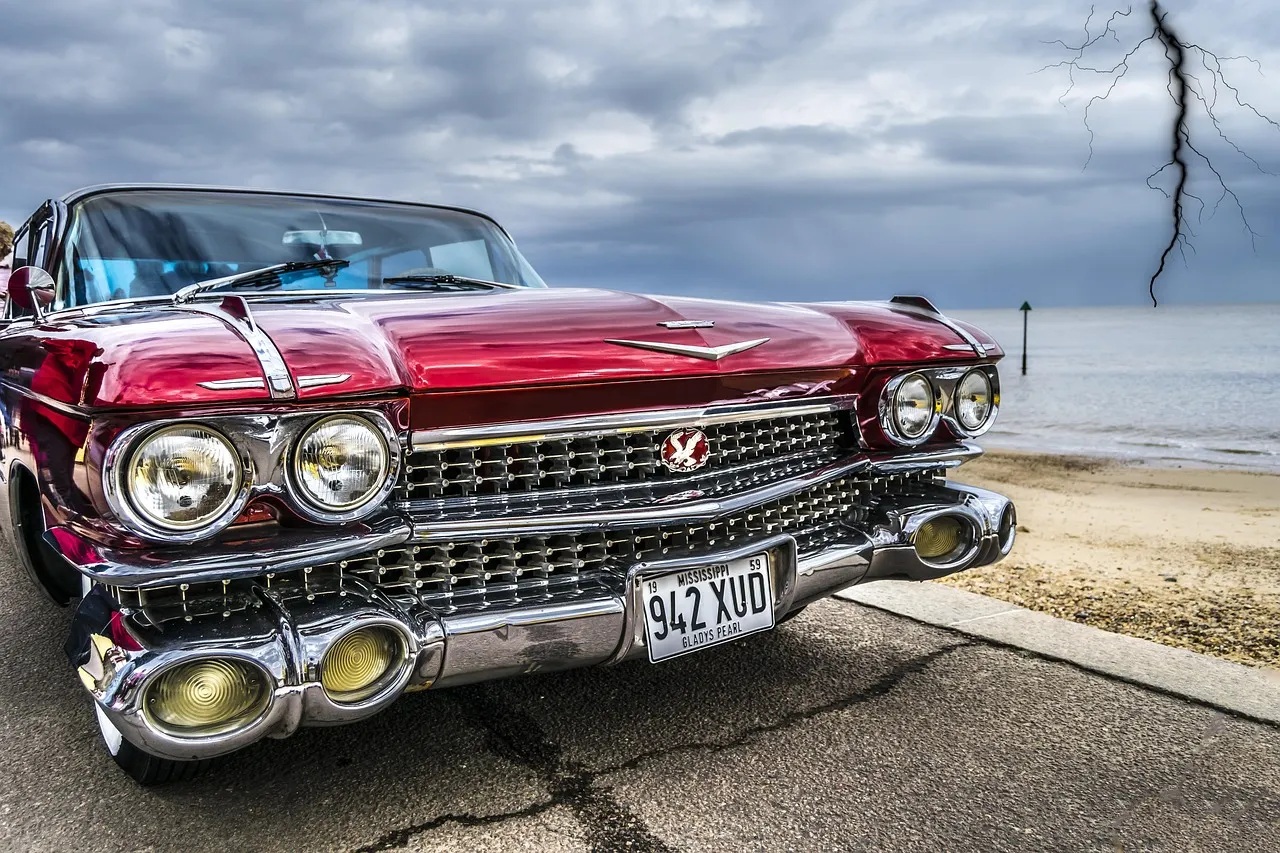
When you move yourself, your family, and belongings from the United States to Switzerland, you may be tempted to bring your vehicle as well. But there are good reasons to leave it behind.
Perhaps the most important reason, at least according to the Federal Office for Customs and Border Security (BAZG), is the cost of this undertaking.
It is not just the price of transporting your car by ship (the only way across the big pond), and then by land transport to Switzerland, once it arrives on the European soil – which will set you back thousands of dollars – see below.
And this is just the beginning of what lies in store for you and your car in Switzerland.
Other costs and procedures
Once the vehicle is in Switzerland, you will also have to pay import duties, the amount of which depends on the item as well as its country of origin.
While Switzerland has many duty-free trade agreements with various countries, goods from the US may not benefit from these.
Then there is the automobile tax – 4 percent of the vehicle’s value – as well as the Value Added Tax (8.1 percent) on its value.
If that doesn’t deter you from importing your automobile to Switzerland, consider that, once it gets here and before it can be legally driven on Swiss roads, it will need expensive technical modifications to meet Swiss safety standards, with costs depending on the model and canton where it is being registered and insured.
And it is not just a matter of switching miles to kilometres on the speedometer: US vehicles often don’t meet Swiss technical standards for headlights, windshield wipers, and other safety features, which means that potentially difficult, and costly, modifications may be required.
All this means that you will be better off selling your car before moving to Switzerland, and buying another one here.
Advertisement
‘A total nightmare’
Social media is full of posts from people who brought their cars over from the United States.
The vast majority say it was a huge mistake – not just from the cost perspective but also due to administrative and other processes involved.
One commenter named Julie, paid $3,000 to ship her car from the West Coast, plus several hundred more in customs fees.
“But the biggest hassle is getting all of the paperwork in order, and you can’t get it insured unless it’s registered, and you can’t get it registered until you have residency permits,” she said on a Facebook group for international residents in Switzerland.
Another commenter who had imported their car said: “The seatbelts, the lights, and other parts [from US cars] need to be changed. I did this process when bringing my car from the US and it was a total nightmare – really not worth it.”
As for Matty, he advised: “Don’t bring your car over. it costs over $3,000 to ship. Do you really want the stress?”
Now, you may be thinking that you should bring the vehicle with you anyway and sell it at a profit.
Advertisement
That, however, is not likely to happen – and here’s why
According to an analysis carried out by Comparis consumer platform, American cars are not among the most popular in Switzerland.
That honour goes to German brands, which take the top five spots, with Mercedes-Benz in the first place, BMW in the second, Volkswagen (3), Audi (4), and Porsche (5); Japanese brands like Toyota also popular among Swiss drivers.
The only US-manufactured vehicle that is popular in Switzerland is the Tesla Model Y, which had been best selling car in the country in 2023 and 2024.
But even if you bring your Tesla to Switzerland and want to sell it here, don’t expect to get top francs for this – or any other US-made car, for that matter.
That’s because some evidence indicates that Americans are selling their non-European cars for 20 percent under the market price for comparable cars in Switzerland.
All those are pretty compelling reasons to leave your car behind when moving to Switzerland.
But if you still want to bring your car along, for reasons known only to you, follow import rules and regulations, as outlined by BAZG, here.


