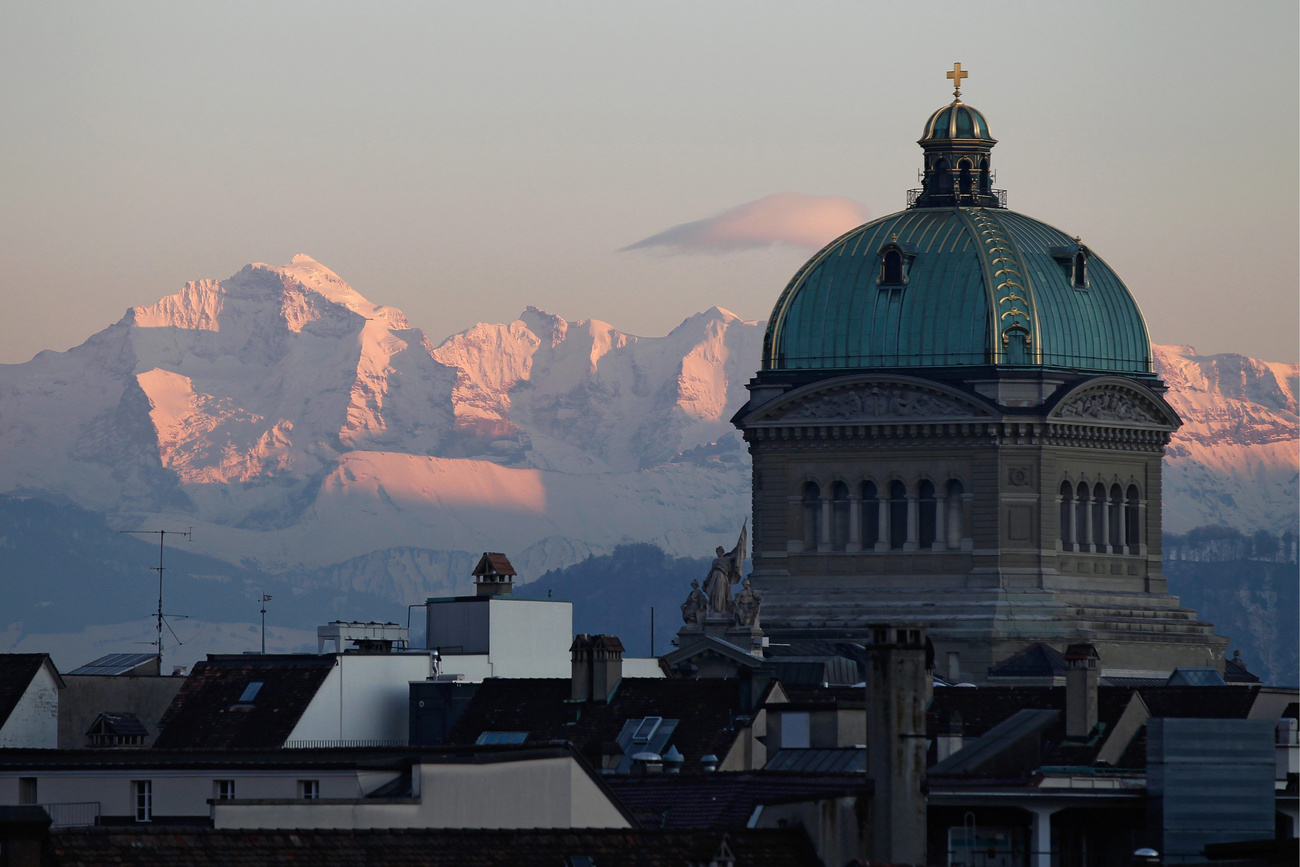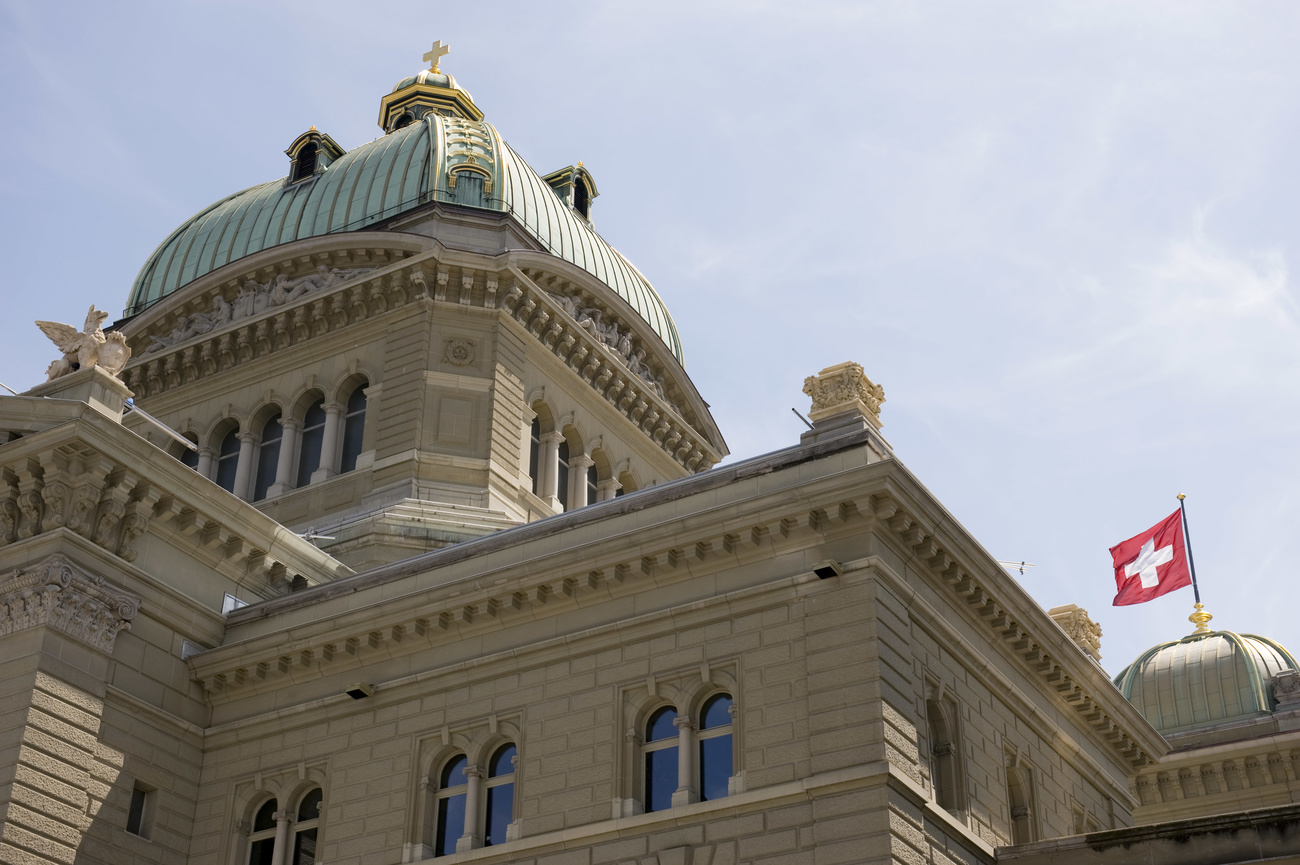
The Federal Palace, symbol of the federal city of Bern since 1902.
Keystone / Alessandro Della Valle
Bern is home to the Swiss government, parliament and large parts of the administration, but it’s not officially the capital of Switzerland. Rather, it bears the title “federal city”. Why?
If you ask foreigners for the capital of Switzerland, they often say Zurich or Geneva. These aren’t crazy answers, since Zurich is the largest and economically most important Swiss city and Geneva is the centre of international organisations.
But they’re wrong. And so is Bern! Although the government, parliament, the Federal Chancellery and much of the federal administration are based in Bern, it’s not called the capital. This is because Switzerland is Switzerland – meaning complicated, historically established and rather pragmatic solutions.
With our SWIplus app, you receive a summary of the most important news from Switzerland every day, plus the main news programmes from Swiss public television and personalised monitoring of developments in the canton of your choice. Find out more about the app here.
To understand why the definition of Switzerland’s capital is unusual, we have to go back a long way: to the very origin of Switzerland.
From 1291, the country was formed from a series of cantons that joined in a loose alliance. Until the end of the 18th century, the Old Swiss Confederacy didn’t have a parliament in the true sense of the word. As a confederation of independent, sovereign cantons without a clear unity, the Confederation had a Tagsatzung, a congress of envoys from the cantons.
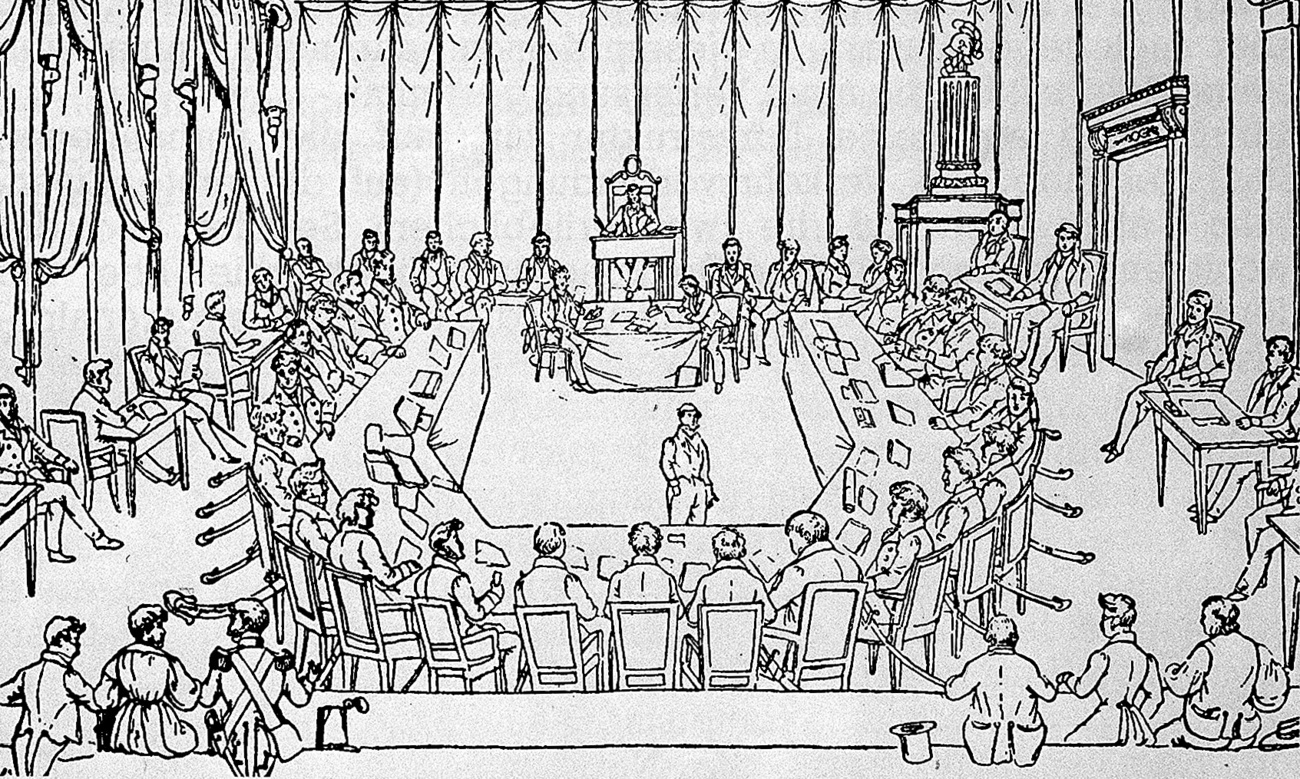
Contemporary depiction of the Tagsatzung in Bern town hall in 1833.
Keystone / Photopress-Archiv
This took place alternately in different cities: in Lucerne, Zurich, Schwyz and particularly frequently in Frauenfeld (canton Thurgau) and Baden (canton Aargau). Curiously, however, they were also held in places that, like Constance, were outside the Confederation, as the Historical Dictionary of Switzerland explainsExternal link.
In 1798, the troops of the French Republic invaded Switzerland. The old Confederation was replaced by the Helvetic Republic, a centralised unitary state based on the French model.
During the five turbulent years of its existence, the cities of Aarau, Lucerne and Bern served successively as the capital. But no one was happy with this.
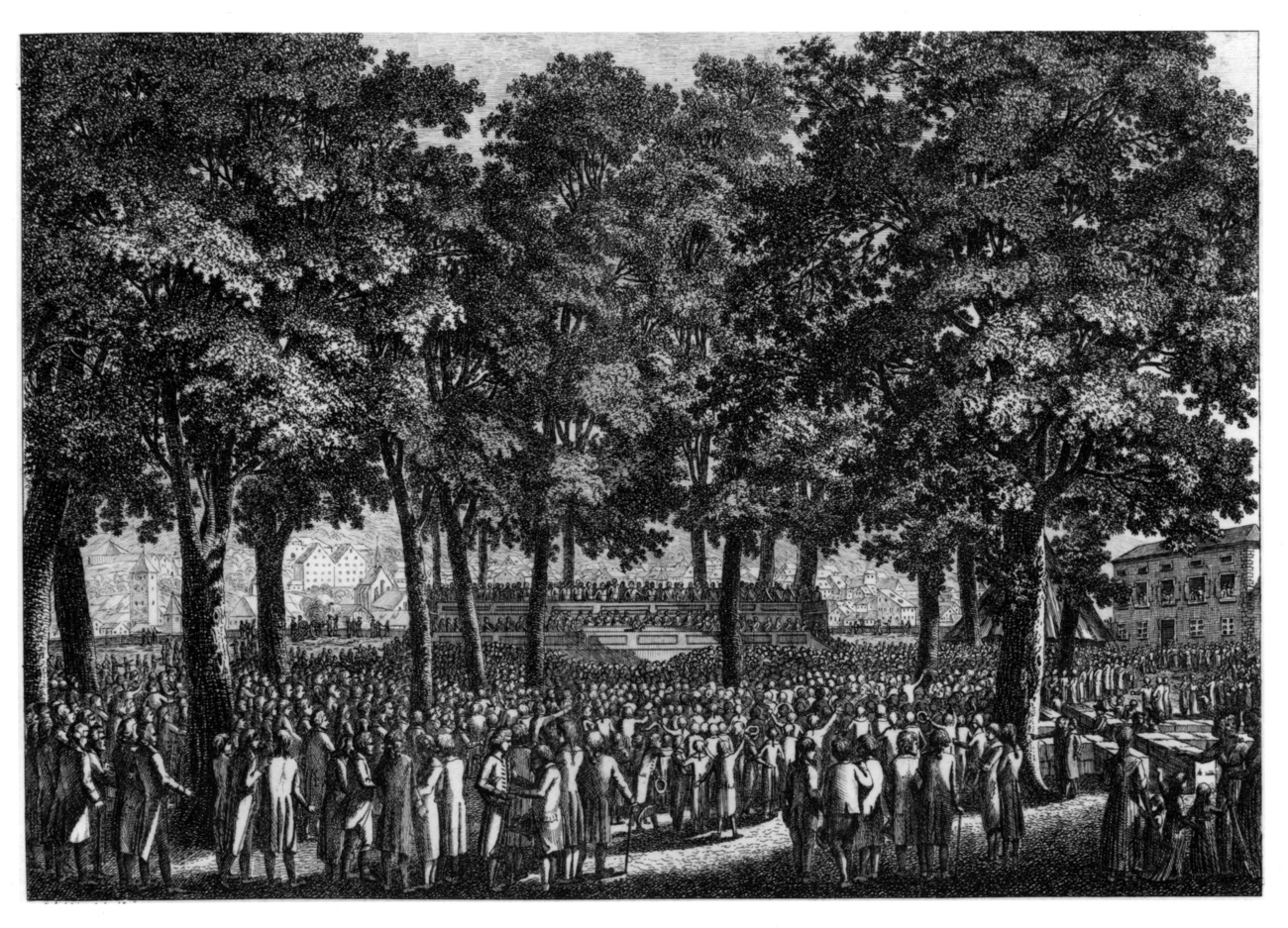
Contemporary depiction of the solemn oath-taking of the men of Zurich gathered at the Lindenhof to the Helvetic Republic on August 16, 1798.
Keystone / Photopress-Archiv / Anonym
To create order, Napoleon Bonaparte restored the borders of the old cantons in 1803 and created new ones such as Vaud and Aargau.
The Confederation of the XIX Cantons, which emerged from the Act of Mediation, did not have a fixed capitalExternal link either: six cities alternated as the capital for one year at a time: Fribourg, Solothurn, Basel, Bern, Lucerne and Zurich.
From 1815, the status of the capital, then still called the “suburb of the Confederation”, rotated every two years between Zurich, Bern and Lucerne, as historian André Holenstein writes in the Unipress publicationExternal link of the University of Bern. That sounds like a lot of relocation, little efficiency and even more discussion.
A typically Swiss compromise
Modern Switzerland was founded as a federal state in 1848. In order to counteract a concentration of power in the liberal cantons after the Sonderbund War of 1847 and to preserve the federalist character of the country, a very Swiss compromise was found.
>> Read our focus on the time before the founding of modern Switzerland here:

More
How Switzerland became Switzerland: the main chapters of the country’s history up to 1848
On November 28, 1848, the federal parliamentarians in both the House of Representatives and the Senate picked Bern as the seat of the federal authorities in the first round of voting.
Why Bern? The reasons given were the central location and the support of the French-speaking cantons. In addition, the city provided the land required for the federal buildings for free. A clever move.
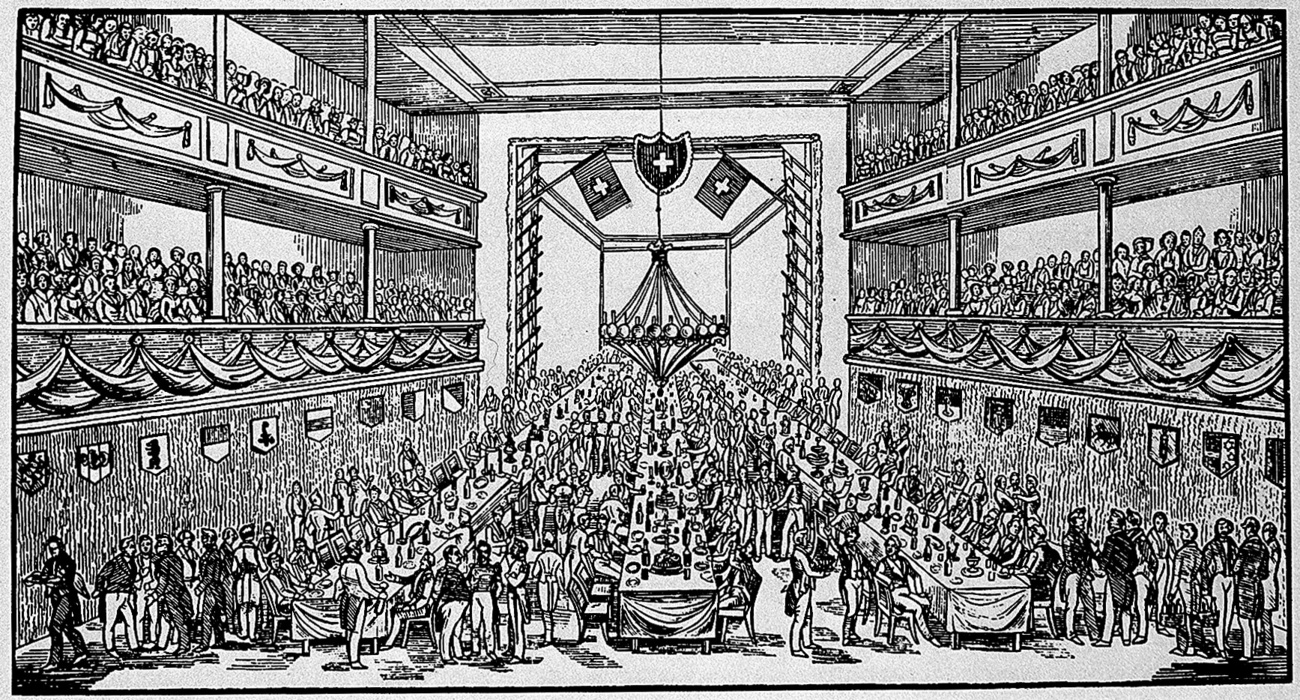
Contemporary depiction of the first Federal Assembly in the theatre in Bern on November 6, 1848.
Keystone / Photopress-Archiv
Other important institutions were distributed to other large cities in accordance with Article 108 of the new Federal Constitution. For example, the Federal Court was moved to Lausanne, the Federal Criminal Court to Bellinzona, and the Swiss National Bank has a seat in Zurich and Bern.
Since then, Bern has been referred to as the “federal city”, although this term is not even enshrined in the Federal Constitution, but only at the legislative level, as can be read on the websiteExternal link celebrating 175 years of the Federal Constitution.
André Holenstein says that by not choosing a capital city, the federal parliamentarians were taking into account the mood in the conservative Catholic cantons. “After all, they had been forcibly beaten into the new state, which they continued to reject politically, culturally and emotionally.”
The strategy seems to have worked – Switzerland has remained stable ever since and has been able to establish itself as one of the most successful democracies in the world.
Edited by Marc Leutenegger. Adapted from German by Thomas Stephens