


Iraq’s parliamentary election on November 11 arrives as Tehran’s regional hand weakens and the outcome could determine whether it preserves a vital anchor in its sphere of influence, financing, and deterrence or slides into a costlier, fragmented game of managing proxies from afar.
With setbacks in Syria and growing constraints on Hezbollah — designated a terror organization by the United States — in Lebanon, Iraq has become the indispensable arena for safeguarding Tehran’s regional depth, economic access, and deterrence architecture.
“The parliamentary election could indeed be consequential for Iran, because if its preferred candidates fare poorly, it’s just another thing that goes wrong for Tehran, and could lead to a cascading effect where Iranian power is viewed as significantly diminished,” said Colin Clarke, executive director of the Soufan Center, a New York-based think tank.
If Iran fails to get its desired result, Clarke added, it would damage Tehran’s brand across the region “as it makes the leaders look weak.”
Iran’s Uphill Battle
For years, Iran has projected influence in neighboring Iraq by backing an array of Shi’ite parties and militias — some founded by the Islamic Revolutionary Guards Corps (IRGC).
But its grip has loosened since the 2020 US killing of Quds Force commander Qassem Soleimani. The sway Tehran once held over these groups has since eroded, giving way to infighting and fragmentation.
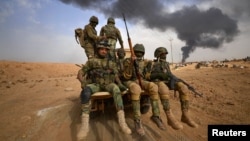
Shi’ite factions within the Coordination Framework — a political alliance that includes Prime Minister Mohammed Shia’ al-Sudani — are now divided over US-backed efforts to disband the Popular Mobilization Forces (PMF), an umbrella organization of mostly Iran-aligned militias integrated into Iraq’s army in 2016.
Several Shi’ite lists that once coordinated under Tehran’s patronage are now running against each other, reflecting not only waning cohesion but a shift toward transactional, interest-driven politics rather than unified pro-Iran slates.
In a bid to contain those rivalries, Iran dispatched Soleimani’s successor, Quds Force commander Esmail Qaani, to Baghdad earlier in October. It remains unclear whether his mission succeeded.
“Iran does not have positive momentum and has been greatly diminished,” Clarke said. “The way Israel ran roughshod over Iran and its proxies has likely led to creeping doubt among its supporters and patrons that the leaders may be less reliable than in the past.”
Preventing Bad From Getting Worse
That erosion of influence is compounded by broader regional setbacks. Over the past two years, Israel has inflicted heavy damage on Iran’s network and capabilities — from decimating the military leadership of the US-designated Palestinian group Hamas and its infrastructure in Gaza to severely degrading Hezbollah and striking IRGC assets in Syria and inside Iran itself. The confrontation culminated in direct war in June, exposing major vulnerabilities on the Iranian side.
The weakening of Hezbollah and the IRGC’s position in Syria ultimately contributed to the fall of President Bashar al-Assad, a key ally who allowed Iran to turn Syria into a land corridor linking its partners in Iraq and Lebanon.
For Tehran, Iraq now stands as the most immediate and indispensable anchor for regional deterrence and political leverage at a time when alternatives elsewhere in the Middle East are narrowing.
If the election results disappoint Tehran, Clarke expects persistence rather than retreat.
“Iran has the difficult task ahead of having to rebuild these proxy groups and dedicate more time, energy, and resources — all of which are in short supply — to keep the relationships strong,” he said.
Iraq’s vote is not just another election. It is a test of whether Iran can still shape outcomes in a region where its power is being steadily chipped away.


