

A month after the widely reported Ceuta mass crossing, a question that many in Spain and abroad have is why there are still thousands of migrants camping out on the streets and beaches of the Spanish enclave. When will the crisis be resolved?
On July 30th and 31st, an estimated 70,000 migrants rushed and swam from Morocco across the border into Ceuta, one of Spain’s two exclaves in North Africa.
Foreign media, international correspondents and even influencers soon flooded into the city.
For some, it was further evidence of the ‘invasion’ of Europe as tens of thousands of migrants had breached one of only two land borders with Africa.
For others, the border rush was a humanitarian crisis and a preview of climate and conflicted-induced migration flows in the future.
READ ALSO: Migrant plight and local anger divide Spain’s Ceuta one month after influx
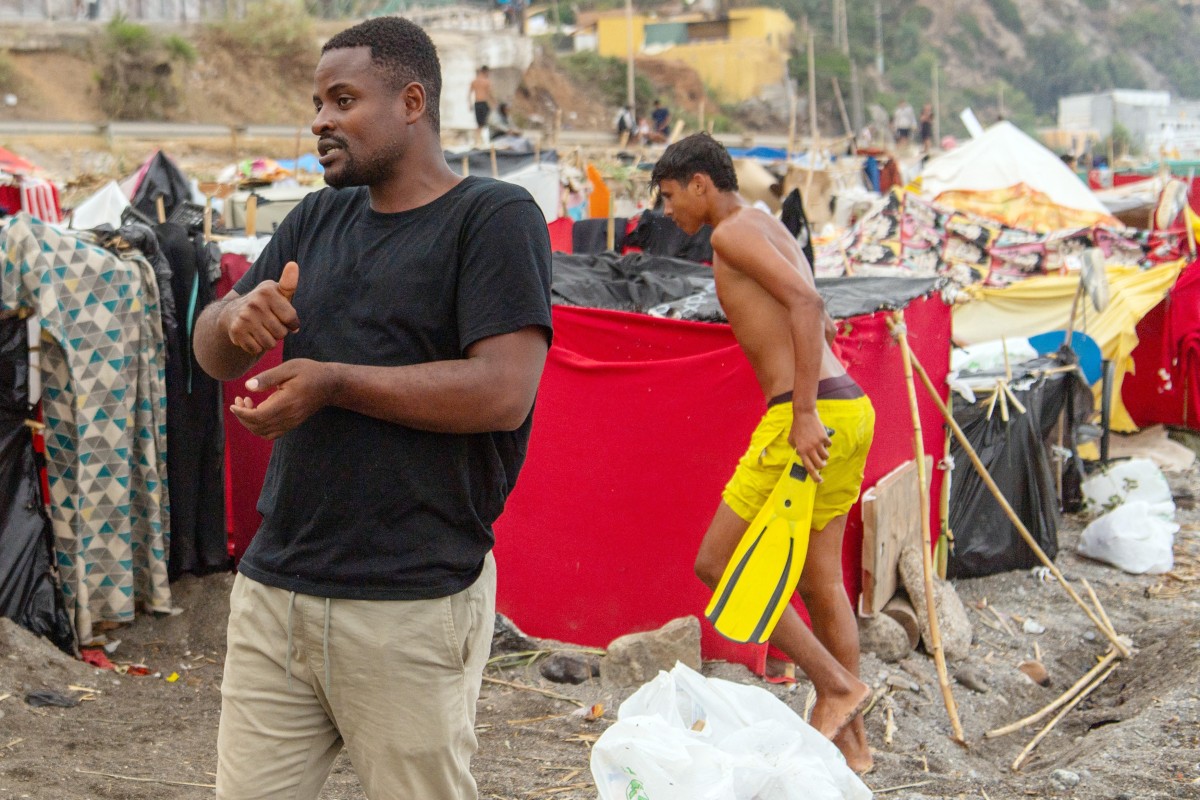
More than a month later, thousands of migrants, including many women and children, have remained in the tiny exclave territory, often sleeping on the streets or beach.
Makeshift settlements have been set up on Ceuta’s El Trampolín beach, while other migrants have been housed in temporary accommodation.
While Spain’s ruling Socialists claim that the vast majority of the migrants crossed the border back into Morocco after a few days, those left in the Spanish city are visible, and tensions have flared among locals.
READ ALSO: Another day of protests in Ceuta mark a month since migrant influx
Some 50,000 ceutíes (residents of Ceuta) recently took to the streets and a mob even stormed the migrants’ camp destroyed their shacks and threw their belongings into the sea or burned them.
There have also been several reports of sexual assaults and attacks on police by migrants.
So why is it taking Spain so long to decide what to do with the irregular migrants in Ceuta?
How many migrants are still in Ceuta?
This remains unclear and estimates vary.
Prime Minister Pedro Sánchez’s government in Madrid estimates there are around 5,000, but the Ceuta city authorities put the figure at more than 9,000.
Why are they still there?
Essentially because not all migrants are the same and some may have genuine claims to stay in Spain. This takes time, especially with Ceuta’s immigration and social services overwhelmed.
There are adults and minors to separate. Even though Moroccans make up the majority, there are also people from countries considered unsafe who are fleeing war or persecution, such as Sudan or Afghanistan.
There may even be migrants who declare themselves stateless or have no way of proving who they are or where they come from, or people claiming asylum, something that the Spanish authorities cannot ignore.
The vast majority who were quickly returned, however, were simply economic migrants and mostly Moroccan. This profile of migrant has less legal rights and can be returned much quicker.
Reporting from AFP states that “the Moroccans who make up most of the arrivals could theoretically be returned if they came with primarily economic motives, but some migrants are seeking international protection in Spain.”
Comorian migrant Hibban Saifi has requested asylum in Spain citing persecution by the Comoros government after alleging electoral fraud in 2024. (Photo by Antonio Sempere / AFP)
The agency reports that a “among them is Hibbane Saifi, who fled the Indian Ocean island nation of the Comoros in 2024 via Tanzania and crossed Africa until he reached Morocco.”
“Saifi, 32, opposes the Comoran government, which critics accuse of authoritarianism, and says he “fears returning” to his home country where he would be “under a death threat”.
A migrant like this may have an asylum claim and that must be respected by the Spanish state.
Recent history and institutional memory could also explain why some migrants remain in Ceuta.
The 2021 border surge still looms large, when so-called ‘express’ repatriations of Moroccan minors caused legal battles and led to two Ceuta government officials being banned from public office for nine years.
Beginning these bureaucratic processes, ensuring they’re legal, as well as arranging food and accommodation, takes time.
And then we must remember that Ceuta is not only a Spanish autonomous city or part of the Spanish border.
With the world’s eyes on the tiny territory, Spain must not only satisfy Spanish law but European and international too, further slowing processes.
How long will it take?
Despite the international press pack swooping in and then promptly declaring the Ceuta crisis over, those migrants and minors currently claiming asylum or international protection could be there for a long time.
Carlos Rontome, a sociologist who directs the UNED centre in Ceuta and was vice president of the city government during the previous crisis in 2021, told Spanish daily El País that the process could take months more.
“This will last months. In 2021 — and arrivals were fewer then — eight months later there were still unregistered migrants,” he said.
