


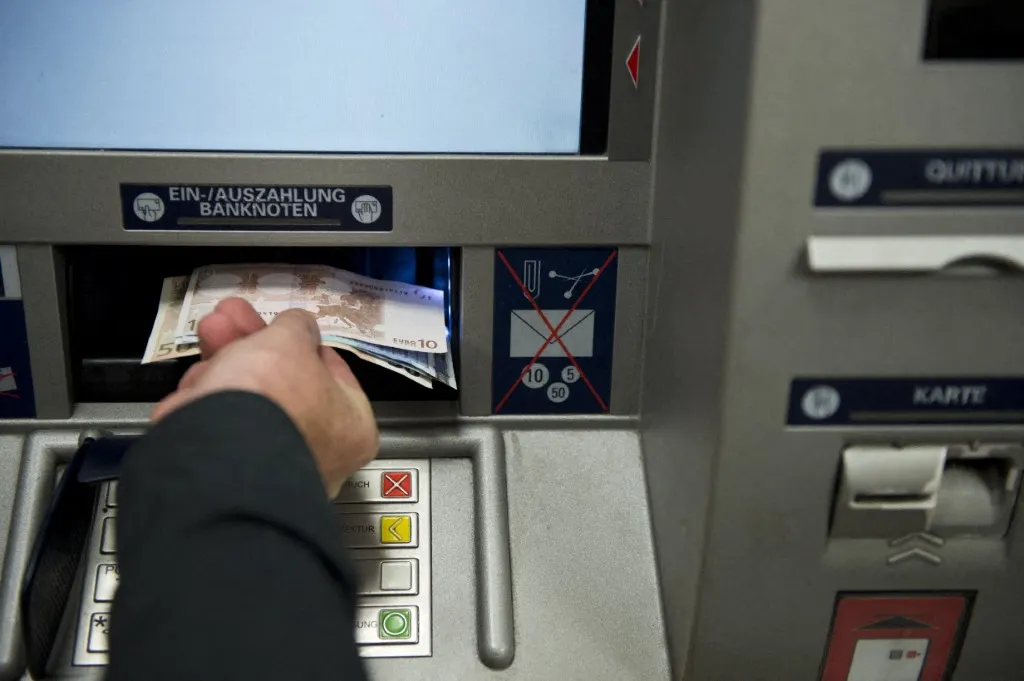
The ECB suggested Europeans keep between 70€ to 100€ at home, according to its new study published this week.
The bank’s study titled “Keep calm and carry cash” covers the the role of cash during four recent crises across Europe. The study found that no matter the crisis, whether it be financial, military -such as the war in Ukraine or public health, such as the Covid pandemic, the use and demand for cash increased.
“The onset of sudden crises – such as the 2008 financial turmoil, the 2014-15 sovereign debt crisis in Greece, the outbreak of the COVID-19 pandemic or Russia’s unjustified full-scale invasion of Ukraine in 2022 – triggered immediate and extreme surges in cash acquisition by the public,” the study noted.
As a result, the ECB has suggested storing some extra banknotes at home just in case electronic payment systems fail.
In other words, most people across Europe are used to paying with their bank cards or via telephone apps but if these fail in a crisis, then the cash will be vital, the bank says.
‘Enough to cover needs for 72 hours’
The ECB says having cash at home can protect you from electronic payment system failure, which has happened in the past. In the event of a major power outage such as the one in Spain last April, a massive cyberattack or a pandemic, cash provides a “low-cost safeguard against major systemic instability,” the document states.
Advertisement
For example, the study cites that authorities in the Netherlands, Austria and Finland suggest keeping approximately €70 to €100 per person at home or “enough to cover essential needs for about 72 hours”.
“This aligns with the understanding that physical currency not only serves to meet individual needs but also contributes to broader systemic resilience,” the ECB states.
According to the bank cash is a “critical component of national crisis preparedness.”
As well as urging citizens to be prepared Europe’s central bank also encourages governments and banks to take measures to cope with cash demand spikes caused by “extreme, infrequent events.” Finland, for example, is currently developing ATMs that would be completely immune to disruptions and cyberattacks.
As the ECB warned that no system is “infallible”, so best be prepared.
Advertisement
Store food and medicine as well
This is part of ongoing efforts by European authorities to prepare citizens for any type of crisis. In March this year, the European Commission advised people to stockpile 72 hours’ worth of food, water and medicine in the event of a crisis that disrupts public services.
“We must prepare for large-scale, cross-sectoral incidents and crises, including the possibility of armed aggression, affecting one or more member states,” the document stated.
The “preparedness” strategy — and the survival kit in particular — drew on the recommendations of a report presented to the European Commission by Finland’s former president Sauli Niinisto in late 2024.
It also took inspiration from the example of Scandinavia, where Finland, Sweden and Denmark have all stepped up efforts to prepare households for the possibility of a future crisis or conflict — as Ukraine fights the grinding three-year Russian invasion
The French government website suggests preparing an “72 hour emergency kit” including six litres of water, non-perishable foods (including for your pets!), and photocopies of IDs in a waterproof bag.


