


One thing about Swiss rents is indisputable: while they may be cheaper in rural and other areas that are not in the vicinity of urban centres, they are often through the roof (no pun intended) in major cities.
The details of the rents based on geographical locations are revealed in a new survey by the Federal Statistical Office (FSO).
The data is from 2023 but it was published in February 2025, which means these figures are still relevant today.
What do they show?
In a nutshell, the data reveals that 2.4 million households in Switzerland (61 percent) live in a rented or cooperative housing.
The cantons of Basel-City (83 percent) and Geneva (78 percent) have the highest proportion of rented dwellings, while Valais (42 percent) and Jura (44 percent) have the lowest.
The majority of tenants are primarily single persons (45 percent) and ‘couple’ households with or without children (43 percent).
And now the details
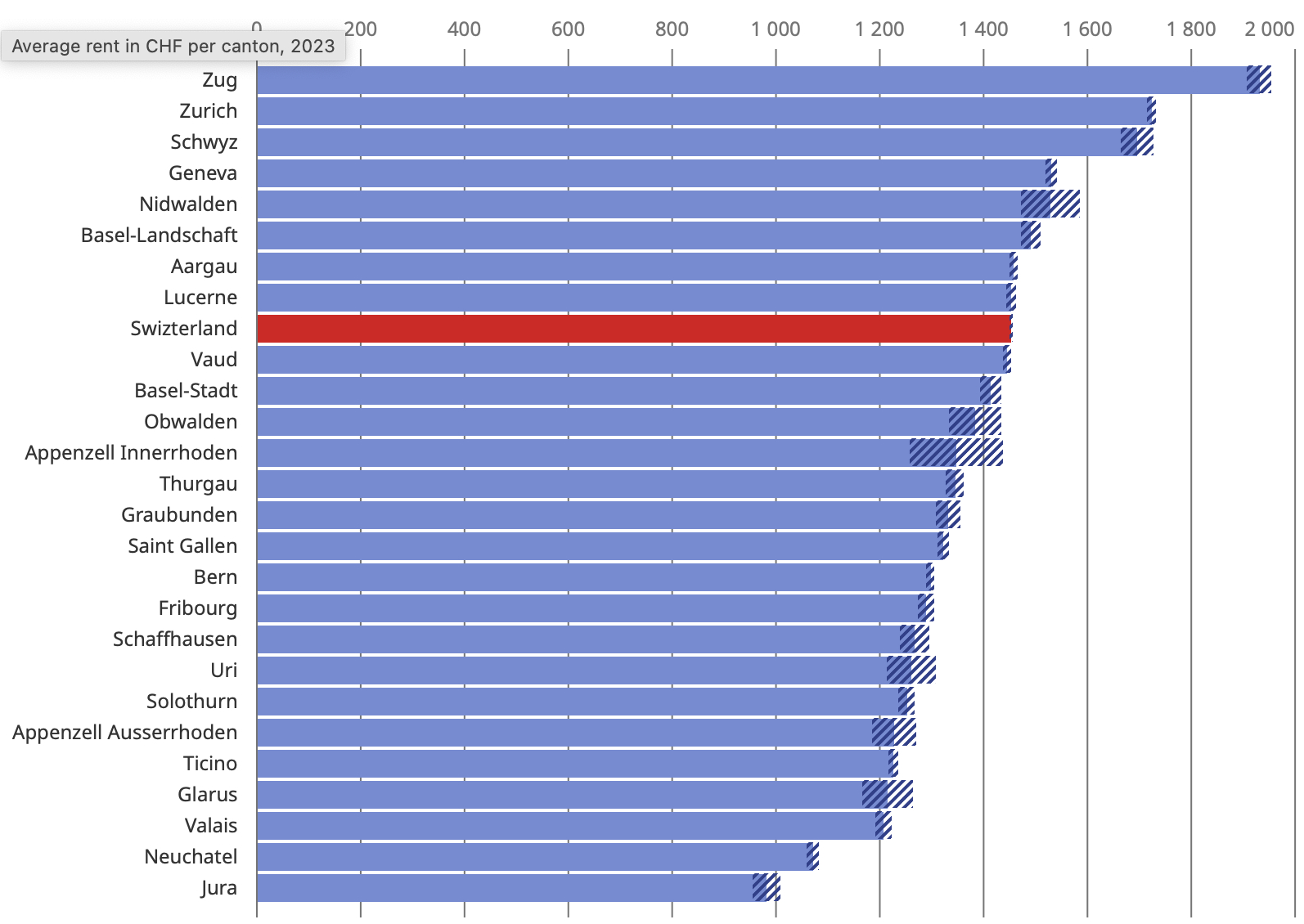
Regardless of size, the average net rent in 2023 (all dwellings included) was 1,451 francs at national level, the FSO found.
The highest rents per region were found in the cantons of Zug (1,931 francs), Zurich (1,722) and Schwyz (1,695).
Geneva (1,529), Nidwalden (1,528) , Basel-Country (1,489), Aargau (1,456), and Lucerne (1,452) are also above the national average in terms of rents.
The lowest prices, on the other hand, are in Jura (981 francs), followed by Neuchâtel (1,070) and Valais (1,206).
You can see average rents for your region in this FSO chart:
Source: FSO
Advertisement
Those are the average overall rents, but what about rents based on the size of the dwelling?
For the purposes of this study, the FSO looked at three and four-room flats, which means two or three bedrooms, respectively.
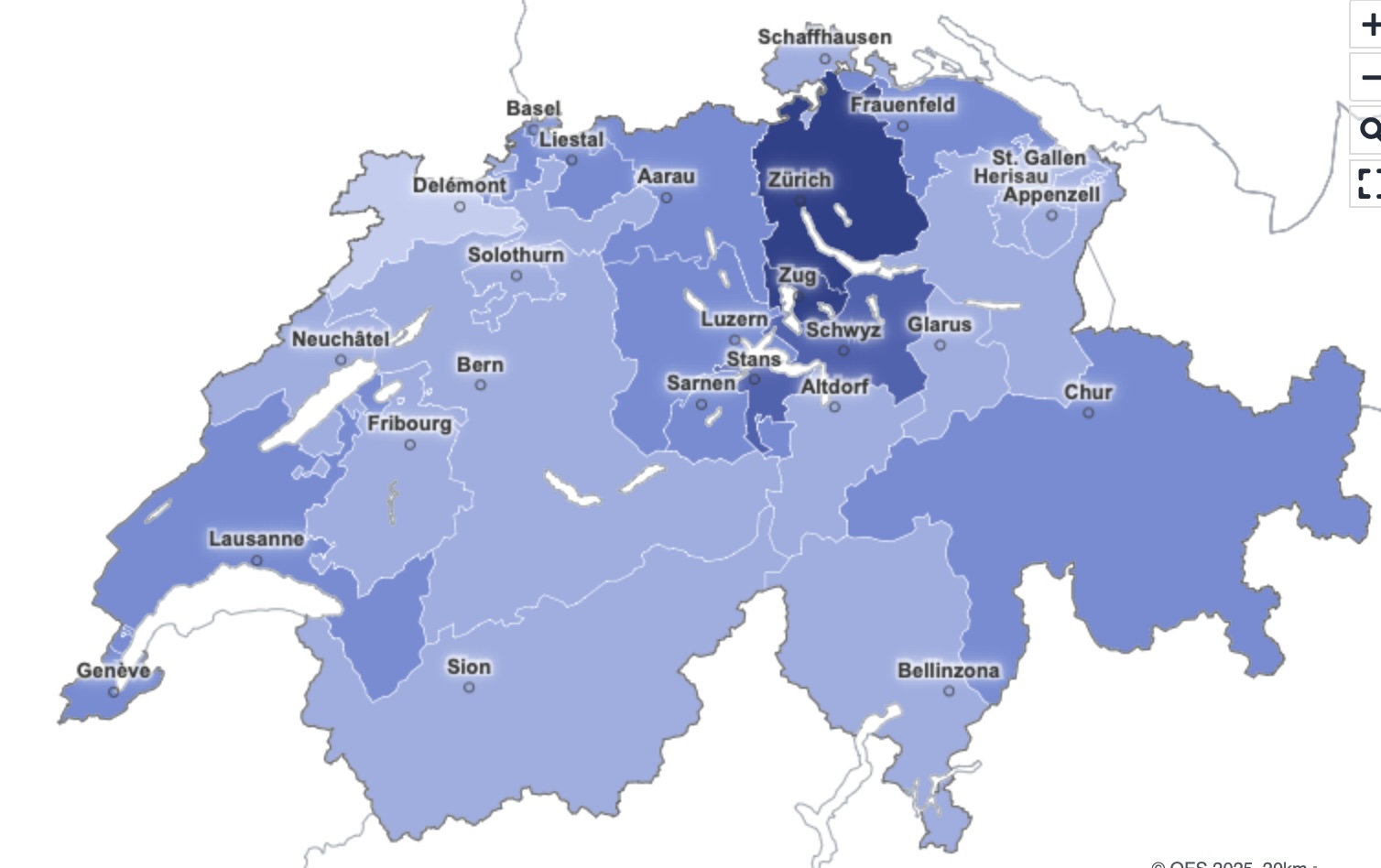
Zug comes up on top, with the average rent of 2,006 francs, followed by Zurich (1,804), Schwyz (1,756), and Nidwald (1,620).
All the areas marked in dark blue on the FSO map are the ones with highest rents in the country.
Source: FSO
By comparison, an appartment of this size in Geneva (a lighter shade of blue) rents for 1,559 francs; in Vaud (1,581); Basel-City (1,544); Basel-Country (1,540); Aargau (1,511); and Graubünden (1,462).
All these prices are well above the averages in lightest-blue cantons — for instance in Jura (1.018).
Rents fall between the two ‘extremes’ (priciest and cheapest) in much of the rest of Switzerland, including Fribourg (1,359), Bern (1,358), Valais (1,322), and Ticino (1,312).
Advertisement
What else emerges from this survey?
While it focuses mostly on rents, the study also includes some statistics about who owns most of the rental housing in Switzerland.
Typically, residential properties are owned y private individuals, corporate entities like banks or insurance companies, other businesses like real estate developers, as well as municipalities or cooperatives.
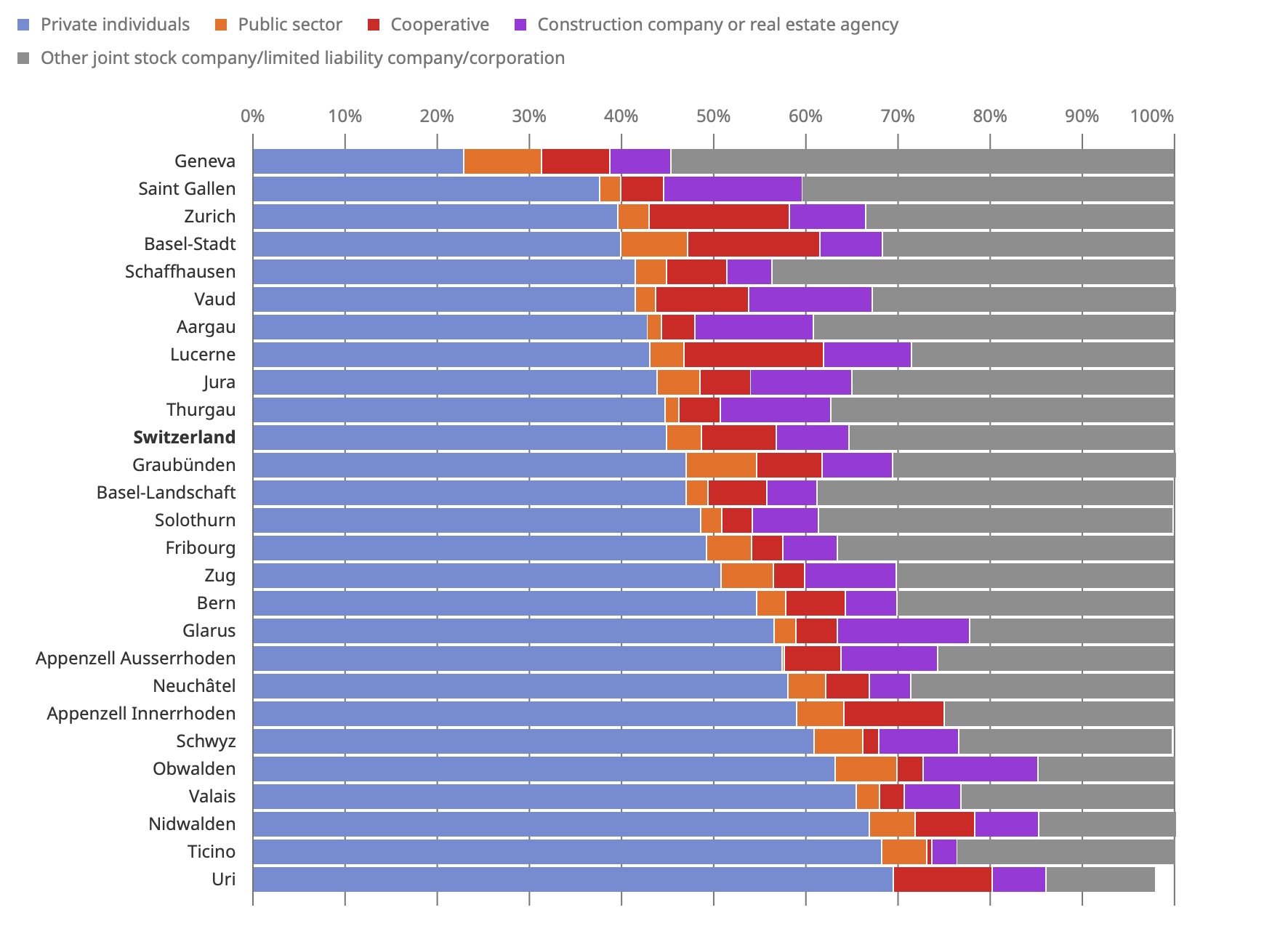
While numbers vary by canton, the vast majority of rented housing is in private hands.
This proportion is highest in Uri (nearly 70 percent) and lowest in Geneva (22.9 percent).
As you can see from this FSO chart, most rental housing is owned either by private individuals or businesses.
Source: FSO
The proportion owned by public entities, cooperative, or construction companies / real estate agencies that built the house, is smallest of all in all cantons.


