


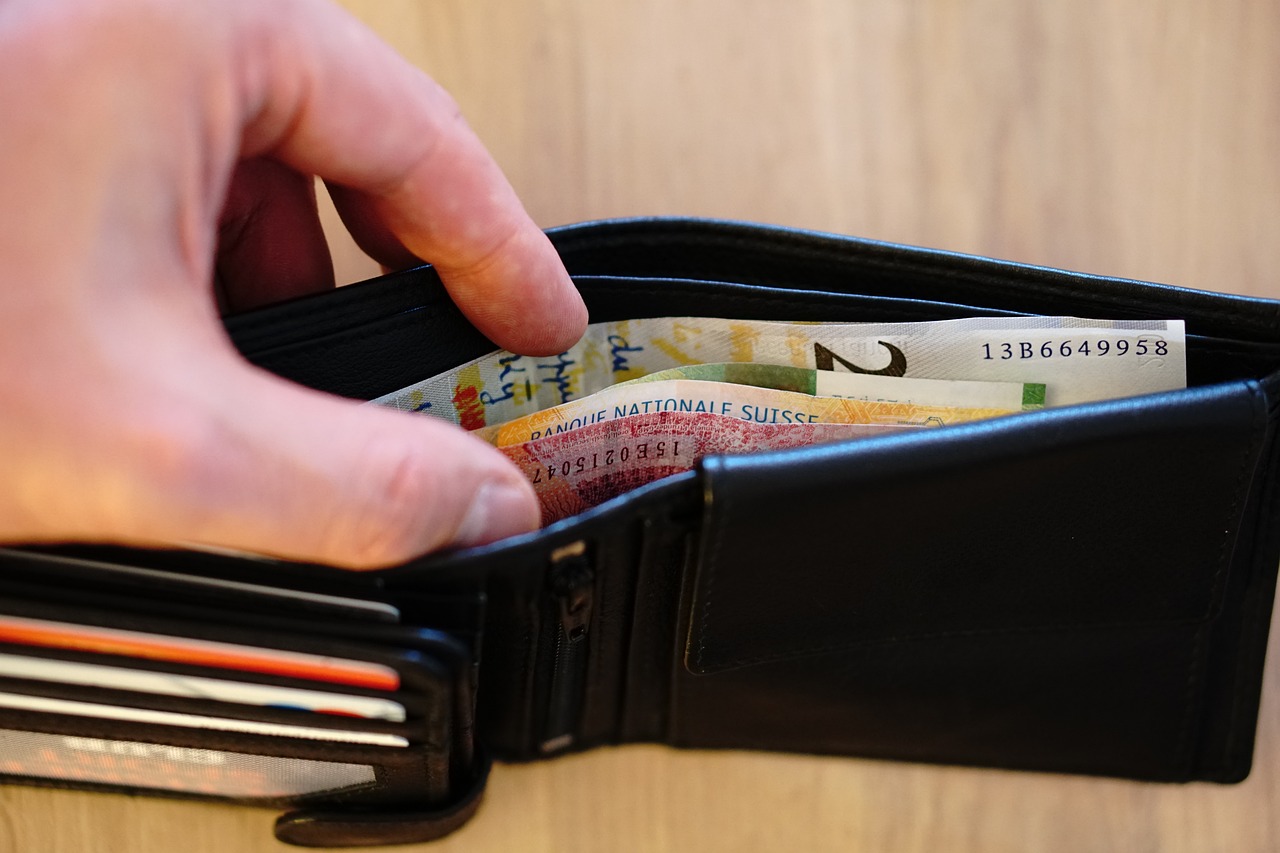
While the cost of living is generally high across Switzerland, in some cantons and municipalities, your purchasing power will be greater than in others.
Before we look at the the differences between cantons in terms of their populations’ purchasing power, this piece of information may surprise you: overall, Switzerland’s residents have a higher purchasing power than Germany’s and Austria’s.
Why is this surprising? Because most goods and services are notoriously more expensive in Switzerland (and often by much) than elsewhere in Europe.
Nevertheless, a new study carried out by a market research company, NIQ-GfK, which surveyed the disposable incomes of residents of DACH countries — a German acronym for Germany, Austria, and Switzerland — found that the per-capita purchasing power of the Swiss population is quite a bit higher than in the two other German-speaking states.
It shows that, on average, Switzerland’s per-capita purchasing power is 49,724 francs (53,011 euros) — a significantly higher amount compared to Austria (29,852 euros — 28,000 francs) and Germany (29,566 euros —27,732 francs).
Additionally, Switzerland recorded the strongest growth in purchasing power compared to the previous year: the population’s net disposable income will increase by 2.3 percent in 2025, while the rate of increase in Austria and Germany will be 2 percent.
Why, given Switzerland’s high cost of living, is its purchasing power higher that in neighbour states?
The reason could be that salaries are lower in those countries, while the inflation rate has been higher than in Switzerland.
READ ALSO: Why Switzerland’s cost of living isn’t as high as you think
Now let’s look within Switzerland: where can you buy most (and least) for your money?
NIQ-GfK‘s regional analysis of purchasing power in Switzerland reveals where residents have an above-average spending potential.
These are the top-10 cantons:
Zug – 85,506 francs in purchasing power
Schwyz – 75,293 francs
Nidwalden – 62,978
Zurich – 58,076
Obwalden – 55,211
Appenzell Innerrhoden – 54,481
Geneva – 52,281
Basel-Country – 51,873
Graubünden – 50,545
Lucerne – 49,772
Advertisement
Next: the cities
The survey also indicated which communities within those cantons have the highest purchasing power.
This is what it found:
Höfe (canton Schwyz) – 132,635 francs per resident
Meilen (Zurich) – 83,746 francs
Küssnacht (Schwyz) – 78,627
March (Schwyz) – 68,705
Horgen (Zurich) – 66,651
Affoltern (Zurich) – 60,456
Einsiedeln (Schwyz) – 62,979
Also, while Vaud is not included on the top-10 list, residents of one area in that canton, Lavaux-Oron, also have one of the country’s highest purchasing powers: 62,725 francs per person.
Advertisement
What about cantons with the lowest purchasing power?
The study focused on the areas with the highest spending.
In terms of lowest purchasing power, it only mentions Jura, where residents have 42,802 francs per capita available for spending and saving. This puts Jura residents more than 15 percent below the national average.
Other studies, however, have found that Ticino and Valais are, along with Jura, the ‘poorest’ cantons as far as purchasing power goes.


