


You probably know about ‘El Gordo’ (The Fat One) – Spain’s famous Christmas lottery – but there’s another festive draw called ‘El Niño’ where the chances of winning are higher.
Every year at Christmas, Spaniards go lottery mad, queuing for hours to buy tickets for the famous Christmas lottery – El Gordo (‘The Fat One’), as it is known.
If you live in Spain, you’ve probably noticed the frenzy it causes, but might not have known that Spain also a second Christmas lottery, called El Niño.
Here’s what you need to know.
What is El Niño?
El Niño (literally meaning the child or boy) is Spain’s second biggest Christmas lottery, and though it doesn’t draw quite the crowds and excitement El Gordo does, there are still some pretty big prizes on offer.
And for the lottery aficionados among you (or those who failed to win the big bucks in El Gordo last month), you actually have a better chance of winning El Niño since the probability of winning is higher than with El Gordo.
While for El Gordo the probability is only 5.3 percent, for El Niño it is 7.82 percent.
However, as the total prize money is considerably bigger with El Gordo, El Niño‘s higher odds of winning don’t equate to sums of money as high as for its predecessor.
Advertisement
When is the draw?
On the 6th of January every year, which in Spain is El Día de Reyes (Three Kings or Three Wise Men Day), the draw for Lotería del Niño dishes out a whopping €700 million in prizes.
Unlike El Gordo, you’ll be glad to hear that El Niño has a much faster draw, lasting around half an hour.
That means that you won’t be forced to listen to the seemingly endless hours of school children enthusiastically singing out the draw like they do with every ball for El Gordo.
READ ALSO: Why do children sing Spain’s Christmas lottery numbers?
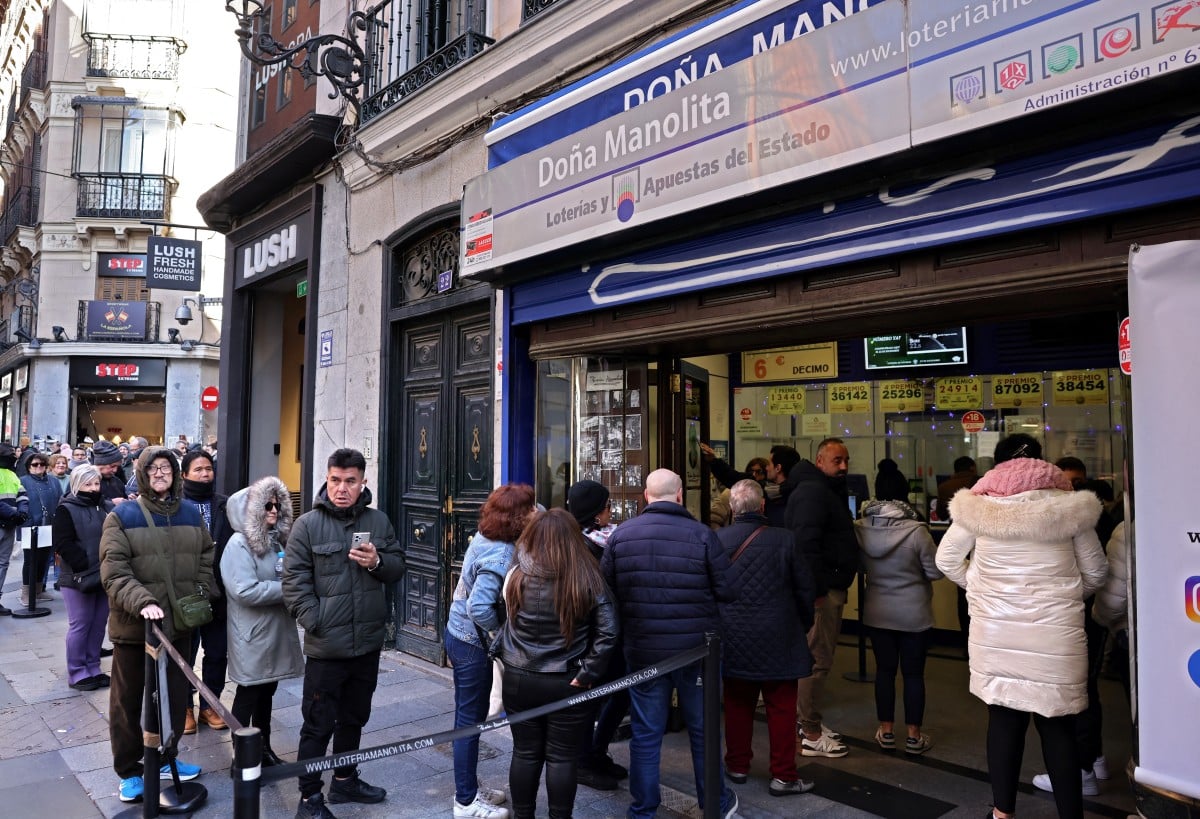 If you’re in Madrid, expect to see queues outside the famous Doña Manolita lottery store ahead of El Niño draw. (Photo by Thomas COEX / AFP)
How do the tickets work?
In a very similar way to the tickets for El Gordo.
A number of ticket (series, each of 100,000 individual tickets) are released, and people tend to buy a décimo for €20. Often families or groups of friends and colleagues will team up and buy part of a serie together.
How much can I win?
In total, there are 37,920 prizes, three of which are considered main prizes:
- A first prize of €2,000,000 per serie (€200,000 per décimo)
- A second prize of €750,000 per serie (€75,000 per décimo)
- A third prize of €250,000 per serie (€25,000 per décimo).
Advertisement
Why is it called El Niño?
There are two theories. One comes from the fact that the draw is always on January 6th, Three Kings Day, something that like most Christmas traditions is heavily focused on children. However, the January 6th lottery existed for more than two decades before it was give its name (in around 1966) so this theory may be an old wives’ tale.
READ ALSO: Why Spain loves the Three Kings more than Santa
There is another story that has gained more strength in recent years. Legend has it that the draw has its roots all the way back in 1879 when the fantastically named Duchess of Santoña María del Carmen Hernández y Espinosa de los Montero (known as Mariquita Hernández) helped fund the opening of a children’s hospital, the Hospital Infantil Universitario Niño Jesús in Madrid.
The Duchess’s generosity helped with the hospital’s construction, but before her death she lost her fortune and was left destitute. Therefore, the story goes that if she had won the first draw she would have recovered part of her fortune, and that the name comes from the hospital she helped build.


