

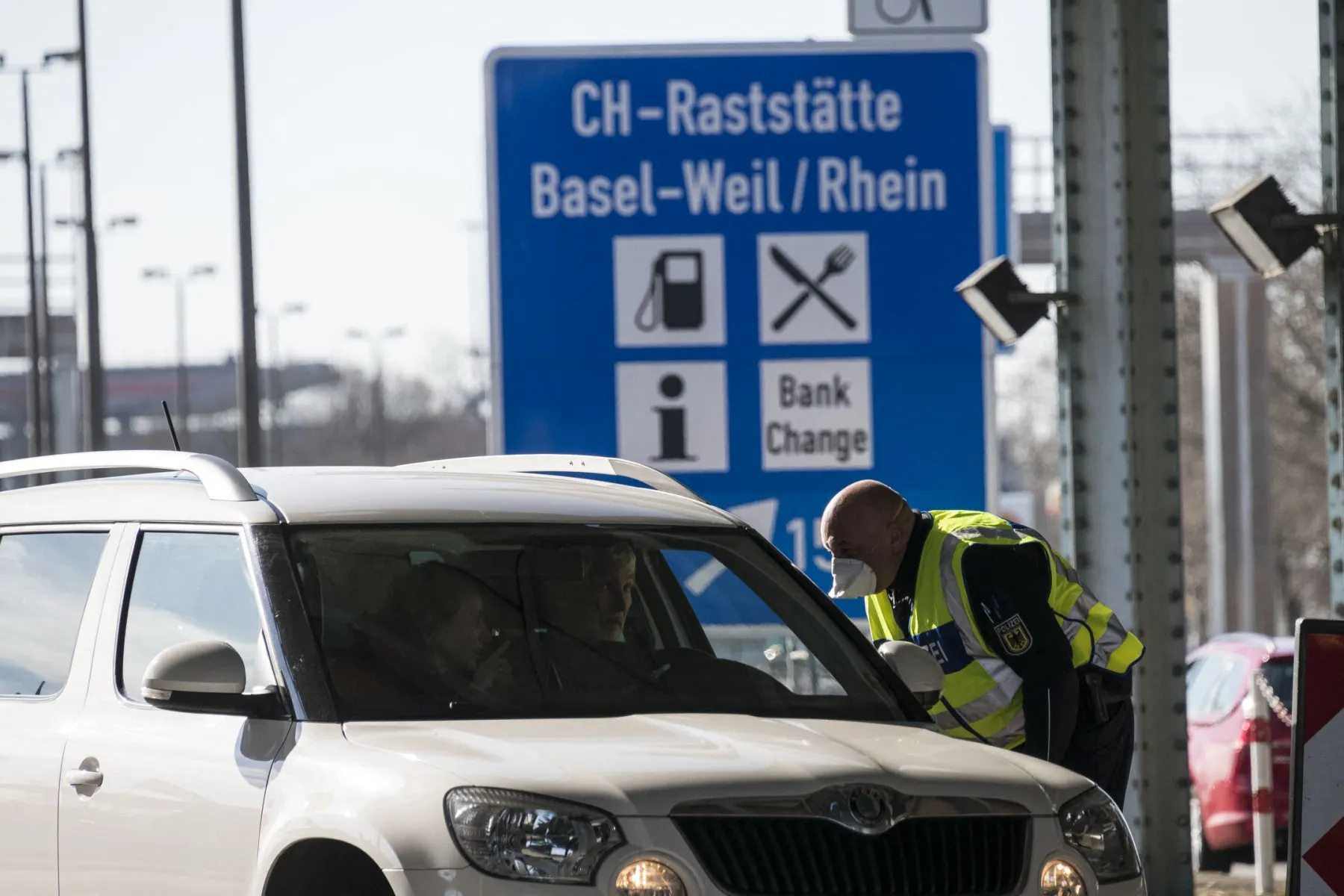
Germany plans to keep controls at its nine land borders until March 2027. How will this affect travel to and from Switzerland?
Switzerland shares a 362-km border with Germany, with major crossing points located in Basel, Aargau, Zurich, Schaffhausen, Thurgau, and St. Gallen.
Normally, as both Germany and Switzerland are part of the Schengen area, traffic between the two countries passes with only infrequent, random checks.
However, Germany introduced checkpoints at its borders in September 2024 to stem the flow of illegal migrants, and extended this measure three times since then.
The latest extension comes among an on-going debate over migration policy and the future of Europe’s border-free Schengen area.
What can happen if you are crossing the border into Germany?
As the checks are not new but have been in place for the past two years, you can expect the same measures to be in place for at least another six months.
Therefore, be prepared to be stopped, present your passport or ID card, and have your vehicle inspected.
This is what could happen; it is also possible that you could be let through without any checks.
These measures are in place when you cross from Switzerland to Germany, not the other way around – though it is not excluded that you could be stopped at a Swiss border for a random check as well.
Also, they apply equally to cars with Swiss plates as well as to tourists.
Will your shopping sprees to Germany be affected?
If you are concerned that your shopping will be impacted – especially since German retailers have been bending backwards (figuratively, not literally) to attract Swiss shoppers – no worries.
The rules relating to tax-free shopping and declarations of your purchases apply when you go back to Switzerland, not when you enter Germany.
READ MORE: Switzerland set to toughen rules on cross-border shopping
