


Simone Knobloch steps into his role as CEO of Valcambi on June 1. He holds a Master’s degree in chemistry and a post-graduate specialisation in polymer science.
Thomas Kern / SWI swissinfo.ch
In his first official interview with the press, incoming Valcambi CEO Simone Knobloch discusses gold’s appeal amid global uncertainty and Switzerland’s advantages as a refining hub.


Valcambi is a giant in the Swiss and global gold sector and one of the most closely scrutinised. It is the largest gold refinery by capacity in Switzerland and among the largest in the world. Today, it is totally embedded in the Swiss and global financial system.
On June 1, Simone Knobloch takes over as CEO of the Balerna-based refinery in canton Ticino. Southern Switzerland became a global hub for gold from the 1970s onwards, building on northern Italy’s jewellery manufacturing tradition and the Swiss high-trust ecosystem of banking, logistics and precious metals refining.
Its bars meet the LBMA Good Delivery standards, the global benchmark for gold quality, and COMEX specifications, the US-based CME Group standards for deliverable gold futures contracts, which are standardised agreements to buy or sell gold at a fixed price on a future date.
Knobloch takes over at a moment when gold prices are hovering near historic highs, driven by investors and central banks turning to the precious metal as a hedge against uncertainty and market volatility. Yet the industry also faces mounting scrutiny over sanctions compliance and responsible sourcing, even as geopolitical instability reinforces gold’s safe-haven appeal.
Valcambi participated in the Swiss Precious Metals Association and the Swiss Better Gold Association, until differences in industry perspective, notably on sourcing from the UAE, forced a split. Amid the glow of furnaces and the hum of automated production lines, Knobloch tells Swissinfo that robust due diligence, rather than disengagement, is the key to responsible gold sourcing.
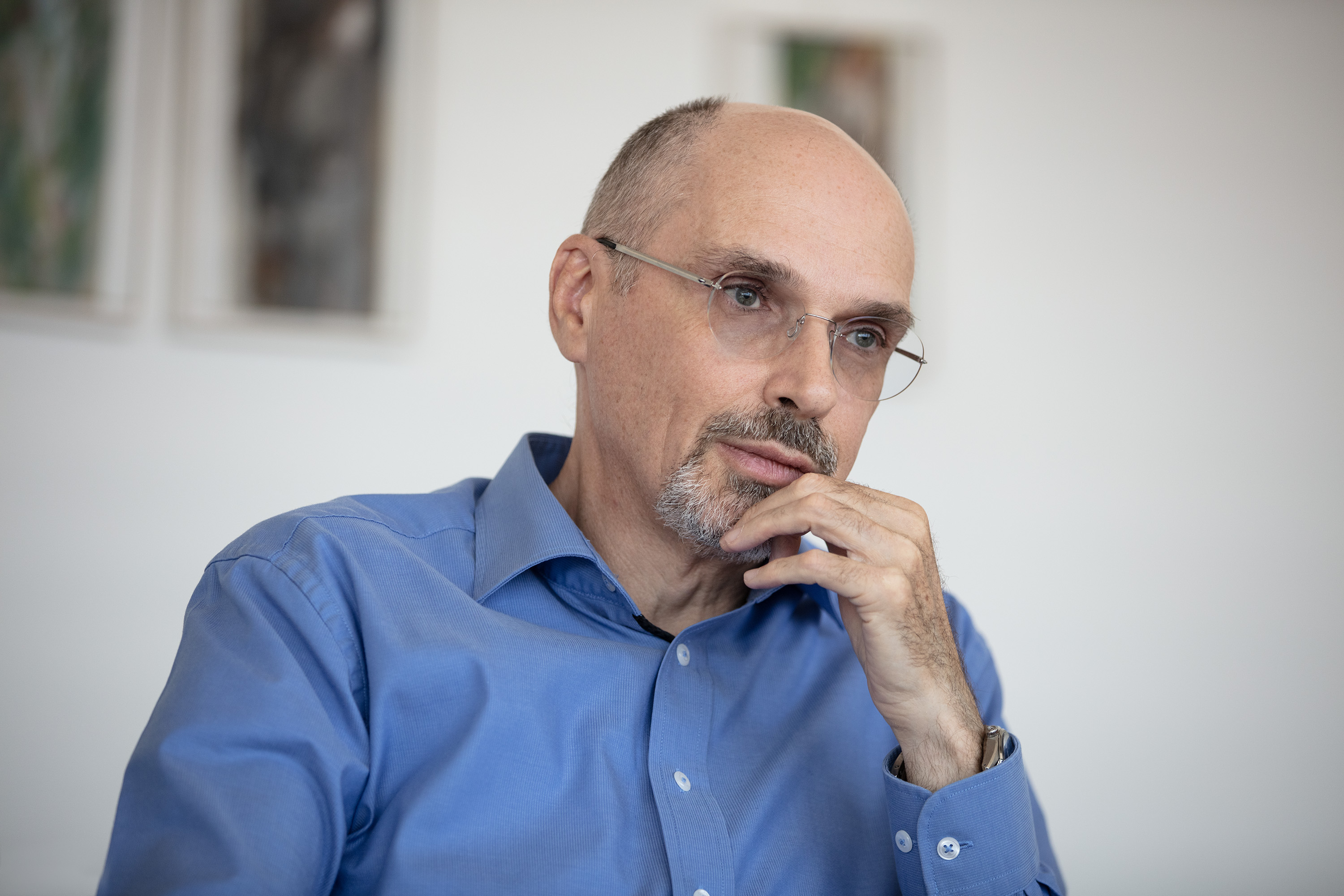
Simone Knobloch joined Valcambi in 2013 and oversaw the implementation of international responsible sourcing and precious metals certification standards before being appointed CEO.
Thomas Kern / SWI swissinfo.ch
Swissinfo: Did the board appoint you to this role with a vision for change or for continuity?
Simone Knobloch: No dramatic changes. The core business will remain investment products: gold, silver, platinum and palladium bars. The main clients are national banks, bullion banks and metal traders. We will continue to work with artisanal miners, with large mines and, in secondary feeds, with recycled materials.
Swissinfo: There are several refineries in this region. What is your niche or competitive edge?
S.K.: Others are mainly strong in semi-finished products for the watch and jewellery sector, or specialised in niche products. Valcambi is specialised in investment bars.
Swissinfo: Gold reached a record high of $5,597 (CHF 4,274) per ounce in January. What drove gold prices to record highs and what does it say about the state of the global economy and financial system?
S.K: In recent years, what one considered to be “certainties”, or predictable situations, have changed a lot. Gold is still a safe haven for investment. It is also regaining its position, not as a currency, but in general transactions, so will remain a strategic asset and commodity in the future.
Swissinfo: As other commodities hubs emerge, can Switzerland remain a competitive global trading and refining hub?
S.K.: Switzerland will keep its position. But we must be aware that some of the advantages of Switzerland may not remain in future. Technically speaking, to produce 999.9 gold, high purity gold, is no longer an exclusive of Switzerland or a few refiners, the technology is now widely available.
Swissinfo: So what does Switzerland provide that other hubs don’t?
S.K: Switzerland is secure. It is a place where processing allows you to save on insurance costs with respect to high-risk areas. We are still an island in the European Union. And there is a well-established system for precious metals, which means you can obtain the credit lines, the financing of the gold during the processing.

A 999.9 gold bar at Valcambi’s refinery in Balerna, southern Switzerland. The 999.9 hallmark indicates that the bar is 99.99% pure gold, the international standard for investment-grade bullion.
Thomas Kern / SWI swissinfo.ch
Last but not least, the sector is tightly regulated with a unique system of sworn assayers [who certify the quality of gold], providing an extra layer of oversight that you do not find anywhere else in the world. This is why Swiss gold is so preferred in the international market. No one in Switzerland is willing to make mistakes in the purity of gold. It is not only a reputational problem for the brand; it means the refinery will lose its accreditation.
A lot of gold is processed by Swiss refiners. Valcambi, as an example, processed 1,000 tonnes of precious metals in 2025. Gold was the vast majority.
Swissinfo: American President Donald Trump’s administration ultimately did not impose tariffs on gold bullion last year. Why did the possibility of such tariffs [raised by a US Customs and Border Protection ruling that briefly defined gold bars as subject to reciprocal tariffs] trigger such an outcry from the global gold industry?
S.K.: We strongly believe that import tariffs on investment gold is not manageable in the global system. Just imagine a US bank that keeps the [gold] stock in different locations in the world. Part is in the US, part is in London, part is in Switzerland. How can they manage what is an asset stored in different vaults? With import tariffs they cannot move between their own vaults without paying import tariffs.
Swissinfo: Central banks, especially in emerging markets, have been buying gold very aggressively since 2022. What is driving that?
S.K.: It is partially about having an alternative to the dollar. We have seen huge purchases from central banks in the past years. What we also see is an increase in the national reserves from the producing countries. They are now keeping part of their domestic production in the country, in their national banks. There is increased awareness among producing countries that they should no longer be dispossessed of their national resources. At the same time, with gold reserves, the national currency can be more stable.
Swissinfo: Is this also a reaction to sanctions and the weaponisation of the financial system?
S.K.: Definitely. Gold, compared to other commodities, is not consumed, gold doesn’t disappear, gold does not rust. There is a large amount of gold in the reserves of national banks. It also serves as the physical backup of general investments. Our savings, our pension funds are all partially invested in gold. That means there is a physical mass of the commodity that makes it more stable with respect to others that are more sensitive to offer and demand peaks. There are investors that have no interest in speculating too much on the price of gold, especially the national banks. The national banks can use their reserves to stabilise or to make the fluctuation of the gold price less steep if needed. For all these reasons, I still see gold as the safe haven for the less risky part of investments.
Swissinfo: Is there sufficiently robust oversight and regulation of the gold sector in Switzerland?
S.K.: Responsible sourcing in Switzerland is still largely voluntary, like in other sectors. But all the big Swiss refiners comply with the LBMA Good Delivery and Responsible Gold Guidance and are aligned with OECD due diligence guidelines, [which also cover sourcing from high risk areas]. We also do a voluntary audit of compliance to the EU. We can always improve but, overall, we start from a strong position.
Swissinfo: Gold from UAE repeatedly comes under scrutiny due to concerns over conflict gold and gold evading Russian sanctions. Last year, Switzerland imported 420 tonnes of gold from the UAE, compared to an average of 150 tonnes in previous years. What triggered such a dramatic increase?
S.K.: One of the reasons that the UAE saw an increase in imports is the demand of COMEX bars from panicked US investors [triggered by tariff concerns] wanting them available inside the United States. Part of the gold had to come from UAE and be converted into COMEX bars [meeting the specifications of the New York-based Commodity Exchange].
Swissinfo: Were all the 420 tonnes imported by Switzerland from the UAE sourced by Valcambi?
S.K.: Yes, close to that. But someone else is also touching [UAE gold]. The position of Valcambi is that we import gold from UAE since gold from there will not disappear. The solution [to responsible sourcing] isn’t ignoring that the UAE is major hub. The solution is to have tight due diligence on selected approved brands.
We import gold from the UAE from two approved brands out of more than 50 present in the country. We perform tight due diligence and accept gold only from these two [the refineries SAM Precious Metals and Al-Etihad Gold].
Sometimes the perception is that Valcambi goes with a supermarket trolley, takes the gold, and brings it to Switzerland. No. A bank or metal trader tells us they are sending us gold to be processed. If gold is coming from the UAE, we tell them we only take gold from these two approved brands.
Furthermore, we perform enhanced due diligence on the refinery. For each delivery, we ask for a statement of conformance, a declaration from the refineries listing the countries of origin of the material they have used. Of course, there is the serial number of each single bar that arrives at Valcambi.
They also confirm in writing their commitment to international standards and sanctions, plus an explicit confirmation that they are not using gold from Africa, Russia, Venezuela, and so on.
More

More
UAE vs. Switzerland: rivalry or synergy in commodity trade?
Swissinfo: Sam Precious Metals opened a branch in Egypt, a key transit route for gold from war-torn Sudan. Are you confident that no gold from Sudan is reaching Valcambi?
S.K.: According not only to the declaration [of compliance by the refinery], but also to our on-site visits, no gold from Sudan or even from Egypt is delivered to Valcambi. We have never found any potential point that would allow us to think that something like that is delivered.
Swissinfo: While showing us the refinery, you explained that processing artisanal and small-scale mining (ASM) gold is costly and requires specialised equipment because the volumes are much smaller. Yet you seem to care about the sector. Last year, you left the Swiss Better Gold Association (SBGA), which aims to support that sector. What changed?
S.K.: It’s a long story. We opened a value chain from Colombia. Panners [barequeros] along the river were the main origin of gold. The amount of gold they can produce is very limited, about one ounce per month. The number of individuals that had to be identified was enormous. The work behind the identification, the on-site visits, everything to open that value chain was enormous.
That value chain started with [Geneva luxury watchmaker and jeweller] Chopard as the destination. One day Chopard informed Valcambi that they were no longer to take that gold. We informed the local partner in Medellin. A short time later we discovered that the same value chain started again at SBGA, not through Valcambi but through another [Swiss] refinery, through MKS Pamp. By coincidence, both Chopard and MKS Pamp are sitting on the board of the SBGA…
Swissinfo: Why did the Swiss Precious Metals Association and Valcambi part ways?
S.K. We have some diverging points of view, for example on the UAE. We do not understand how they ask members not to source from the UAE when at the same time other members of the association still have a legal entity in the UAE.
Swissinfo: What do you think people outside the industry fundamentally misunderstand about the gold business?
S.K.: They do not understand that we are an industry, a factory, as you have seen today. It’s not that we’re doing illegal, dirty, non-traced material. Everything you have seen is an industrial process.
The other thing that is not clear is that the refiners are not the buyers, we are service providers. Whatever Valcambi or a big refinery receive is delivered by banks or metal traders. Everybody is looking at the refiners, but no one is asking who is sending UAE gold?
Swissinfo: So who is sending to you UAE gold?
S.K.: I will not answer but the LBMA knows the details. We receive gold from international banks and traders accredited on all the international markets that are buying from UAE. All of them are LBMA members or associates in well-regulated countries.
Thomas Kern / SWI swissinfo.ch
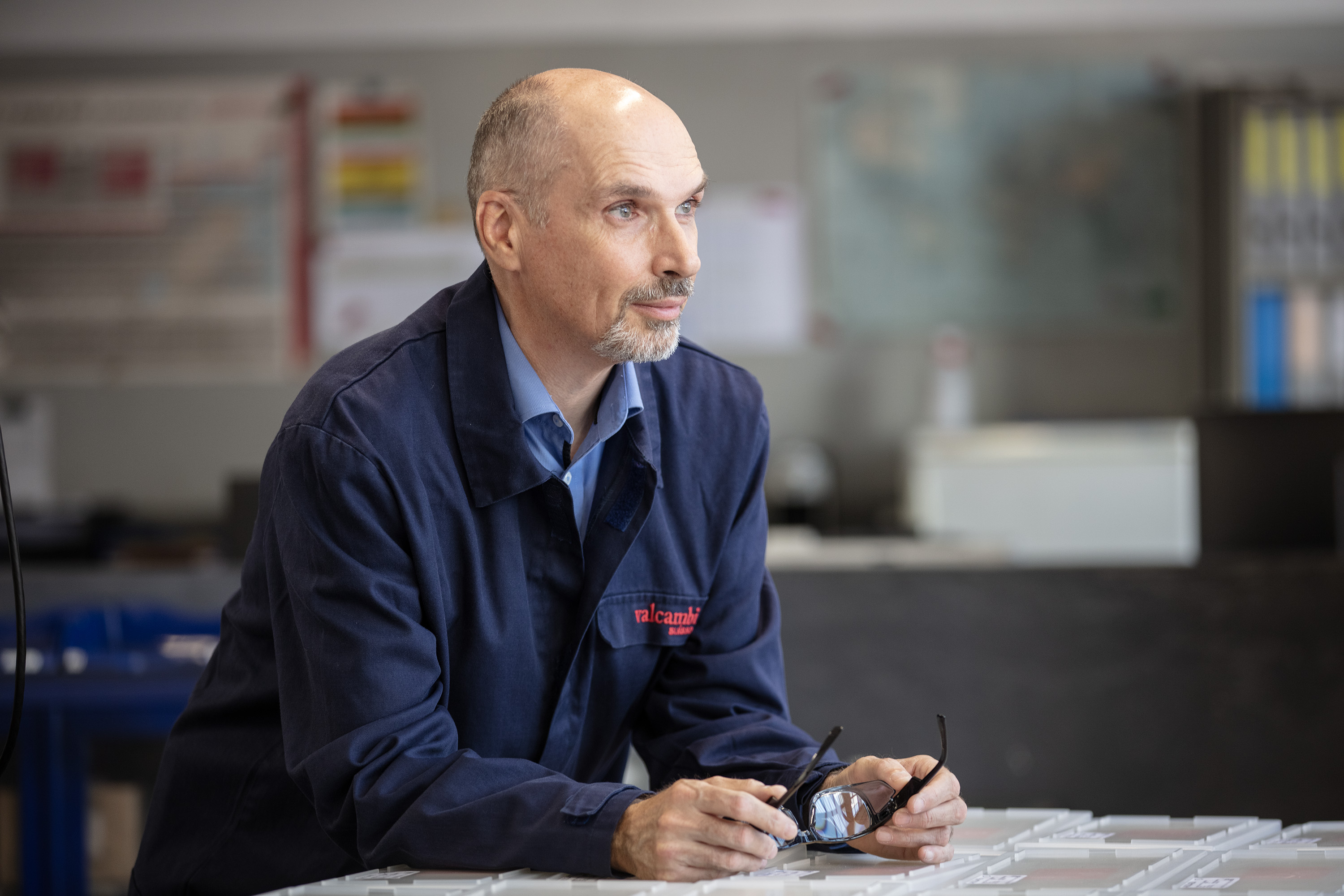
Knobloch joined Valcambi in 2013. He says his first task was developing organizational models to achieve LBMA Responsible Gold and Silver certification, a global due diligence standard requiring refiners to trace gold sources and prevent links to conflict financing or illicit activity.
He progressively implemented additional sourcing standards, including the Responsible Jewellery Council Certification Scheme; Fairtrade and Fairmined; and the LBMA Platinum Group Metals certification. The latter covers metals widely used in catalytic converters, chemical processing, electronics and medical applications.
With graphics by Kai Reusser and Pauline Turuban
Edited by Virginie Mangin


