


The ZNPP suffered a complete loss of offsite power on 23 September following military activity in the vicinity, marking the 10th time this has happened since Russia launched its full-scale invasion of Ukraine in February 2022.
“Europe’s largest nuclear power plant has been without external power for more than a week now, which is by far the longest lasting such event during more than three and a half years of war,” said IAEA Director General Rafael Mariano Grossi.
It is currently operating on emergency power which “is clearly not a sustainable situation in terms of nuclear safety,” he said, adding that “neither side would benefit from a nuclear accident.”
Last power line damaged
The ZNPP has been under Russian control since the early weeks of the conflict and both sides have accused the other of attacks that endanger the plant.
The latest offsite power cut occurred last Tuesday afternoon when the sole remaining power line was damaged by military activity some 1.5 km away.
Emergency diesel generators (EDGs) automatically kicked in to supply the power needed for the safety systems and to cool the six reactors as well as the spent fuel.
The ZNPP is currently operating eight EDGs. Nine additional units are in standby mode and three are in maintenance. The operating EDGs are being alternated to service some of the idle ones and ensure continuous availability.
Repair efforts hampered
The plant reportedly has the personnel and spare parts needed to repair the power line, but this has not happened yet due to military activity nearby.
Ukraine has expressed readiness to repair a back-up power line that has been disconnected since early May, but the military situation has also prevented this from happening.
The ZNPP’s reactors have been shut down for over three years now, resulting in the cooling of the nuclear fuel and reducing the amount of radioactive material in the fuel.
As a result, the nuclear safety situation is not as dangerous as it would have been had the plant still been generating electricity, the IAEA noted.
However, in case of a complete blackout with no off-site or emergency power, the nuclear fuel could melt if power could not be restored in time, which is why mobile diesel generators are also available.
Prevent a nuclear accident
“The current status of the reactor units and spent fuel is stable as long as the emergency diesel generators are able to provide sufficient power to maintain essential safety related functions and cooling,” Mr. Grossi said.
“Nevertheless, it is extremely important that offsite power is restored,” he added.
“As I have repeatedly stated, a nuclear accident is in no one’s interest and all efforts must be made to prevent that from occurring.”
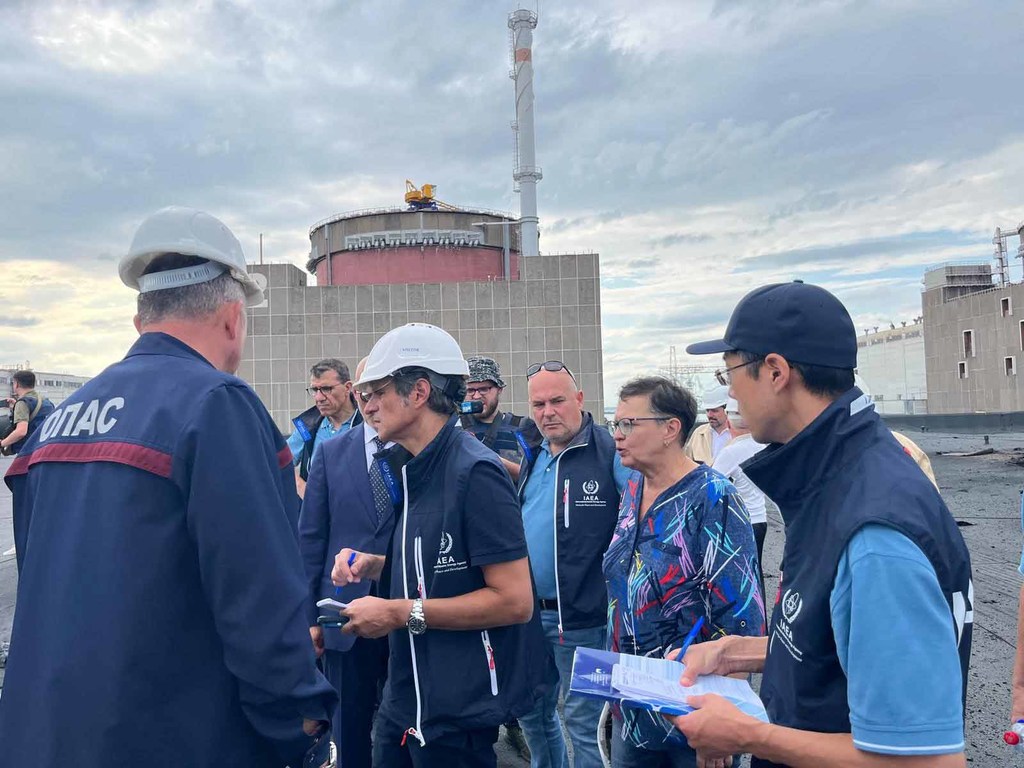
IAEA Director General Rafael Mariano Grossi (centre) visited the Zaporizhzhya Nuclear Power Plant in Ukraine in September 2022.
Monitoring developments
The IAEA has maintained a presence at the ZNNP since September 2022.
Its team continues to monitor the situation closely, receiving more frequent nuclear safety updates from the plant, including cooling water temperatures.
“Based on the plant’s information, we can conclude that the emergency diesel generators have been able to reliably provide the power needed for cooling the nuclear fuel in the reactor cores and spent fuel pools,” Mr. Grossi said.
The IAEA team was also informed that the plant has fuel reserves for more than 10 days of operation.
Radiation monitoring continues to show that there has been no increase above normal levels, both in and outside the site.


