


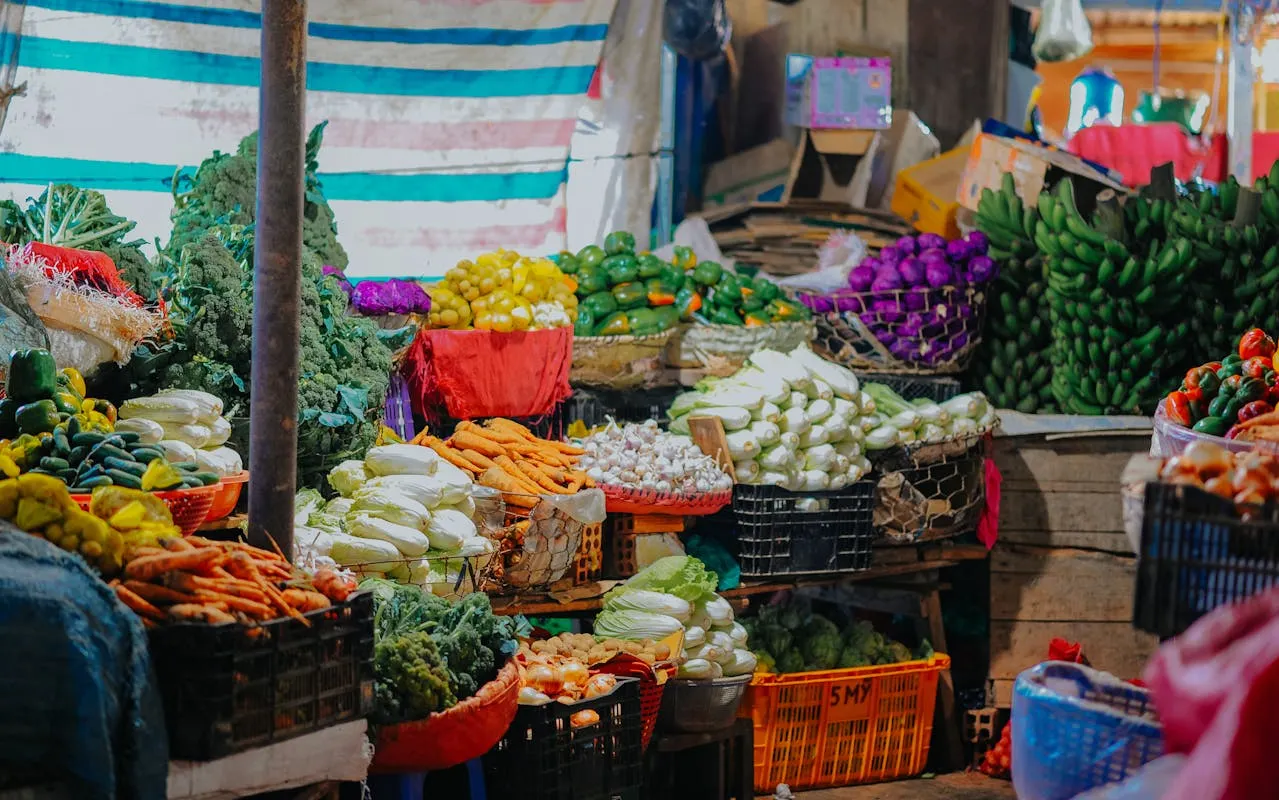
Veggies may be healthy, but a new analysis reveals that most of those on sale in Swiss stores are contaminated.
This is what emerges from a consumer magazine KTipp, which analysed samples of various vegetables sold in Switzerland.
It discovered that of the 25 products tested, 16 were contaminated with substances dangerous to human health – specifically, PFAS chemicals.
The highest level of toxins was found in carrots and potatoes, with cucumbers, lettuce, and tomatoes slightly less contaminated but dangerous nevertheless.
The organic vegetables in the sample were, generally less contaminated than conventional products.
For instance, the PFAS content of organic carrots from Coop and Lidl was about half that of conventional carrots from Migros and Aldi.
What is PFAS anyway?
An acronym for ‘per- and polyfluoroalkyl substances’, it is a group of synthetic compounds also known as ‘forever chemicals’ because they don’t break down, remaining in the environment and human body for decades.
They can cause a variety of chronic medical conditions, including weakening of the immune system, thyroid disease, liver damage, cancers, and reproductive issues, among others.
These chemicals are typically present in consumer products like non-stick cookware, water-resistant fabrics, food packaging, and many others.
How to these toxins get into vegetables?
Though the KTipp study focused only on vegetables, these substances are present in fruit as well.
They penetrate crops primarily through PFAS-contaminated water – which is plentiful in Switzerland.
In fact, a government study analysing 12 Swiss waterways – including Lake Geneva, as well as the Rhine, Rhone, Aare, and Limmat rivers – detected “a great variety of PFAS substances.”
(PFAS is also present in the drinking water, though the government says concentrations rarely exceed Swiss legal limits).
Can you wash these chemicals off fruits and vegetables?
Not totally – especially since PFAS is present in the water as well.
However, according to a study carried out in the United States, they can be minimised.
“Adding baking soda or vinegar to water and soaking produce for five to 10 minutes can help break down certain pesticides and may be more effective than water alone,” it found.
Furthermore, “peeling a fruit or vegetable’s skin is another effective way to reduce pesticide residues.”
A global phenomenon
Though the KTipp only analysed produce sold in Switzerland, PFAS contamination is not strictly a Swiss phenomenon.
It is also a pressing problem across the European Union, according to the Pesticide Action Network.
“The number of European fruit and vegetables with detected PFAS pesticide residues has nearly tripled between 2011 and 2021, with a growth rate of 220 percent for fruit and of 274 percent for vegetables,” it says.


