


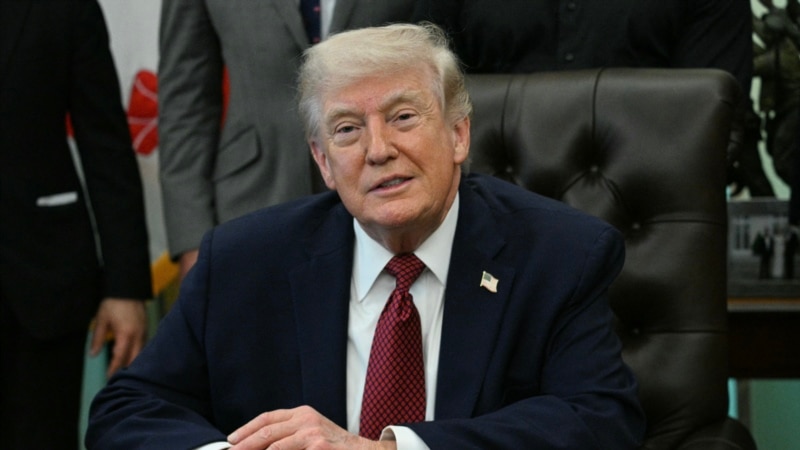
As the clock ticked toward a major US deadline, President Donald Trump said he was unilaterally extending a cease-fire to give Iran a chance to make a “unified” peace proposal and at the request of Pakistani officials acting as mediators.
“Based on the fact that the Government of Iran is seriously fractured, not unexpectedly so and, upon the request of Field Marshal Asim Munir, and Prime Minister Shehbaz Sharif, of Pakistan, we have been asked to hold our Attack on the Country of Iran until such time as their leaders and representatives can come up with a unified proposal,” Trump wrote on Truth Social.
Trump added that he will “extend the Ceasefire until such time as their proposal is submitted, and discussions are concluded, one way or the other.”
An adviser to Iran’s powerful parliament speaker called the cease-fire extension a “ploy to buy time for a surprise attack” and asserted that Tehran must take the initiative, without being specific.
The spokesperson also said the current US blockade of Iranian ports is “no different from bombardment and must be met with a military response.”
Trump earlier said he did not want to extend the temporary cease-fire with Iran, which was due to expire on April 22, as Washington waits to see if talks with Tehran will proceed. The exact time of the expiration of the cease-fire was unclear.
Trump added in his post that the US will continue its blockade of Iranian ports that has so far led to at two ships being seized by the US Navy.
Tehran has said it will not resume negotiations as long as the blockade is in effect, while the US has said it will not end the action until a peace deal is signed.
Iran has yet to say whether it will take part in a new round of face-to-face talks with the US in Islamabad. As of midday in Washington, Vice President JD Vance had not departed for Pakistan, US officials said.
Pakistan, the mediator in the peace process, urged both the US and Iran to extend their truce, but multiple reports said Tehran was weighing its options and waiting to see if its conditions, including an end to the blockade and a recognition of its right to enrich uranium, would be met.
Baqaei denounced the boarding of an Iranian tanker by US forces late on April 20, as well as the seizure of a separate cargo ship a day earlier, as “piracy at sea and state terrorism” and said the actions raised questions about Washington’s commitment to serious negotiations.
Iran has blocked access to the Strait of Hormuz that controls access to the Persian Gulf to all ships but its own or those Tehran approves for transit.
Iran’s ‘New Cards’
Iranian parliamentary speaker Mohammad Baqer Qalibaf, who is also Iran’s lead negotiator, wrote on X late on April 20 that Tehran is “prepared to reveal new cards” in the war with the United States and Israel, accusing Trump of “imposing a siege and violating the cease-fire” as he tries to turn the negotiations into a “surrender or to justify renewed warmongering.”
Trump has threatened to restart the war and attack Iranian civilian infrastructure such as bridges and power plants unless Tehran accepts his terms.
The first round of talks in Islamabad on April 11-12 failed to produce an agreement for a full end to the war, which began on February 28 when US and Israeli air strikes pummeled targets across Iran.
Tensions in the region remain high while cargo ships pile up in the Gulf due to the blockade. Trump has said it will not be lifted until a peace deal is signed.
While shipping traffic has ground more or less to a halt, some ships have reportedly passed through the Strait of Hormuz.
Data from the MarineTraffic ship-tracking platform showed that a vessel named the Ean Spir, which had no known flag or known ownership, passed through the waterway on April 21 after previously docking at an Iraqi port.
A second unflagged ship, the Lian Star, also appeared from the data to have sailed through the strait.
The number of ships that usually pass through the strait, which handles about 20 percent of global oil and gas water transit, is around 140, according to shipping analysts.


