


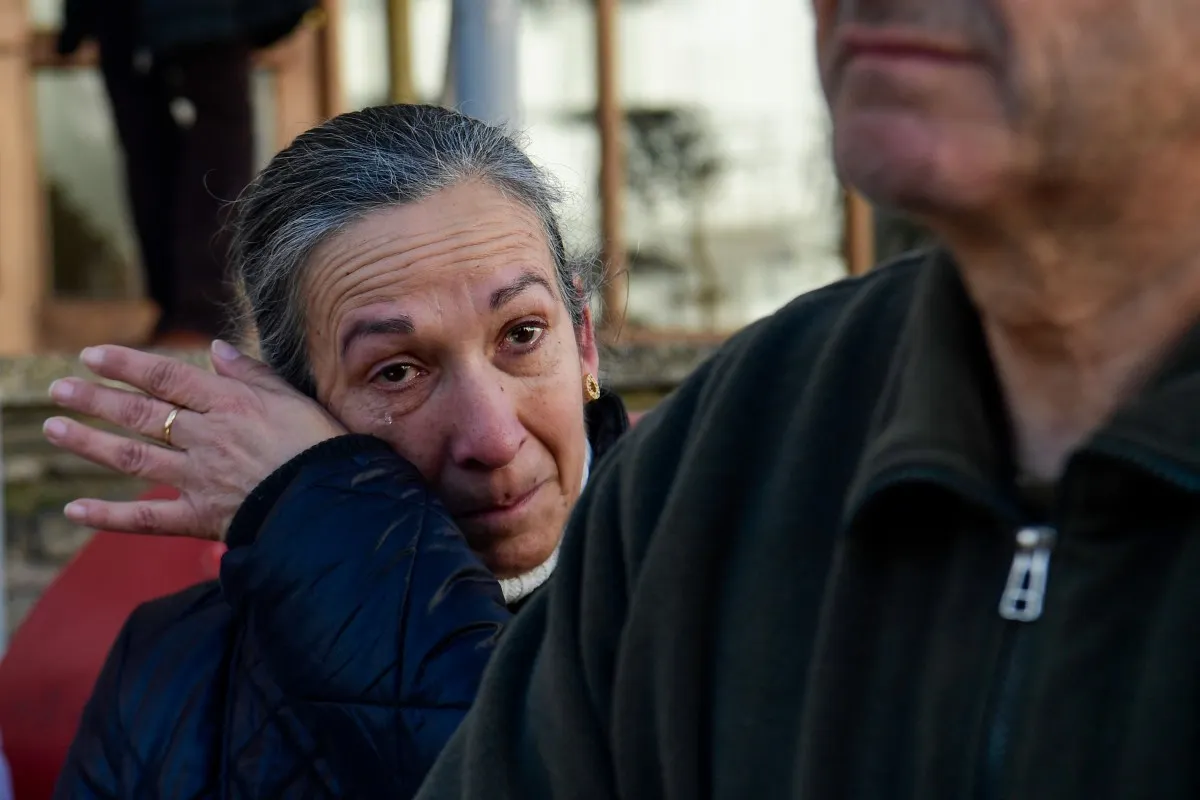
In this week’s Inside Spain, we look at how the reaction by locals in the village where Sunday’s deadly train crash took place speaks volumes about how Spaniards react in times of crisis. Unfortunately, there are others looking to profit from tragedy.
Solidaridad (solidarity) is a word you’ll hear a lot in Spain, and one that in many ways describes Spanish society.
The Oxford Dictionary defines it as “support by one person or group of people for another because they share feelings, opinions, aims”.
This shared feeling was illustrated when at nearly 8pm on Sunday January 18th two trains collided close to the sleepy Andalusian village of Adamuz, and the first people at the scene were the locals from this pueblo.
Advertisement
They took blankets, water and bandages to the scene of the wreckage and invited those not seriously injured into their homes.
Adamuz’s local supermarket reopened its doors, as did the pharmacy – anything that could be done to assist, the villagers put aside their own shock and fears and were there to help.
READ ALSO: ‘A village of solidarity’ – How locals rushed to help Spain’s train crash victims
Sixteen-year-old Adamuz local Julio had been fishing with his friend when police cars sped past them.
They decided to follow emergency services to the scene of the accident and within a matter of minutes, Julio was rescuing a man who had been trapped in the wreckage for over an hour.
“He’s my guardian angel,” José Manuel Durán said as he embraced the adolescent in hospital two days after the crash.
Paco, another heroic local teen who helped with the rescue operation, told La Sexta TV that “we saw scenes we never imagined we’d see,” but if faced with a similar situation he said “I would do it again.”
“Tenemos un país cojonudo” (“we have a fantastic country”), said Más Vale Tarde presenter Iñaki López upon hearing Paco’s testimony.
“With very professional, top-notch emergency services, and with many citizens who are willing to risk their lives to help.”
And he’s right, Spain is cojonuda when it comes to joining together in times of crisis. We saw it with the devastating floods in Valencia in October 2024, when thousands of volunteers from other parts of the country went to the destroyed areas to help with the gargantuan clean-up operation.
Or during the nationwide blackout last April, when taxi drivers gave free rides to stranded people, and there was no mass panic buying.
Advertisement
And let us not forget that during the Covid-19 pandemic, Spaniards were among the most civil in Europe when it came to mask wearing and following the other rules, putting the wellbeing of the most vulnerable before their own.
Spain has inevitably been influenced by a world that’s becoming increasingly individualistic, but it still remains a society where family, friends and community matters.
I for one am proud to live in a country which deals with difficult times in such a way.
READ ALSO: Nine unwritten rules that explain how Spain works
Unfortunately, there’s a more sinister side that emerges when tragedies like the train collision that killed 43 people in Adamuz happen, and it’s not unique to Spain.
Airlines and rental car companies took advantage of the spike in demand by desperate travellers (those involved in the crash and those unable to travel by train as a result of it) to make an easy profit through their so-called ‘dynamic prices’.
This is continuing even now as national rail operator Renfe has cancelled all high-speed trains between Andalusia and the Spanish capital until February 2nd.
Advertisement
For example, a flight from Málaga to Madrid yesterday cost an eye-watering €361 with one carrier.
Not all airlines are engaging in these practices. Iberia has set the maximum price of €150 for a ticket from Madrid to any of Andalusia’s main cities. Renfe, Alsa, Socibus and Air Europa have also put price caps in place.
But some businesses are taking advantage. “The moment we left and tried to arrange the rental, in just ten minutes the price of a rental car jumped to over €100,” one traveller at Madrid’s Atocha train station told COPE radio the day of the accident.
“In principle, implementing dynamic pricing in a business makes it more efficient and isn’t inherently negative,” Leticia Poole, Professor of Economics and Business at the European University of Valencia, told La Información.
The problem is that the algorithm, which operates based on numerous variables, isn’t public, so it lacks transparency, and that’s a problem for the consumer, who is left with a feeling of injustice”.
Poole acknowledges that this pricing system “becomes unfair in certain situations,” although she points out that “if prices were always fixed, there would be no cheap prices,” and many people would be excluded from certain goods or services.
Since Valencia’s DANA storm, dramatic price hikes are illegal when a civil protection emergency has been declared. The problem is that, in the case of the Adamuz train accident, such an emergency wasn’t formally declared, so prices could not be frozen.
Now Spain’s Consumer Affairs Ministry is preparing new regulations to prohibit price increases in public transport following accidents like the one in Adamuz.
Companies will have to announce in advance the price of a product or service throughout its availability and may not, under any circumstances, exceed the prices announced for a specific date.


