• Login
Thursday, February 26, 2026
Geneva Times
  • Home
  • Editorial
  • Switzerland
  • Europe
  • International
  • UN
  • Business
  • Sports
  • More
    • Article
    • Tamil
No Result
View All Result
  • Home
  • Editorial
  • Switzerland
  • Europe
  • International
  • UN
  • Business
  • Sports
  • More
    • Article
    • Tamil
No Result
View All Result
Geneva Times
No Result
View All Result
  • Home
  • Editorial
  • Switzerland
  • Europe
  • International
  • UN
  • Business
  • Sports
  • More
Home Business

Total lunar eclipse to be visible on March 3 – PAGASA

GenevaTimes by GenevaTimes
February 24, 2026
in Business
Reading Time: 2 mins read
0
Total lunar eclipse to be visible on March 3 – PAGASA
0
SHARES
0
VIEWS
Share on FacebookShare on Twitter


Total lunar eclipse to be visible on March 3 – PAGASA

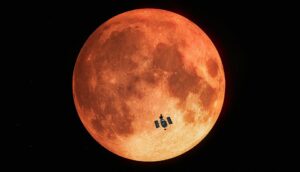
A total lunar eclipse will be observable in Manila and parts of the country for about an hour on March 3, Tuesday, according to the Philippine Atmospheric, Geophysical and Astronomical Services Administration (PAGASA) on Monday.

If skies are clear, the maximum eclipse, or the phenomenon’s peak, is expected at 7:34 pm, PAGASA said in an official statement.

As for the timeline, the Moon will enter totality, or the moment when it is fully covered by Earth’s shadow, at 7:04 pm, remain in the planet’s primary shadow until 8:03 pm, and fully exit the umbral shadow at 9:17 pm.

In Manila, the Moon will rise at 5:58 pm, with the partial eclipse already visible, and will remain eclipsed until it exits the penumbral shadow — the faint outer part of Earth’s shadow — at 10:25 pm.

“The total lunar eclipse is very easy to observe. A modest pair of binoculars will provide an excellent view of the Moon’s surface, but is not required,” PAGASA said in a statement.

It added that, unlike a solar eclipse, a total lunar eclipse is completely safe to observe and does not require any protective eyewear.

A lunar eclipse happens when the Earth passes between the Sun and the Moon, causing the Earth to cast a shadow onto the Moon.

“During the maximum eclipse, the umbral shadow cast by the Earth will obscure 100% of the Moon’s disk,” PAGASA said. It added that the phenomenon is also called a blood moon because it appears red due to the way Earth’s atmosphere filters and scatters sunlight.

The total lunar eclipse will also be completely visible in other regions, including Eastern Asia, Australia, the Central Pacific, and most of the Americas. — Edg Adrian A. Eva

Read More

Previous Post

Robert Carradine, Lizzie Maguire and Revenge of the Nerds star, dies aged 71

Next Post

Commission launches 'BE READY' European Partnership to strengthen pandemic preparedness research ecosystem

Next Post

Commission launches 'BE READY' European Partnership to strengthen pandemic preparedness research ecosystem

ADVERTISEMENT
Facebook Twitter Instagram Youtube LinkedIn

Explore the Geneva Times

  • About us
  • Contact us

Contact us:

editor@thegenevatimes.ch

Visit us

© 2023 -2024 Geneva Times| Desgined & Developed by Immanuel Kolwin

Welcome Back!

Login to your account below

Forgotten Password?

Retrieve your password

Please enter your username or email address to reset your password.

Log In
No Result
View All Result
  • Home
  • Editorial
  • Switzerland
  • Europe
  • International
  • UN
  • Business
  • Sports
  • More
    • Article
    • Tamil

© 2023 -2024 Geneva Times| Desgined & Developed by Immanuel Kolwin