


What does it mean if a politician is called a ‘chorizo’? Who’s a ‘plumber’ in Spanish politics? With corruption on everybody’s lips in Spain, it’s easy to get lost unless you understand the jargon used everywhere from the news to your local bar.
Chiringuito
Most foreigners in Spain might know the word chiringuito as a beach bar.
But it has another meaning in Spain which pays heed to the informal nature of these establishments.
Nowadays, a chiringuito is a derogatory expression used in Spain to refer to state offices or agencies that exist almost exclusively to place friends of important politicians in positions of power and to allow them to collect hefty salaries for often unnecessary work.
In other words, a shady business, a government department born from cronyism, a bunch of cowboys basically.
Example:
La alcaldesa se ha embolsado 10 millones de euros a través de este chiringuito.
The mayor has pocketed €10 million through this shady company.
Sanchismo
Sanchismo has essentially become a catch-all phrase used by the Spanish right to characterise anything they don’t like about Prime Minister Pedro Sánchez’s government or what they perceive to be leftist politics.
The -ismo/a word ending is the Spanish equivalent of using English suffixes like -ism or -ite that are often used in political science as a way of characterising a person or party’s ideological approach. Some common examples of this are Blarite, to refer to the politics of former British Prime Minister Tony Blair, or Trumpism, to refer to the politics of former US President Donald Trump.
Sanchismo — and ending it — is a word that’s been used a lot during the recent corruption scandals.
For his critics, sanchismo is now a synonym for corruption and little else.
Example:
Puede que el sanchismo tenga los días contados con tantos casos de corrupción.
It’s looking like the days of sanchismo are numbered with so much corruption cases.
Mordida
A commonly used way in Spanish to refer to a soborno (bribe), but which also means bite in a more literal sense.
Other close translations include a kickback or backhander, such as in the Santos Cerdán scandal.
Example:
Supuestamente Zapatero cobró medio millón como mordida.
Supposedly Zapatero got half a million as a backhander.
Fontanero
If you’ve kept up with the Leire Díez scandal (yes, another), you might’ve heard the word fontanero/a a fair bit recently.
Fontanero literally means plumber, but used in the political context it refers to the Machiavellian backroom bargaining (and worse) that goes on in high level politics. These policy enforcers or fixers usually undertake internal organisational work, especially internal party discipline and dealing with political attacks and scandals.
Leire Díez was the Socialist’s fontanera and was seen, as fontaneros usually are, as a necessary evil. All parties have fontaneros who work in the shadows, and often they have a bad reputation because they suppress internal dissent and bad coverage but at the same time ensure continuity and keep the party — or government —- on the road.
Example:
Leire Díez niega ser la fontanera del PSOE, dice ser sólo periodista.
Leire Díez denies being the PSOE’s policy enforcer in the shadows, she claims to be just a journalist.
Trama
A plot or conspiracy that generally involves corruption, influence-peddling and embezzlement – a word used in pretty much all of the recent corruption scandals in Spain in recent years.
Example:
Han descubierto una supuesta trama de tráfico de influencias para el rescate de la aerolínea Plus Ultra.
They have uncovered an alleged influence-peddling plot for the bailout of the Plus Ultra airline.
Caso
All of these big tramas or corruption scandals get a nickname in Spain, and the word caso (case) is used to describe them, following by a word related to the plot. There’s the PSOE’s Caso Koldo and Caso ERE, as well as the PP’s Caso Kitchen and Caso Gürtel, to name a few of many.
Example:
Llámalo Caso Koldo, Caso Ábalos o Caso Mascarillas, es corrupción con letras mayúsculas.
Call it the Koldo Affair, the Ábalos Case or the Facemask Scandal – it’s corruption with a capital C.
Sobre
Sobre can mean many different things in Spanish, notably ‘on’ or ‘about’, but in the political corruption context, it means ‘envelopes’ and the dirty money inside them.
During the Ábalos scandal, investigations suggested that sobres of cash were regularly picked up at the Socialist headquarters in Madrid, Ferraz.
Example:
Luis Bárcenas se encargaba de entregar miles de euros en efectivo en sobres a miembros del PP.
Luis Bárcenas was in charge of handing thousands of euros of cash in envelopes to PP members.
¡Y tú más!
The classic Spanish defence against corruption allegations — y tú más! (Literally ‘And you more’).
This is the sort of ‘whataboutery’ that goes on in politics in every country, and in Spain especially between the Socialists and Popular Party whenever each is embroiled in another scandal — such as 2026, in which both parties are currently being investigated for various instances of corruption or influence peddling.
Example:
El PP usa la estrategia del ‘y tú más’ para esquivar preguntas sobre sus propias tramas de corrupción.
The PP uses the whataboutery strategy to distract from its own corruption scandals.
Contratos a dedo
Used to refer to handpicked contracts without any formal tender process and often used in construction corruption cases.
Think of this as a crony contracts where there’s no competitive bidding involved.
Example:
El presidente adjudicó contratos a dedo a las empresas de sus amiguitos.
The president awarded crony contracts to his buddies’ companies.
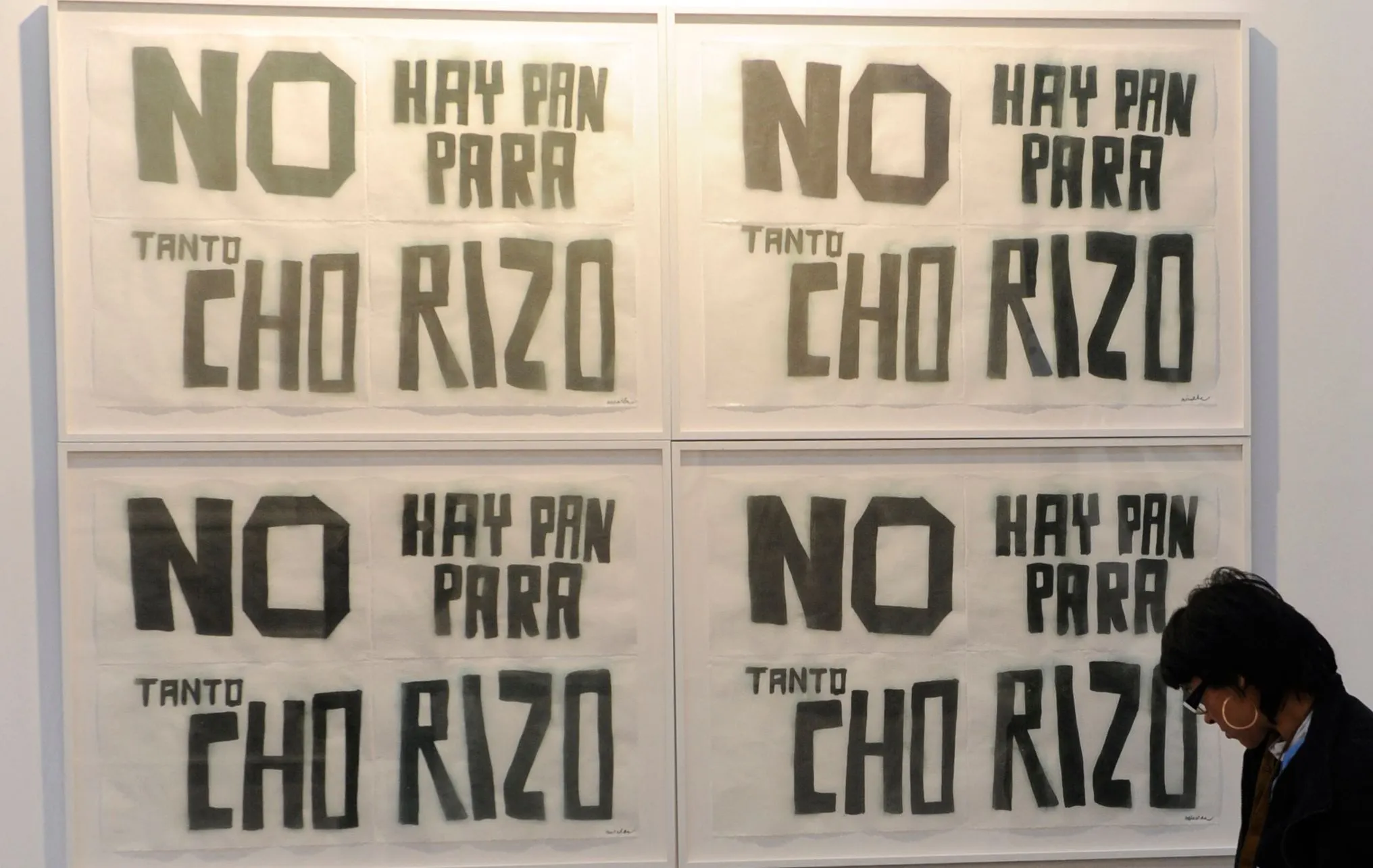
Chorizo
Everyone knows this word refers to Spain’s most famous sausage, the delicious pork product spiced with smoked paprika that is eaten the world over.
But beyond chorizo’s everyday gastronomic use, the word has a more negative meaning – thief – and is hurled as an insult against corrupt politicians or fraudsters.
Examples:
Estos políticos son todos unos chorizos.
All these politicians are a bunch of thieves.


