


Namangan, Uzbekistan – The Third International Maqom Art Forum brought together hundreds of distinguished musicians, scholars, cultural leaders, diplomats, and government officials from around the world in the historic city of Namangan, reaffirming Uzbekistan’s growing role as an international center for the preservation and promotion of traditional music and cultural diplomacy.
Held from June 23 to June 27, the prestigious forum celebrated the rich heritage of maqom—one of the oldest and most sophisticated forms of classical music in the East—while encouraging dialogue between nations through culture and the arts. The event combined concerts, an international competition, scientific conferences, educational masterclasses, exhibitions, and cultural exchanges, transforming Namangan into a meeting place for some of the world’s leading experts and performers of traditional music.
A Presidential Commitment to Culture
The forum officially opened on June 23 in the presence of President Shavkat Mirziyoyev of the Republic of Uzbekistan, who addressed participants during the opening ceremony.
Welcoming distinguished guests, artists, scholars, and representatives of international organizations, President Mirziyoyev described maqom not merely as a musical tradition but as a powerful symbol of humanity’s shared spiritual and cultural heritage.
He stressed that music possesses a unique ability to transcend borders, languages, and political differences, acting as a bridge between civilizations and generations.
According to the President, maqom “serves as a spiritual bridge uniting people’s hearts and paving the way for goodness,” emphasizing that preserving cultural heritage is essential for promoting peace, dialogue, and mutual respect in today’s rapidly changing world.
His remarks reflected Uzbekistan’s broader strategy of investing heavily in culture as an essential component of national development and international cooperation.
What is Maqom?
Maqom is one of the oldest surviving traditions of professional oral classical music in the East. According to UNESCO, it emerged during the Middle Ages and gradually evolved into an extraordinarily sophisticated musical genre combining vocal performance, instrumental music, poetry, philosophy, and improvisation.
Rather than being simply a style of music, maqom represents an entire artistic system, with highly developed melodic structures and centuries-old performance traditions that have been transmitted orally from one generation of musicians to another.
Different variations of maqom exist across Central Asia and the broader Middle East, including Shashmaqom in Uzbekistan and Tajikistan, Mugham in Azerbaijan, Muqam among the Uyghurs, and Dastgah in Iran. Although each tradition has developed its own distinctive characteristics, they all share common historical roots and demonstrate the remarkable cultural exchanges that have shaped the civilizations of the Silk Road for centuries.
Today, many of these traditions are recognized by UNESCO as masterpieces of the Intangible Cultural Heritage of Humanity.
A Truly International Gathering
The Third International Maqom Art Forum attracted participants from more than 80 countries, making it one of the largest cultural events ever organized in Uzbekistan.
Approximately 250 representatives of the cultural and artistic community attended the forum, including internationally renowned musicians, researchers, educators, composers, performers, and policymakers.
The event welcomed senior representatives from several major international organizations, including:
- UNESCO
- ICESCO
- The Commonwealth of Independent States (CIS)
- The Shanghai Cooperation Organization (SCO)
- The Organisation of Turkic States (OTS)
- TURKSOY
- The Parliamentary Assembly of Turkic States (TURKPA)
- The Turkic Culture and Heritage Foundation
Among the honorary guests were:
- Dr. Salim M. AlMalik, Director-General of ICESCO;
- Nosir Hamad Hinzab, Chair of UNESCO’s Executive Board;
- Kubanichbek Omuraliev, Secretary-General of the Organisation of Turkic States;
- Sultan Raev, Secretary-General of TURKSOY;
- Aktoty Raimkulova, President of the Turkic Culture and Heritage Foundation.
The forum also welcomed ministers of culture from numerous countries, including H.E. Adil Karimli, Minister of Culture of the Republic of Azerbaijan, ambassadors accredited to Uzbekistan, directors of cultural institutions, leading academics, and internationally recognized performers.
Former Prime Minister of the Republic of Türkiye and Chairman of the Council of Elders of the Organisation of Turkic States, Binali Yıldırım, was also among the distinguished guests attending the forum.
Celebrating Namangan
During his keynote speech, President Mirziyoyev praised the host city of Namangan, highlighting its economic dynamism, entrepreneurial spirit, and remarkable cultural achievements.
He described Namangan as a city where tradition and modernity coexist, noting its rapid development while emphasizing its enduring role as one of Uzbekistan’s most important cultural centers.
“Namangan deserves special recognition for its entrepreneurial spirit, its prosperous cities and villages, and its achievements in industry, agriculture, science, culture, arts and sports,” the President said.
He also paid tribute to the city’s rich literary heritage, describing Namangan as the birthplace of celebrated poets and intellectuals such as Nodim, Fazliy, Majzub, and Usmon Nosir, whose works continue to inspire generations.
Investing in the Future of Maqom
One of the central themes of President Mirziyoyev’s address was Uzbekistan’s long-term commitment to preserving and developing maqom as an essential element of the country’s cultural identity.
He explained that promoting maqom has become one of the priorities of the cultural policy of New Uzbekistan.
Among the major initiatives announced by the government are the establishment of 21 creative associations dedicated to different artistic disciplines—including maqom—and increased support for artists, researchers, educational institutions, and cultural organizations.
The President also announced the construction of a new Maqom Centre in New Tashkent, envisioned as one of the world’s leading institutions dedicated to traditional Eastern music.
Beyond teaching Uzbek maqom traditions, the academy will also provide education in Arab, Turkish, Persian, Tajik, Indian, and other classical musical traditions, reflecting Uzbekistan’s historical role as a crossroads of civilizations along the Silk Road.
The project aims not only to preserve traditional knowledge but also to encourage intercultural dialogue, academic research, and artistic innovation.
A Vision for Global Cooperation
Perhaps the most ambitious proposal announced during the opening ceremony was President Mirziyoyev’s call to create a unified digital platform dedicated to the world’s classical Eastern musical traditions.
He proposed bringing together maqom, mugham, muqam, dastgah, and related musical traditions into a single digital archive that would preserve manuscripts, recordings, research, and educational materials for future generations.
“The time has come to create a unified digital space dedicated to maqom, mugham, muqam, dastgah and other classical musical traditions of the world,” he declared.
He further invited scholars, musicians, and cultural institutions to collaborate on creating a World Anthology of Maqom, a project that could become one of the most significant international initiatives for safeguarding intangible cultural heritage.
Four Days of Music, Scholarship and Cultural Exchange
Throughout the forum, participants enjoyed an extensive programme featuring gala concerts by internationally acclaimed performers, an international maqom competition, scientific and practical conferences, masterclasses led by renowned musicians, exhibitions, and visits to the historical landmarks of the Namangan region.
The programme encouraged exchanges between artists from different countries, allowing participants to compare performance traditions, share research, and explore new opportunities for international collaboration.
For many young performers, the forum also represented a unique opportunity to learn directly from internationally recognized masters of traditional music.
Honouring Outstanding Performers
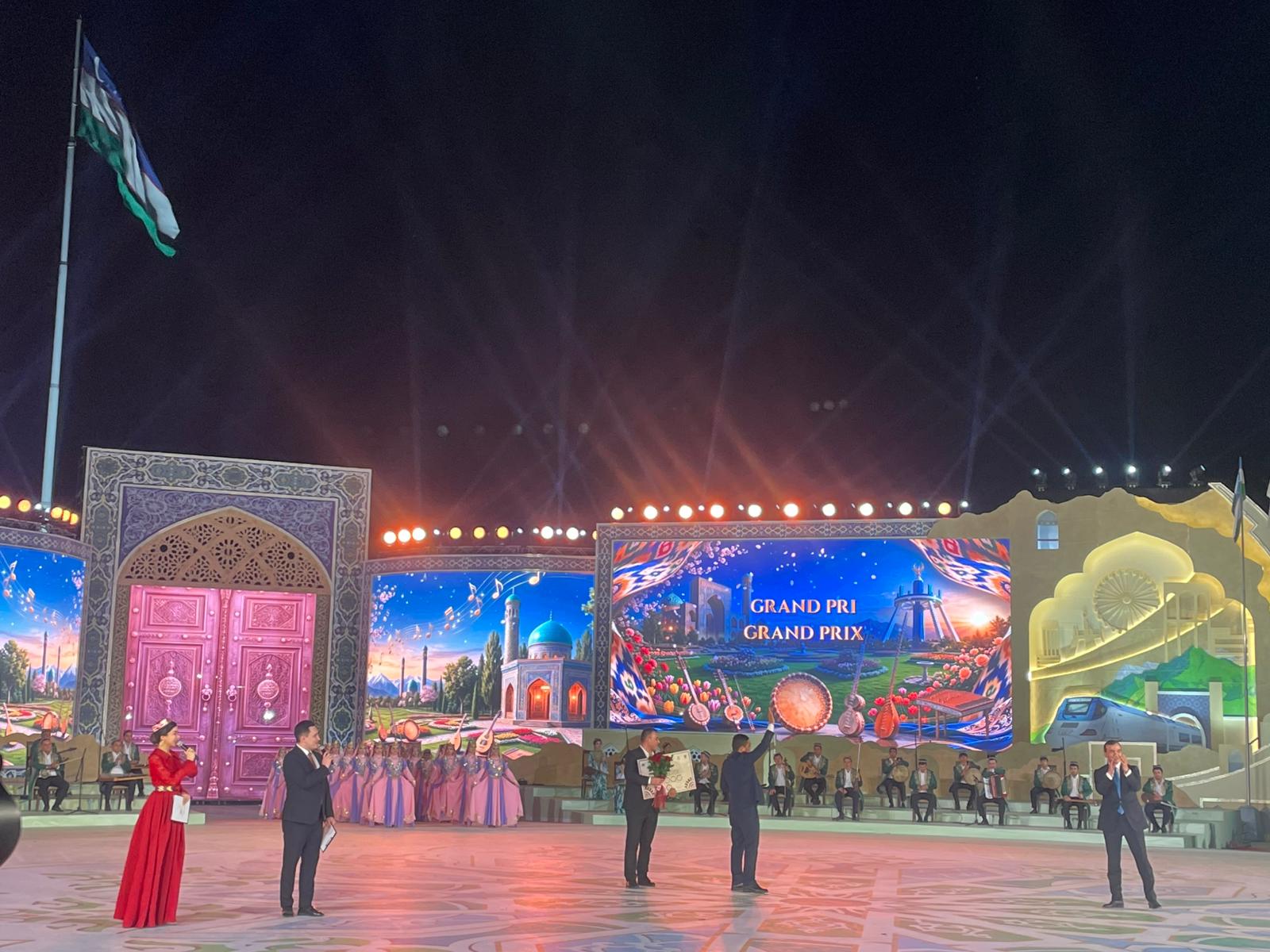
The forum concluded on June 27 with a prestigious award ceremony recognizing the competition’s most outstanding musicians.
The Grand Prix, accompanied by a prize of US$15,000, was awarded to Orif Ergashev of Uzbekistan.
The award was presented by H.E. Ozodbek Nazarbekov, Minister of Culture of Uzbekistan, who is also one of the country’s most celebrated singers and performers.
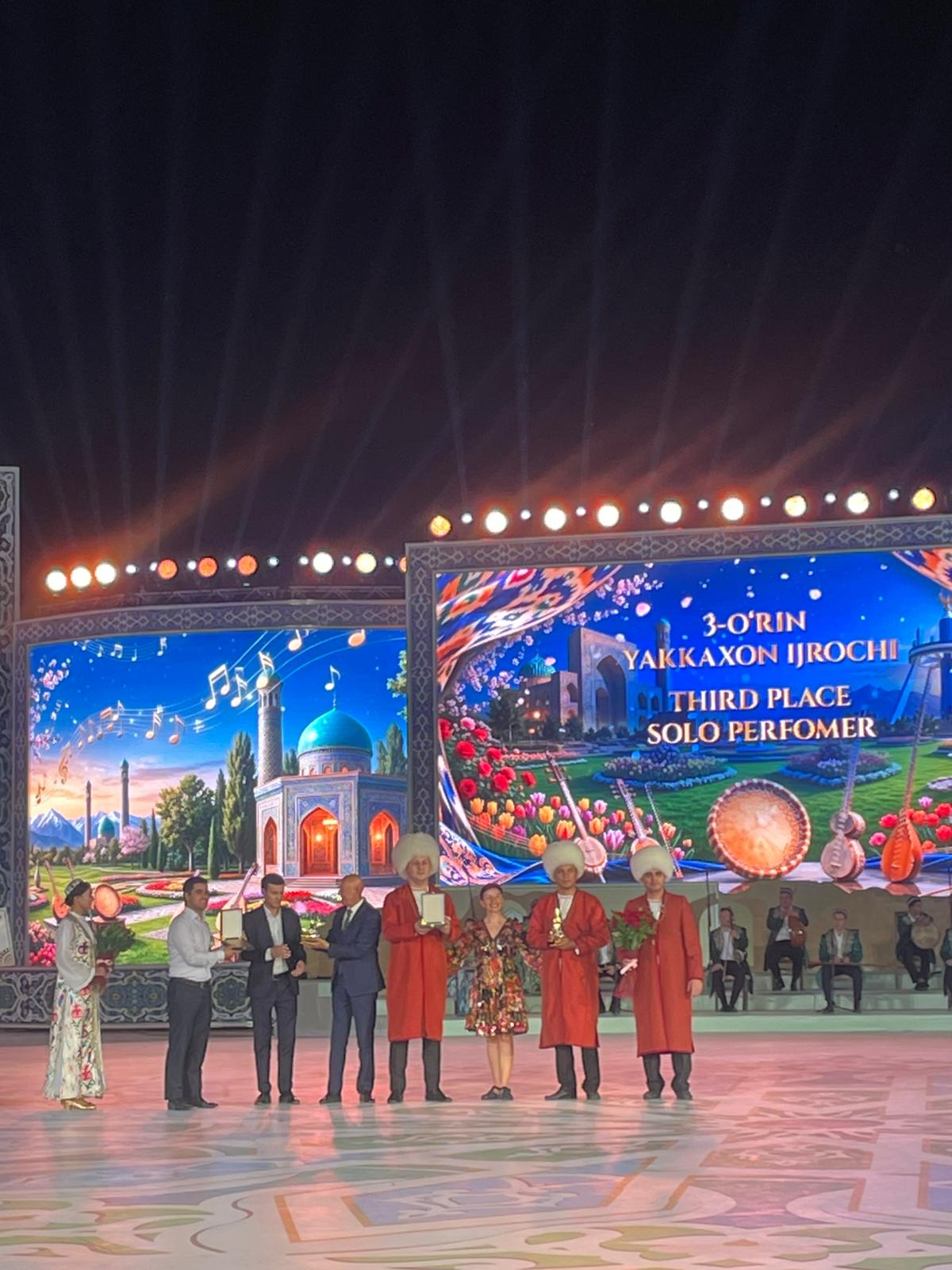
Among the First Prize winners were:
Ensemble Category
- Ensemble of the State Symphony Orchestra of Uzbekistan – US$5,000
- Mugham Ensemble of the Republic of Azerbaijan, represented by Kamila Nabiyeva – US$5,000
Solo Category
- Nuraddin Taghiyev and Teymur Jabrayilov of Azerbaijan – US$5,000
The results reflected the exceptionally high artistic standards demonstrated throughout the competition and highlighted the diversity of classical musical traditions represented at the forum.
The Flower Festival Adds Colour to the Celebration
Coinciding with the Maqom Forum was the internationally renowned 65th Namangan International Flower Festival, one of Uzbekistan’s largest annual cultural celebrations.
The city welcomed hundreds of thousands of visitors, with streets transformed by spectacular floral displays, artistic installations, concerts, and public celebrations.
This year’s edition achieved international recognition after Namangan officially entered the Guinness World Records for the “Most flowers planted by a team in one month,” adding another historic achievement to the city’s growing international reputation.
The simultaneous organization of both events created a unique atmosphere in which music, culture, tourism, and public festivities came together to showcase the best of Uzbekistan.
Looking Towards the Turkic World
While Namangan celebrated maqom, the neighbouring city of Andijan hosted another landmark event, marking its designation as the Tourism Capital of the Turkic World for 2026.
The celebrations brought together senior officials from across the Turkic world, including H.E. Adil Karimli, Minister of Culture of Azerbaijan; Sultan Raev, Secretary-General of TURKSOY; Serdar Çam, Deputy Minister of Culture and Tourism of Türkiye; and numerous government officials, diplomats, and cultural leaders.
The event further demonstrated the growing cooperation among Turkic countries in the fields of culture, tourism, education, and heritage preservation.
Culture as a Bridge Between Nations
Beyond its concerts and competitions, the Third International Maqom Art Forum served as a powerful reminder that culture remains one of the most effective instruments for strengthening international understanding.
By bringing together artists, scholars, and policymakers from across the world, the forum reaffirmed Uzbekistan’s ambition to become a leading global platform for intercultural dialogue and the preservation of intangible cultural heritage.
As participants departed Namangan after four days of performances, discussions, and cultural exchange, one message resonated throughout the forum: the timeless melodies of maqom continue to unite people across borders, proving that music remains a universal language capable of connecting civilizations and inspiring future generations.


