

If you were building an NFL team from the ground up, where would you start?
The obvious answer is “quarterback.” This is a QB-driven league, and the quickest path to a championship is finding a franchise passer.
That’s typically the case, at least. But the 2025 season showed other ways to build a contender. Teams quarterbacked by Patrick Mahomes, Lamar Jackson, Joe Burrow, and Dak Prescott missed the postseason entirely. Josh Allen couldn’t make it past the divisional round, and Justin Herbert was one-and-done. Meanwhile, teams quarterbacked by mid-level guys dominated the postseason.
It’s difficult to win in the NFL without a great quarterback, but teams are learning that it’s equally difficult to win without a dominant unit elsewhere on the depth chart. The Super Bowl champion Seahawks were led, first and foremost, by a dominant defensive line. The play of the Patriots’ secondary offset Drake Maye’s putrid playoff run. And the Broncos rode their elite offensive line to an AFC title berth.
With the 2026 season just a week away, let’s look at the units that could be building blocks for a championship team. We’ll rank the 20 best based on value.
A few notes before we start: These units were ranked based on both depth of talent and positional value. Receivers, tight ends and running backs are grouped together as “skill players.” The “total cost” figures are based on 2026 cap hits and were pulled from Spotrac. With that out of the way, let’s get to the list.
20.

Players: LT Bernhard Raimann, LG Quenton Nelson, C Tanor Bortolini, RG Matt Goncalves, RT Jalen Travis
Total cost: $40.9 million
Quarterback Daniel Jones’ redemption arc and running back Jonathan Taylor’s all-around brilliance stole the spotlight from the engine that powered the Colts’ shockingly good offense in 2025. The right side of the line is a little iffy in pass protection, but Raimann and Nelson form one of the best tackle-guard pairs in the NFL, and Bortolini is a road grader in the run game.
I’m optimistic Indy’s offensive success last season will carry over to 2026 if this line stays healthy.
19.

Players: CB Pat Surtain II, CB Riley Moss, S Talanoa Hufanga, S Brandon Jones, CB Ja’Quan McMillan, CB Jahdae Barron
Total cost: $54.2 million
Ranking the Broncos’ secondary this low may be insulting to Surtain, who’s emerged as the best corner in the NFL. I just don’t trust the rest of the unit.
Moss is better than his numbers show, but playing across from Surtain is a thankless task that comes with a constant barrage of targets. If Moss could be less handsy and draw fewer flags, his coverage stats would look a lot better.
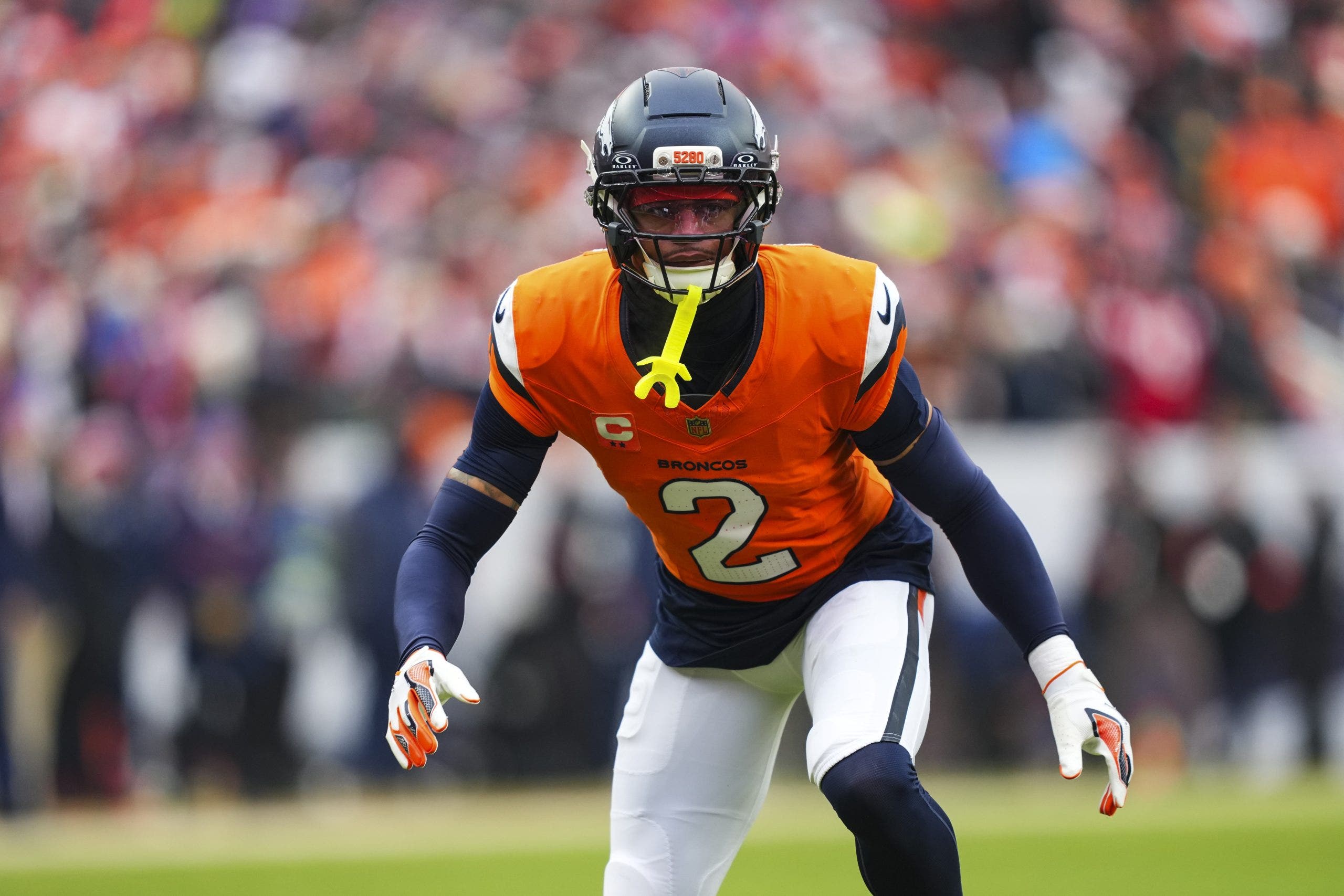
Pat Surtain II won Defensive Player of the Year in 2024. (Photo by Cooper Neill/Getty Images)
18.

Players: RB D’Andre Swift, WR Rome Odunze, WR Luther Burden III, TE Colston Loveland, TE Cole Kmet
Total cost: $43 million
At this time next year, we could be talking about Loveland as the best tight end in the NFL. He was unguardable down the stretch last season and emerged as one of quarterback Caleb Williams’ most trusted targets.
Swift is a flawed running back with suspect vision, but head coach Ben Johnson’s running game gets him into open space where he’s awfully hard to corral. Odunze and Burden are a perfect pair at receiver, with the former offering contested catching ability and the latter providing the big-play threat.
17.

Players: Edge T.J. Watt, Edge Alex Highsmith, Edge Nick Herbig, DT Keeanu Benton, DT Cam Heyward
Total cost: $98.6 million
The Steelers’ defensive line can take over games. Benton and Heyward are immovable objects in the interior, and Watt, Highsmith and Herbig form one of the more productive pass-rushing groups in the NFL. Getting Watt back to his Defensive Player of the Year form would elevate this unit even higher.
16.

Players: LT Alaric Jackson, LG Steve Avila, C Coleman Shelton, RG Kevin Dotson, RT Warren McClendon Jr.
Total cost: $64.7 million
The Rams quietly put together one of the most efficient run games in league history last season, and the offensive line led the way. This unit just mashes defensive fronts and keeps L.A.’s offense moving along four or five yards at a time. Injury is a concern across the front, but McVay and GM Les Snead have fortified the unit with solid depth.
15.

Players: CB Christian Gonzalez, CB Carlton Davis, S Craig Woodson, S Kevin Byard, CB Marcus Jones
Total cost: $52.3 million
The Patriots secondary has a “best in the league” ceiling. Gonzalez can blanket most WR1s and will hold his own with the very best. Woodson, a second-year safety, was one of the best players on the defense throughout the postseason run.
If Davis returns to form and gives New England a second man-to-man corner next to Gonzalez (I’m skeptical), and Byard keeps up his ball-hawking after nabbing seven picks last season (skeptical!), this group will outplay this ranking.
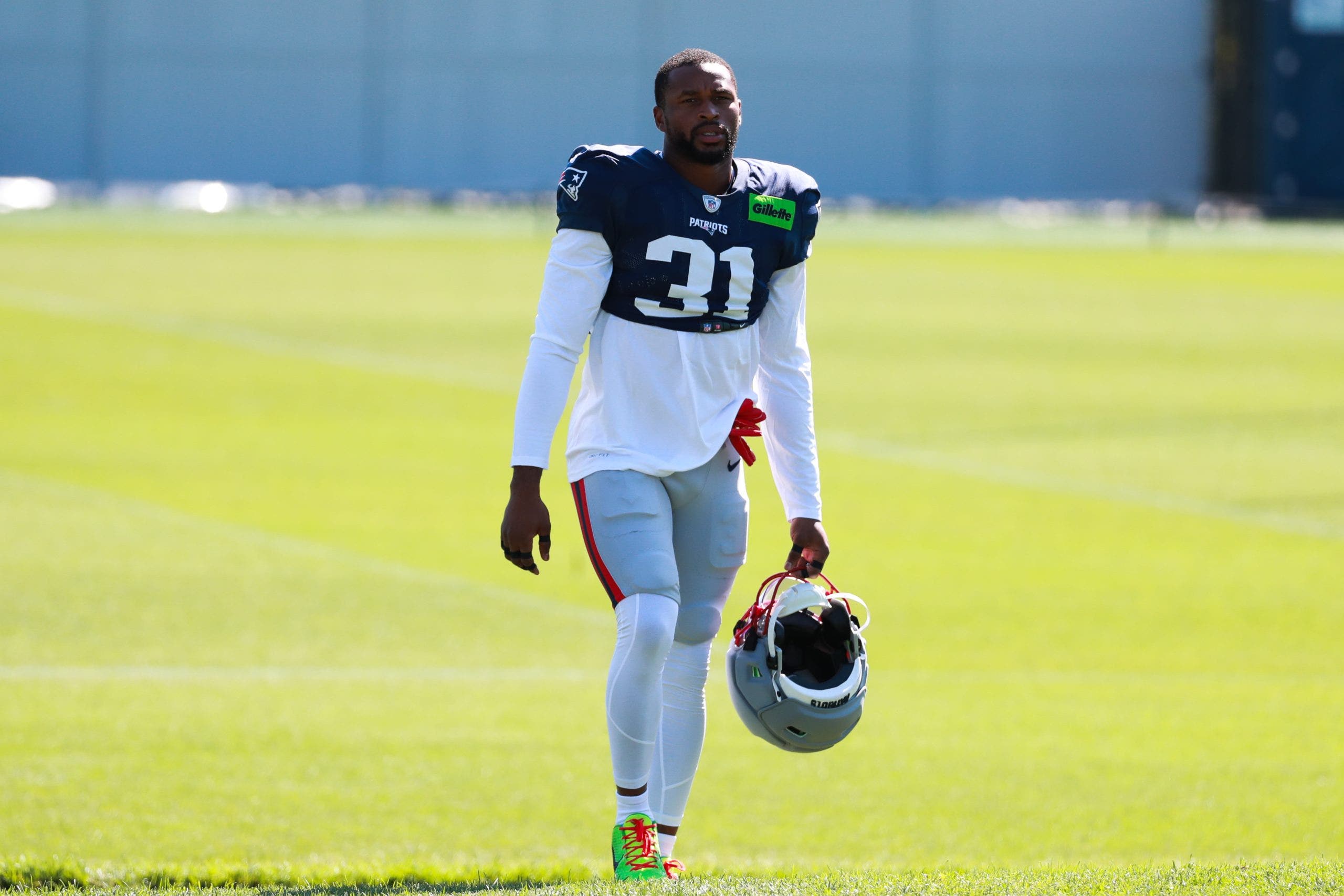
Kevin Byard joined the Patriots this offseason after recording a league-leading seven interceptions with the Bears last offseason. (Photo by Summer Lamont/Icon Sportswire via Getty Images)
14.

Players: CB Quinyon Mitchell, CB Cooper DeJean, S Andrew Mukuba, CB Riq Woolen, S Marcus Epps
Total cost: $20.6 million
The Eagles placing this high is a bet on two things:
1. Mukuba taking a step forward as a deep safety who can drop down and play man coverage when needed. He flashed that ability last season but was inconsistent in the role, as most rookies are.
2. Riq Woolen can fill the hole at the second cornerback spot. He doesn’t have to be a lockdown cover guy to clear that bar. If he makes enough plays when the ball goes his way—which will happen a lot with Mitchell and DeJean on the field – the Eagles will be happy with their offseason addition.
If both of those boxes are checked, Philly’s defense will be even better than it was a year ago.
13.
Players: WR Puka Nacua, WR Davante Adams, RB Kyren Williams, and too many tight ends to count
Total cost: $72.4 million
Let’s put a Myles Garrett-sized asterisk on this one with Nacua facing possible discipline from the league due to off-the-field issues.
On paper, though, the Rams have so many options for Sean McVay to mix and match thanks to his committee of useful tight ends and receivers who are willing to block. Los Angeles had four tight ends go for at least 200 yards last season, and all of them have different skill sets.
For instance, Terrance Ferguson is more of a receiver who just happens to play tight end. The Rams played more 13 personnel (1 RB, 3 TEs) than any team, but when Ferguson was out there, it was essentially 12.5 personnel. McVay could split him out wide and create mismatches against a linebacker if teams put their base defense on the field. If defenses put an extra defensive back out there, L.A. would just bludgeon them with the run.
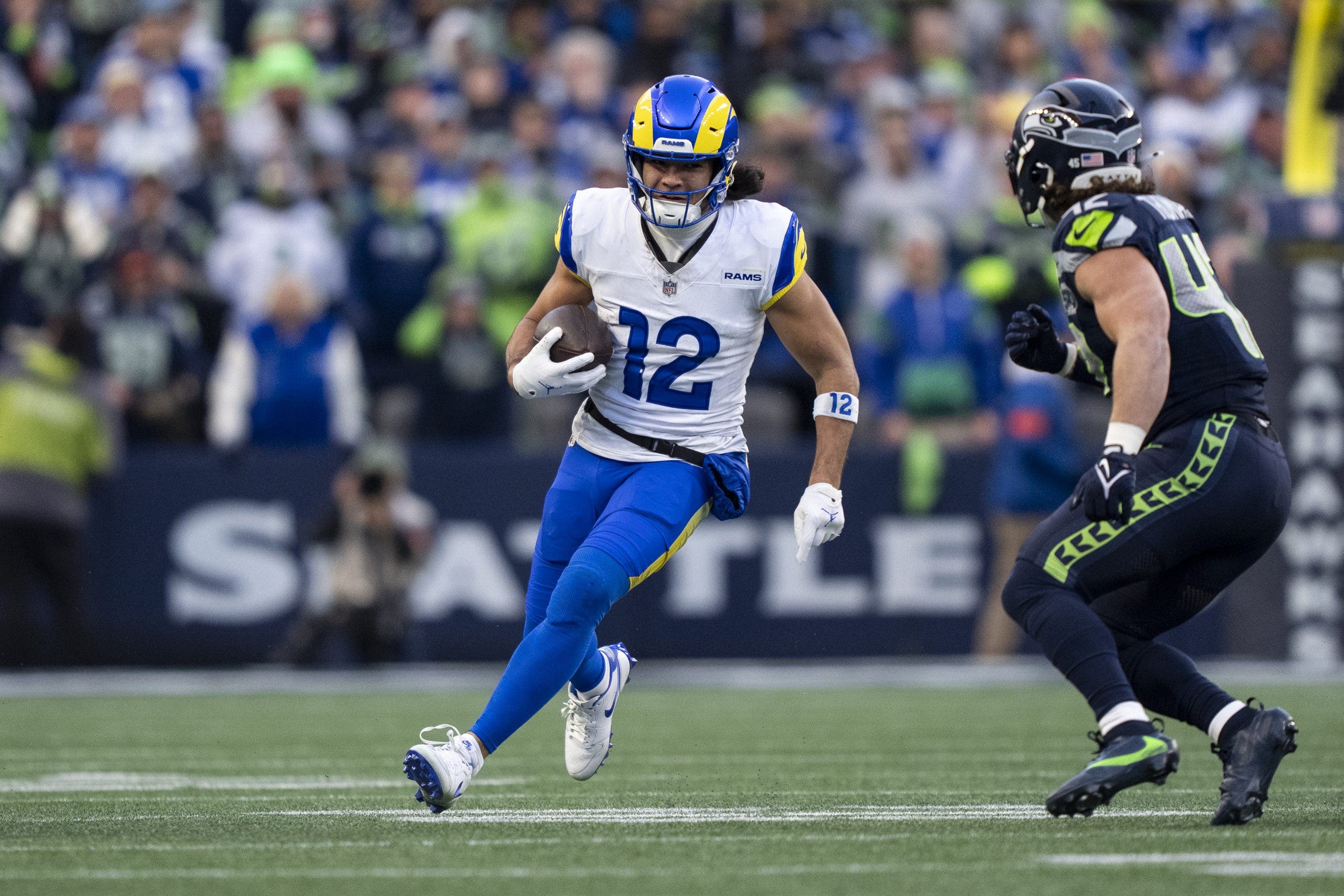
Puka Nacua was second in the league in receiving yards this past season. (Photo by Michael Owens/Getty Images)
12..

Players: CB Derek Stingley Jr., CB Kamari Lassiter, CB Jalen Pitre, S Calen Bullock, S Reed Blakenship
Total cost: $35.1 million
Every player in Houston’s secondary can cover, but it’s their desire to hit anything that moves that makes them special. Lassiter and Pitre would take a speeding bus head-on, which helps the Texans play lighter bodies even on run downs. Stingley is an eraser on the outside, and Bullock owns the deep middle.
11.

Players: WR Justin Jefferson, WR Jordan Addison, TE T.J. Hockenson, RB Aaron Jones, WR Jauan Jennings
Total cost: $85.2 million
Jennings was the missing piece for the Vikings receiving corps. Jefferson and Addison can strike for an explosive play at any time, but Minnesota was missing a pass catcher who could do the dirty work over the middle of the field when Jefferson is doubled. Jennings mastered that role in San Francisco.
10.

Players: RB Jahmyr Gibbs, WR Amon-Ra St. Brown, WR Jameson Williams, TE Sam LaPorta
Total cost: $70.5 million
Gibbs and Williams are the fastest pair of teammates in the NFL. If they touch open grass with the ball in their hands, it’s six for Detroit. In St. Brown and LaPorta, Goff has two reliable chain movers who keep the offense on schedule in between the Gibbs and Williams fireworks.
9.

Players: LT Dion Dawkins, RG O’Cyrus Torrence, RT Spencer Brown, C Connor McGovern, LG Alec Anderson
Total cost: $50.7 million
The Bills offensive line is solid in pass protection, but it’s their work in the run game that lands them on this list. These guys are bulldozers in human form.
New head coach Joe Brady, who served as offensive coordinator before getting a promotion this offseason, has built Buffalo’s offensive identity around his offensive line’s ability to move bodies. The powerful run game keeps Josh Allen out of too many obvious passing situations.
8.

Players: WR CeeDee Lamb, WR George Pickens, RB Javonte Williams, TE Jake Ferguson, WR Ryan Flournoy
Total cost: $75.1 million
Pickens was everything the Cowboys needed him to be: a playmaker in the deep and intermediate areas of the field and a ball-winner on the outside. His presence made it harder to throw extra bodies at Lamb, who’s become one of the league’s elite possession receivers. Ferguson has become Dak Prescott’s go-to guy for his trademark throws up the seam.
7.
Players: RT Lane Johnson, LT Jordan Mailata, LG Landon Dickerson, C Cam Jurgens, RG Tyler Steen
Total cost: $60.8 million
This ranking is either too high or too low. The best version of the Eagles offensive line – the version that led Philly to a Super Bowl in 2024 – would land significantly higher on this list. But that’s not the version we saw last season, with injuries affecting Dickerson, Jurgens and Johnson. Steen was a liability, as expected. Mailata is still one of the best left tackles in the sport, but he’s getting up there in age.
Still, this is a very strong unit. It will have to prove it’s still elite after a down year – and do so without Hall-of-Fame offensive line coach Jeff Stoutland.
6.
Players: LT Tristan Wirfs, RT Luke Goedeke, C Graham Barton, RG Cody Mauch, LG Ben Bredeson
Total cost: $66.4 million
The value of the Bucs offensive line was apparent last season. Eight offensive linemen played at least 250 snaps in 2025, per FTN’s Football Almanac 2026. Barton, arguably the weakest member of the group, was the only starter to play the full slate. With the offensive line in shambles, the offense imploded. But with everyone back and healthy for 2026, this unit will show why it’s one of the best in the NFL.
5.

Players: DT/DE Leonard Williams, DT Byron Murphy II, Edge Demarcus Lawrence, Edge Jarran Reed, Edge Dante Fowler Jr.
Total cost: $79.5 million
Mike Macdonald put Seattle’s defensive success in simple terms: “If you can defend the run [with two safeties deep], that’s high-powered stuff. It’s not easy to do. There’s a lot of stress on the interior of your defense and on your edge … if you can do it, it just gives you such an advantage.”
Thanks to this defensive line, MacDonald gets free access to that high-powered stuff. Williams, Murphy, and Williams can blow up run games on their own, so Seattle rarely has to load the box on early downs. That takes stress off the players responsible for pass coverage and makes their jobs a lot easier.
4.

Players: WR Ja’Marr Chase, WR Tee Higgins, RB Chase Brown, WR Andrei Iosivas, TE Mike Gesicki
Total cost: $78.9 million
Chase is the best receiver in the game, and Higgins might be the NFL’s best No. 2. There’s a reason why Burrow was begging his front office to pay both of them. Both receivers can dictate coverages and pull attention away from their less talented colleagues, giving Burrow plenty of options on every single dropback. Throw in Brown, who’s become one of the league’s most consistent backs, and you get a skill group worth nearly $80 million in cap hits this season.
3.
Players: LT Garett Bolles, RG Quinn Meinerz, LG Ben Powers, RT Mike McGlinchey, C Luke Wattenberg
Total cost: $65.5 million
With the Eagles taking a step back last season, it’s time we pass the “best OL in the league” title off to a new line. The Broncos are my pick for the honor.
These guys can move bodies in the run game, and they keep quarterback Bo Nix in pristine pockets. Bolles and Meinerz are the stars, but there are no weak links.
2.
Players: Edge Will Anderson Jr., Edge Danielle Hunter, DT Tommy Togiai, DT Sheldon Rankins
Total cost: $49.8 million
Playing against the Texans’ defense just looks painful, and the first wave of punishment comes from the front four.
Anderson and Hunter don’t defend the edges; they demolish them, like two Kaiju thrashing through a city. They will eventually blow up a run play on early downs, put the offense in a passing situation, and let their two pass-rushing monsters go to town.
1.
Players: Edge Myles Garrett, DT Aaron Donald, Edge Byron Young, DT Braden Fiske, DT Kobie Turner, DT Poona Ford
Total cost: $61.8 million
The Rams may have topped this list before Donald came out of retirement and ruined every offensive line coach’s weekend.
Even if Darnold is a non-factor, there’s plenty of depth behind Garrett with Fiske, Turner and Ford clogging up interior run gaps on early downs, and Young providing more pass rush juice on third down. This unit will be a nightmare to contend with in any scenario.
