

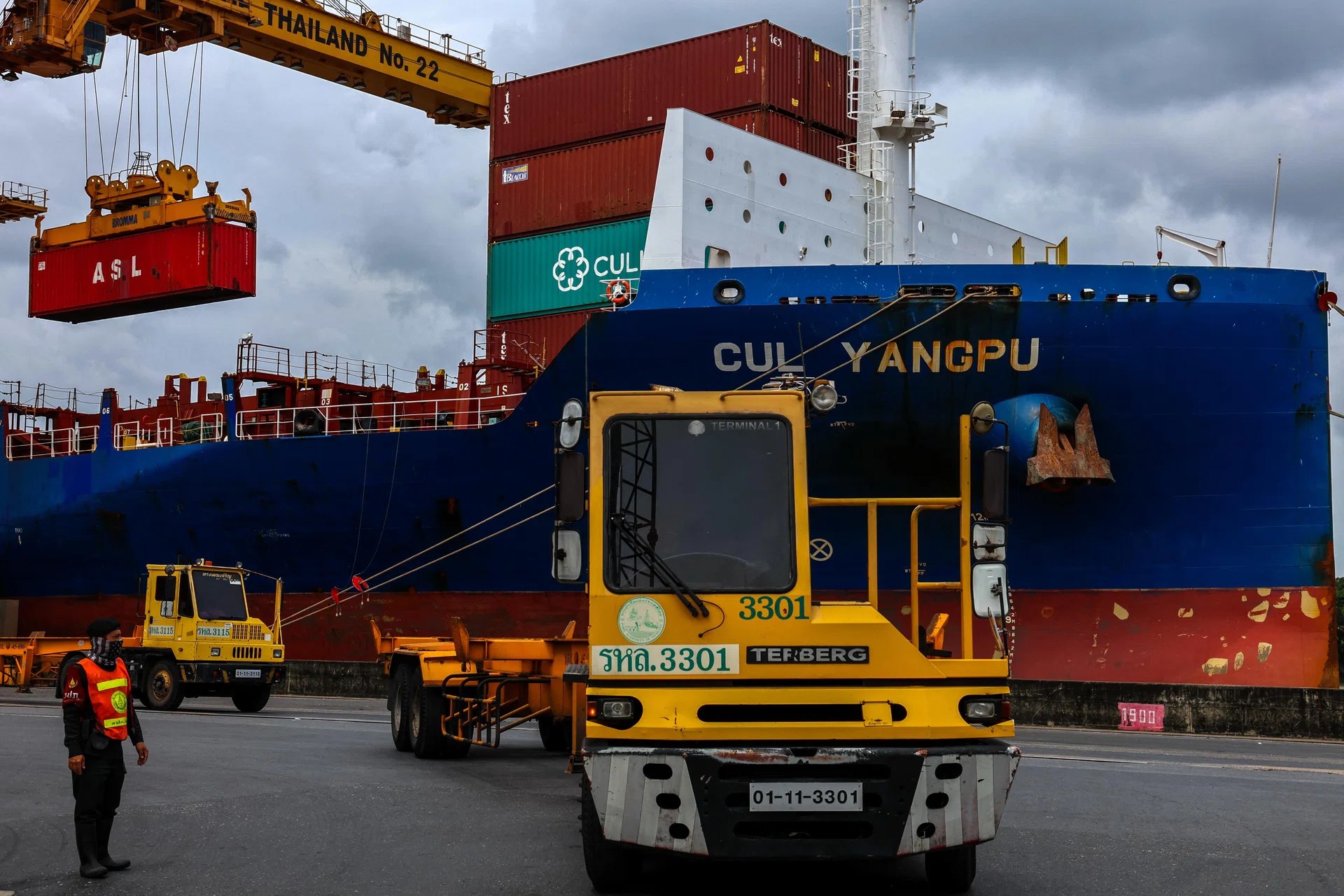
Thailand’s August exports grew 5.8%, the slowest in nearly a year, due to a stronger baht and U.S. tariffs. The ministry maintains a 2-3% export growth forecast for 2023. Officials remain cautious, citing global economic uncertainties and potential disruptions in key markets. Efforts to diversify export destinations and promote high-value goods are underway to counterbalance these challenges.
Key Points
- Thailand’s exports grew 5.8% in August year-on-year, the slowest increase in nearly a year, influenced by a stronger baht and U.S. tariffs. The growth fell short of analysts’ expectations, which forecasted 9.5%.
- Export growth to the U.S. remains solid at 12.8%, but is expected to decelerate in the coming months due to a 19% tariff on Thai goods.
- The commerce ministry upholds its forecast for 2-3% export growth this year, despite increased imports and a resulting trade deficit of $1.96 billion in August, particularly noting a significant drop in rice exports.
Thailand’s Export Growth Slows Amid US Tariff Pressures
Thailand’s export growth has significantly decelerated, hampered by the ongoing impact of U.S. tariffs and sluggish global demand. The country’s Ministry of Commerce reported that exports rose just 3.1% year-on-year in August, a stark contrast to a 10.5% increase recorded earlier in the year.
The slowdown reflects broader trends affecting Southeast Asia’s economic landscape. Analysts attribute the decline to heightened tariffs on key Thai products, including electronics and agricultural goods, imposed during ongoing trade tensions between the U.S. and China. The Thai economy heavily depends on exports, which constitute about 60% of its GDP. As global trade dynamics shift, businesses are feeling increased pressure to adapt.
In a bid to mitigate these challenges, Thailand is exploring new trade agreements with countries in Asia and Europe, aiming to reduce dependence on any single market. Officials have also emphasized the importance of stimulating domestic consumption as a buffer against external shocks.
As Thailand navigates these turbulent waters, the government remains optimistic. “We believe that strengthening our production capabilities and global partnerships will help us weather these challenges,” said Minister of Commerce Jurin Laksanawisit.
While the long-term outlook remains uncertain, the current export slowdown highlights the intricate connections of global trade and the vulnerabilities faced by countries reliant on international markets.
Sources: Thai Ministry of Commerce


