

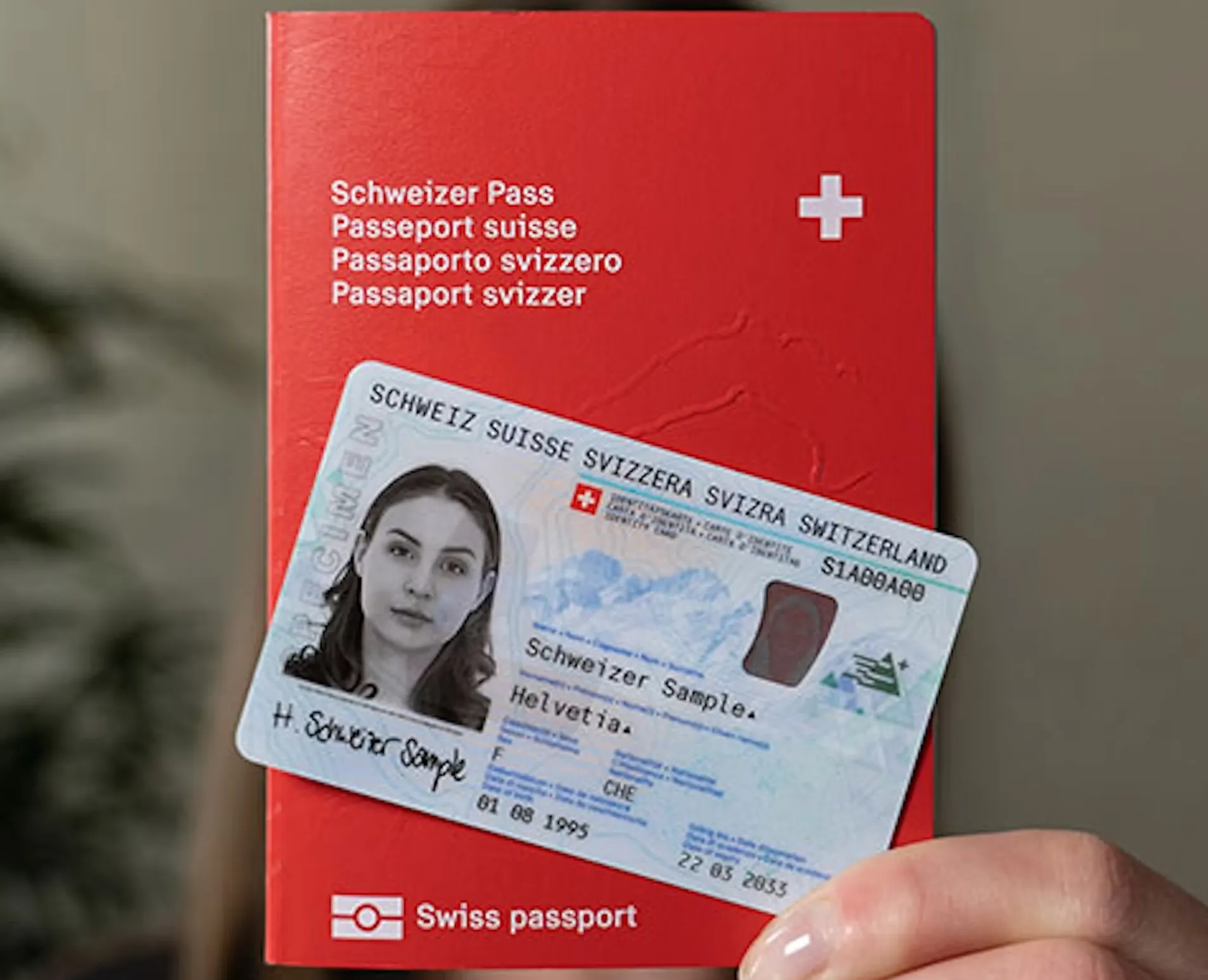
The Swiss government has adopted the necessary legal framework for the introduction of a new biometric ID card in November.
“From November 2nd, 2026, Swiss citizens who wish to do so will be able to order the new card,” the Federal Police (Fedpol) announced on August 26th.
“Like the Swiss biometric passport, the new card will be equipped with a chip containing an image of the face and two fingerprints. It will thus offer reinforced protection against abuse,” Fedpol added.
In line with European requirements
Fedpol explained that since 2021, for security reasons, European Union countries have only issued biometric identity cards.
“The new Swiss identity card ensures that Swiss citizens will continue to move freely within the EU in the future,” the federal police said, emphasising, however, that “non-biometric identity cards issued before the introduction of the new biometric identity card can be used for travel within the EU until their expiry date.”
Furthermore, there will be no obligation to replace current cards with new biometric ones
“Citizens will be able to choose between the two identity cards, biometric and non-biometric, in the future. This choice belongs to citizens and depends on their needs.”
What does this mean?
According to the government, if you travel within the European Union states, a biometric identity card is recommended.
“But for those using the card solely as identification in Switzerland, the non-biometric identity card is sufficient.”
Is the new card and the digital ID one and the same?
No, the two are totally different.
As Fedpol explained it, “the biometric card is an official identity and travel document. The e-ID, for its part, will ultimately [once introduced at a future date] allow you to prove your identity online, but cannot be used as a travel document.”
You can apply for the new ID card (only if you are a Swiss citizen – including dual nationals) at your cantonal passport office.
READ ALSO: Why the introduction of Switzerland’s e-ID is being delayed
