


Patrick Andres at his home in Fribourg. Like many Swiss homeowners, he has considered switching to solar energy, but uncertainty around costs and incentives has slowed the decision.
Patrick Andres
As the Iran war pushes up fuel costs, households across Europe are turning to solar panels, heat pumps and electric cars. In Switzerland, residents face hurdles on the path to renewable energy.

For years, Patrick Andres and his partner had been thinking about putting solar panels on their house in the canton of Fribourg. Generating their own electricity would save money, and it would help them reach their goal of net zero emissions. This year, they decided to book the installation.
“It wasn’t really because of the Iran crisis,” Andres says. “But now, with the current prices and cheaper batteries, it really started to make sense.”
Across Europe and the world, many households are making a similar choice. Faced with yet another energy crisis, people who had been on the verge of switching to renewables are taking the plunge. Demand for solar panels, heat pumps and electric vehicles has surged, with some markets in Europe seeing increases of 80%External link or more in recent weeks.
But in Switzerland, action has been muted. Solar companies say they have not seen an increase in demand this year. EV sales are about the same as they were four years ago. And heat pump installations saw a sharp decline in 2024-2025, with 2026 data showing only modest growth, far from the surge External linkreported in other European markets.
This is not a sign that Swiss residents reject renewables. Utilities say customers are curious about green energy, but they hesitate to make big decisions.
“There is a clear gap between interest and implementation,” says communication manager Manfred Joss from BKW, one of Switzerland’s biggest energy companies.
For many Swiss households, the issue is incentives, or the lack there of. Government incentives to adopt renewables – such as tax deductions – are largely decentralized.
Some cantons, for example, offer grants for installing heat pumps, but these vary based on location and what kind of system homeowners buy. Switzerland is also set to abolish most tax deductions for renovations to property, meaning homeowners have a limited window to invest before the new rules take effect in 2029External link.
There are no federal subsidies to purchase electric vehicles, and Switzerland ended its EV import tax exemption in 2024. Most incentives now come in the form of cantonal tax reductions.
Industry representatives say policy changes, uncertainty about future incentives, and ongoing debates about the future role of nuclear energy in Switzerland have sent mixed signals to investors and homeowners, complicating long-term decisions and slowing the shift towards heat pumps or other renewables.
In Germany and France, meanwhile, grants and low-interest loans have significantly reduced the upfront cost of installing heat pumps and solar panels, while the United Kingdom combines targeted subsidies with regulatory schemes to support household adoption of renewable energy. In the Nordic countries, incentives are even more structural: Norway has made electric vehicles highly competitive through tax exemptions and perks, and Denmark uses a combination of registration taxes and energy policies to tilt the market toward electric mobility.
But in Switzerland, people like Andres find that their personal desire to go green clashes with regulatory red tape and unclear options.
“Every offer was different, subsidies depend on the canton, and the rules keep changing,” Andres says. “You’re always wondering if you’re making the wrong decision.”
More

More
I went solar in Switzerland – I now know why many people don’t
Europe surges ahead, Switzerland lags behind
The conflict in Iran is just the latest catalyst to drive installations of solar power in Europe. The Covid-19 pandemic and the energy crisis triggered by Russia’s invasion of Ukraine led to spikes over the last several years. But in Switzerland, installations have slowed in recent years.
Data from Swissolar and CKW AG, another of Switzerlands biggest energy providers shows that applications for new solar installations has begun to fall from its peak after Russia’s invasion of Ukraine.
Elsewhere, however, installations are climbing. Around 6,100 heat pumps were sold in Switzerland in the first quarter of 2026, an increase of about 9% compared with the same period last year, but far from the rapid surge seen during the energy crisis following Russia’s invasion of Ukraine, where sales increased by 25%. Experts estimate that Switzerland needs to install around 60,000 heat pumps per year on average to reach its 2050 climate targets. The required pace will increase over time, starting closer to 40,000–50,000 installations per year and rising further as older systems need replacing.
In the United Kingdom , energy supplier Octopus Energy reportsExternal link that solar system sales rose by around 80% in March, new electric vehicle leases increased by more than 85%, and heat pump orders nearly doubled. Other providers report similar trends, with some recording a surge of more than 250% in solar inquiries.
In Germany, energy provider E.ON says demand for rooftop solarExternal link installations has roughly doubled since the outbreak of the conflict in Iran. In the Netherlands, installers report being overwhelmed by demand for solar panels, heat pumps and home batteries, with some seeing short-term spikes of up to 100% compared with levels from before the current energy crisis.
Slow progress on electric cars in Switzerland
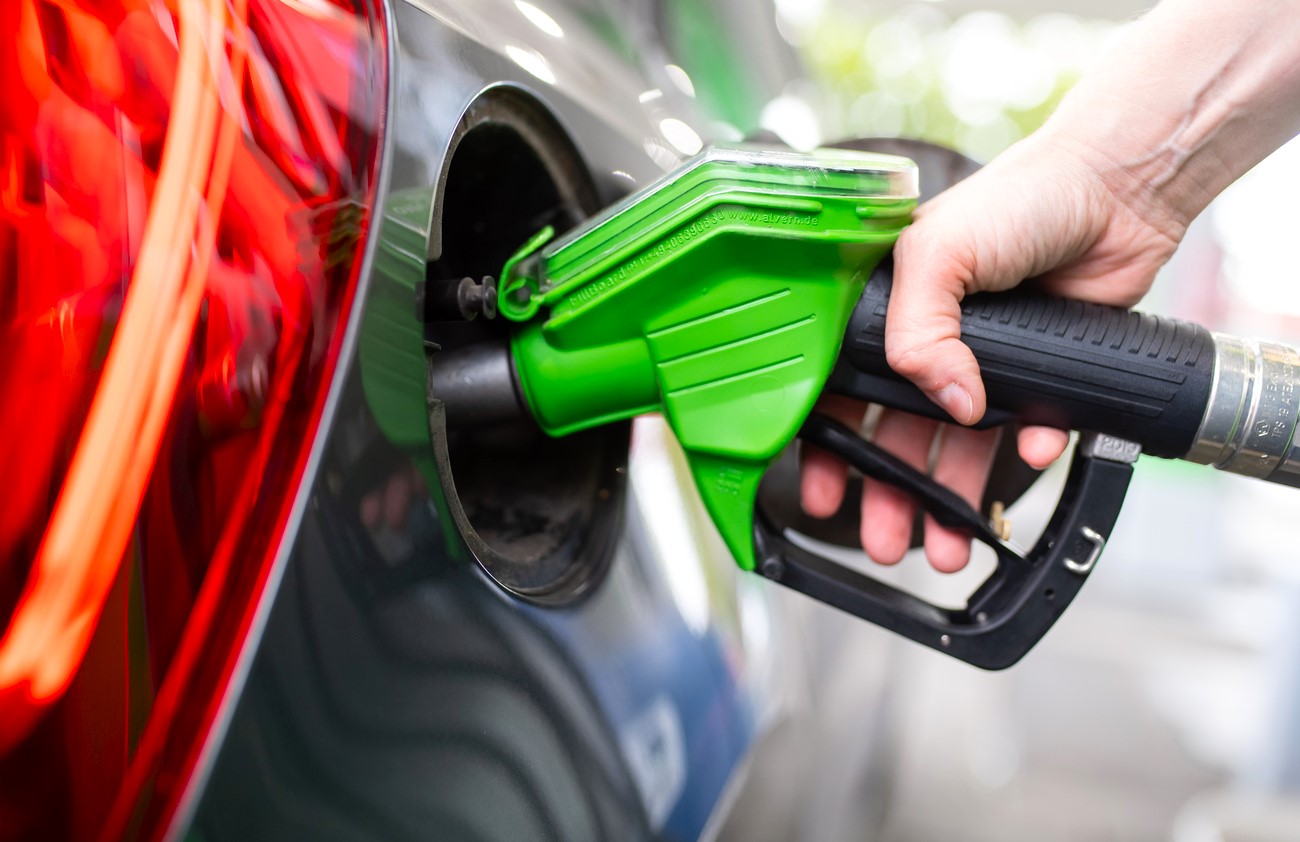
The steepest, most visible effect of the Middle Eastern conflict has been at the gas pump, where prices are rising sharply, strengthening the economic case for electric vehicles.
In Germany, registrations of battery-electric vehicles in March was 60% higher than it was in March of the previous year. Also in March, electric vehicles accounted for 98% of new car sales in Norway, 77% in Denmark and 50% in Finland. In Switzerland, the share reached 23.2%.
This gap between Switzerland other countries is relatively new. As recently as 2022, Denmark and Switzerland were at roughly the same point, with electric vehicles accounting for around 20% of new car sales. For this year, the share exceeds 80% in Denmark, while in Switzerland, it remains relatively the same as it was, just above 21%.
Part of the difference lies in how policy shapes the economics of switching. In countries such as Denmark and Norway, tax systems and incentives have shifted the relative price of electric cars to the point where they are often competitive with, or cheaper than, comparable petrol models.
In Switzerland, incentives are far more limited. With no federal subsidy and incentives changing canton-to-canton, EVs are often more expensive than gas-powered cars. The main financial benefit, then, is the operating costs.
“In the short term, rising petrol prices may change behaviour,” says Vincent Kaufmann, associate professor at EPFL. “But structural changes take longer.”
Many Swiss households are adapting to electric vehicles, but slowly. Hybrid vehicles account for a larger share of new car sales than fully electric models, suggesting that consumers are reducing fuel dependence without taking the final step.
More
More
US oil buoys Swiss fossil fuel needs amid Middle East conflict
A shift driven by calculation, not urgency
As the effects of climate change and global energy shocks continue to mount, lawmakers are considering how to respond.
The Swiss Green Party has called for a faster phase-out of fossil fuels, warning that they continue to fuel global conflicts. Politicians from the Green Liberal Party and the Centre have similarly emphasized the need to reduce dependance on energy imports, calling for greater investment in solar energy, grid infrastructure and storage capacity.
The Free Democratic Party (FDP) has pushed for fewer administrative barriers and stronger incentives for private investment in renewables. This includes simplifying approval procedures for solar and wind projects, improving planning certainty for investors and relying more on market signals such as energy prices to drive adoption, rather than expanding state subsidy programmes.
More broadly, analysts say the Iran crisis is reinforcing concerns about energy security and dependence on imports, strengthening the case for renewable energy on the national level, too.
“In the medium and long term, it will accelerate electrification and strengthen the shift towards public transport,” Kaufmann says of the conflict.
Edited by Gabe Bullard/gw


