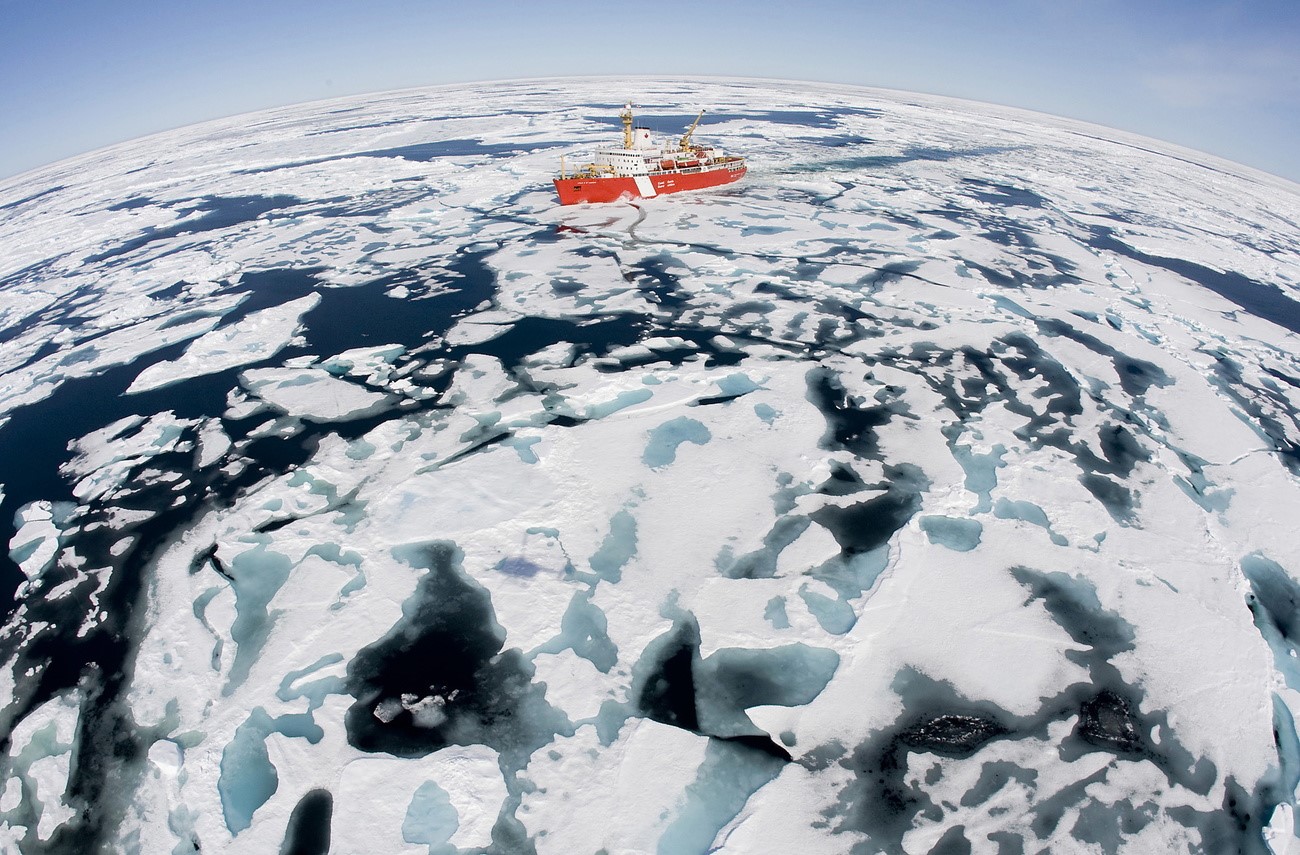
The waters off Djibouti are a maritime hub – and their surveillance is correspondingly international: members of the Spanish navy during an exercise together with Djiboutian authorities.
U.S. Army National Guard Spc. Emily Held / Alamy Stock Photo
The strategic importance of the Gulf of Aden is growing. Switzerland has real interests there, but not much in the way of political influence. It is trying to gain some by being a good neighbour – such as helping with coral reefs.
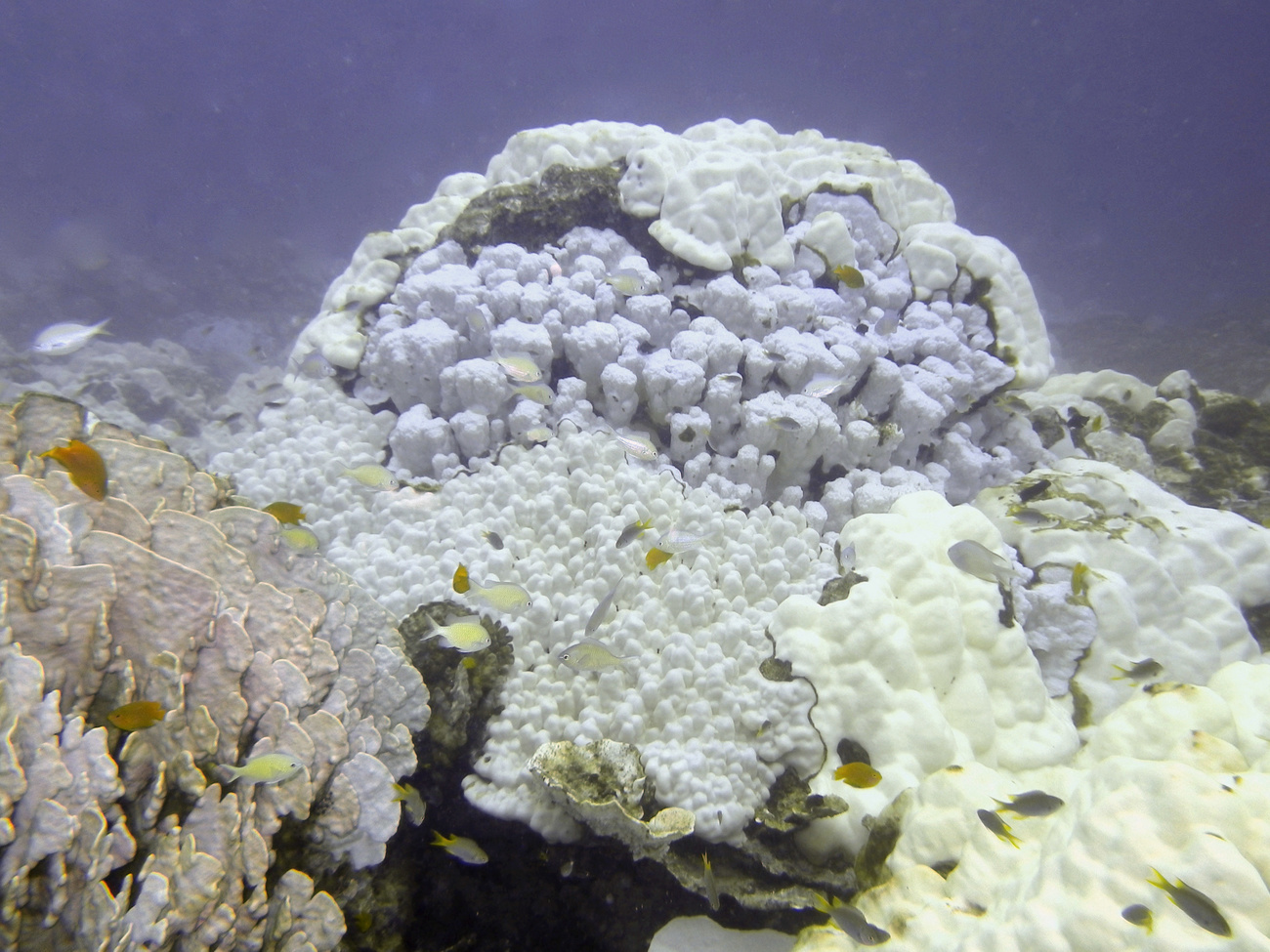
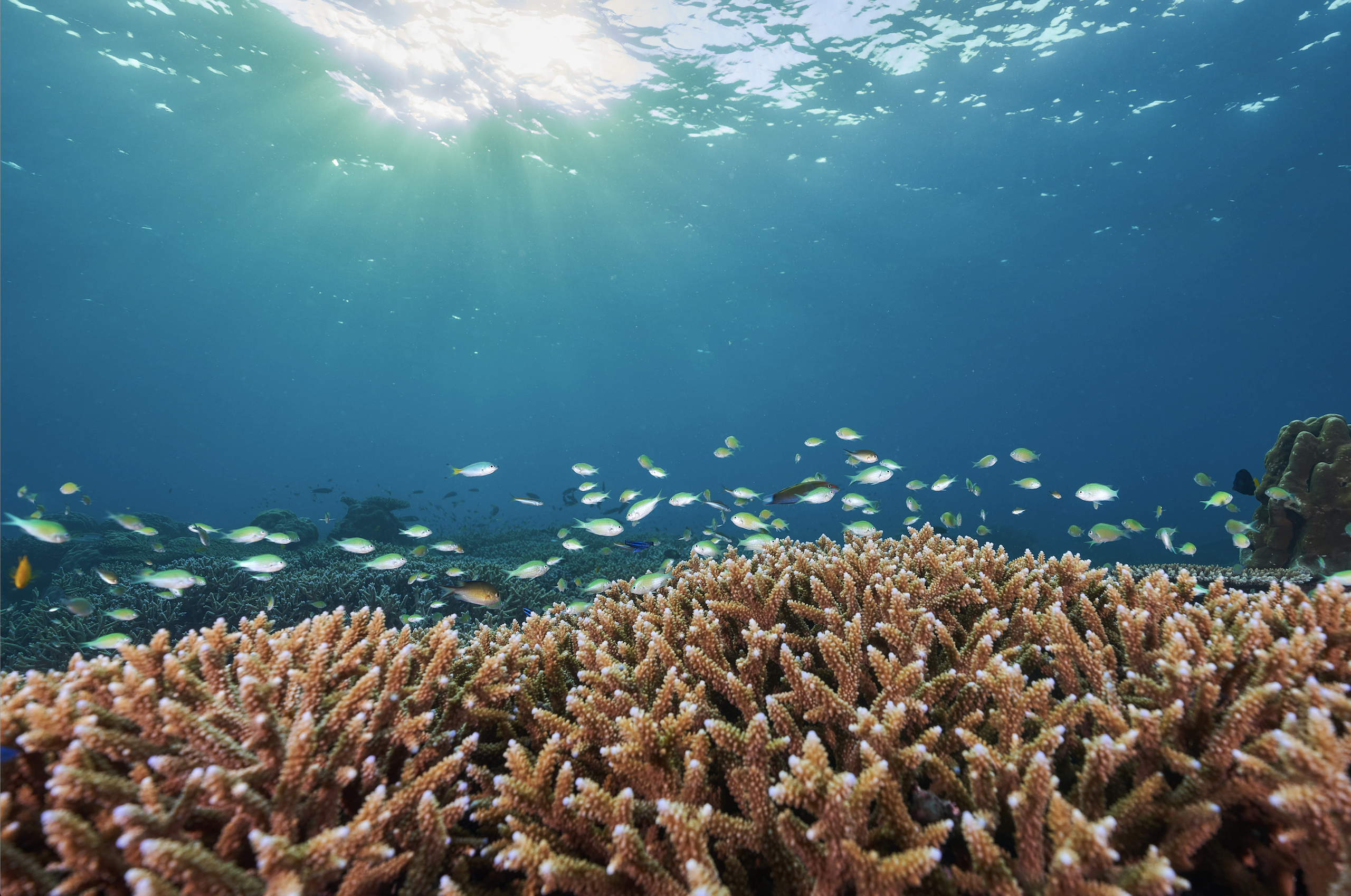
Nowhere in the world are there such beautiful coral reefs as off the coast of Djibouti, a small state on the Horn of Africa, at the southern end of the Red Sea. Here on the Gulf of Tadjoura dark volcanic mountains rise into the air, and only the odd sailboat is to be seen out on the sea. But under water there is a wonderful world to be explored. The coral reefs in shimmering shapes and colours host an amazing wealth of natural life.
Two years ago this submarine world was the object of a scientific expedition in which Switzerland took part. Diving and taking samples of the unique vegetation has kept researchers from several countries busy. The samples are now being studied by the Transnational Red Sea CenterExternal link at the Swiss Federal Institute of Technology Lausanne (EPFL).
Using DNA analysis, the researchers are seeking to understand the biological process of Djibouti’s coral reefs a bit better. They seem to be more resistant to the adverse effects of climate change than reefs in other parts of the world. This autumn, photos from the scientific expedition, which will continue on into 2025, could be seen at an openExternal link-air exhibition in Geneva.
More
More
Diplomatic ecosystem aims to save Red Sea corals
Science with a diplomatic purpose
For Switzerland, participation in the project is not just a matter of altruism. The Transnational Red Sea Center, which was launched in 2019 and is funded by the Swiss foreign ministry, has a further dimension. It involves a now well-established strategy in Swiss foreign policy: linking science and diplomacy so as to build bridges and make useful contacts in a fragile political environment. Foreign Minister Ignazio Cassis explained this strategy in an article for SWI swissinfo.ch published in 2019.
For even apart from the coral reefs, the Red Sea region with its many tensions could have geopolitical strategic importance in the future, according to Ali Miganeh Hadi, a researcher in maritime and geopolitical issues at the University of Djibouti. In autumn he spoke to SWI swissinfo.ch at an international five-star hotel in the capital city of Djibouti from which the tall cranes in the port were visible.
Djibouti, which hosts the largest American military base on the African continent and further bases belonging to China, France, Italy and Japan, has been successful over two decades in positioning itself as a key player in the Red Sea area. “Compared to our neighbours, we are an anchor of stability in the region,” Hadi pointed out.

Kai Reusser/swissinfo.ch
Only a few miles away, where the Red Sea’s waves meet the horizon, is the Bab el-Mandeb Strait – one of the world’s busiest sea lanes. Between Djibouti and Eritrea on one side and Yemen on the other, it links the Red Sea with the Gulf of Aden. It is one of the most important trade routes between Europe and Asia. Nearly a quarter of the world’s shipping traffic – carrying billions of tonnes of goods – passes through this waterway every year.
Since last year there has been an ongoing crisis. The Houthi militia, supported by Iran, controls most of northwest Yemen, and since last November they have been targeting international freighters with their drones and rockets. These attacks are in retaliation for the Gaza war. They are intended to provide support for Palestinian militant group Hamas, regarded as terrorists by the US, the EU and numerous other states. The Houthis have aimed to discourage the Israeli military action in Gaza with their attacks.
Swiss business needs the Red Sea
This could become a big problem for European states, because the Houthi attacks have provoked an economic crisis. Since the start of the Gaza war in October 2023, hundreds of cargo ships in international waters near Yemen have been hit by rockets, drones and missiles. Sailors have been killed, and many ships have been either hijacked, sunk or damaged.
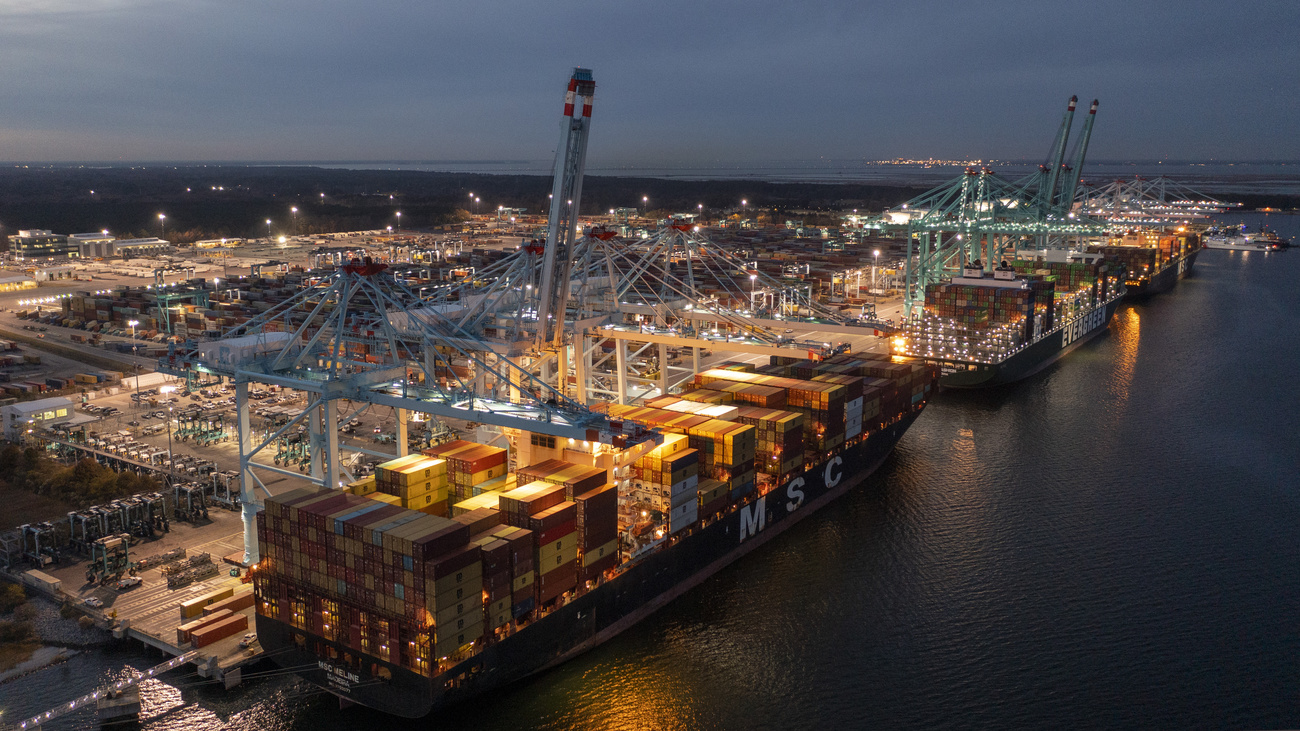
This also affects Switzerland, which is an important centre for shipping lines. In March a container ship belonging to Mediterranean Shipping Co. (MSC), one of the world’s biggest shipping lines with its headquarters in Geneva, was targeted by Houthi forces on its journey from Singapore to Djibouti about 150 kilometres south of the Yemeni city of Aden. According to US military sources, Houthi fighters fired two rockets, one of which hit the vessel. Incidents like this are often hushed up. Shipping lines are worried about their reputation for reliability and about possible increases in their insurance premiums.
More
More
Mark Pieth: Switzerland must regulate its opaque shipping industry
To bypass this hazardous route from Asia to Europe, international freighters are increasingly using the longer route around the Cape of Good Hope in South Africa. This takes an extra two weeks and uses up about 30% more fuel. Following the attacks on shipping, traffic through the Red Sea has decreased almost 80% within a year.
In Switzerland not only shipping lines are affected, but also logistics firms. Logistics is another important Swiss industry sector, and in view of its global supply chains it too is vulnerable to international flashpoints.
Added to this complex situation is another factor: Djibouti is the central corridor for migration flowsExternal link from East Africa to the Arabian peninsula. Even the long-standing conflict in Yemen has not affected this.
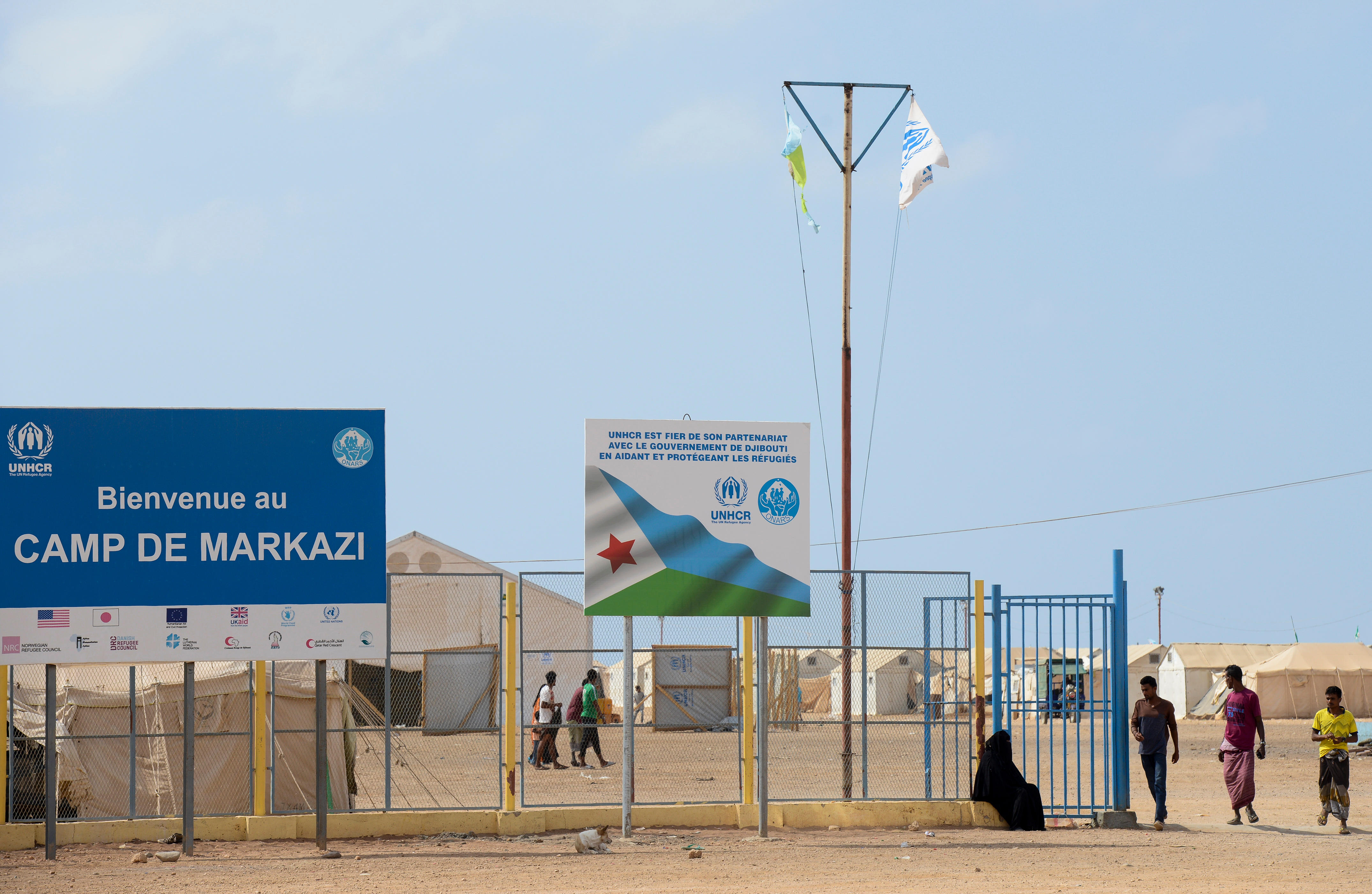
Migrants cross from Djibouti to Yemen – and people from Yemen flee to Djibouti. The picture shows the UNHCR Markazi camp for Yemeni refugees.
Credit: Joerg Boethling / Alamy Stock Photo
A new approach to gain influence
For East Africa expert Tobias Hagmann of Swisspeace, an independent research organisation based in Basel, the Horn of Africa is likely to become more of a focus for European countries – including Switzerland. The civil war in Yemen has caused a rethinking of the situation, with the region being regarded as one large economic area, he said. The latest crisis involving the Houthis will only add to this.
“As soon as trade routes and sea lanes are endangered, alarm bells go off with those affected, which only increases concern with the political situation in the region,” he said. For Switzerland in particular, as an exporter nation, it is of decisive importance to secure its own supply chains, according to Hagmann.
Until now, he said, Switzerland has used its humanitarian aid and development cooperation activities in the Horn of Africa to try to play a constructive role in stabilising the region. This has included contributing to multilateral and multinational funding for building up a state structure in neighbouring Somalia, where pirates have been active and a threat to passing shipping.
Given the present crisis, states such as Djibouti, which is already mentioned in the Swiss foreign ministry’s Strategy for Sub-Saharan AfricaExternal link in connection with geopolitical developments in the Red Sea area, could receive more attention. The small coastal state has expressed its solidarity with the Palestinian people in Gaza, but it supports peaceful solutions and respects the sovereignty of both sides, Ali Miganeh Hadi explained.
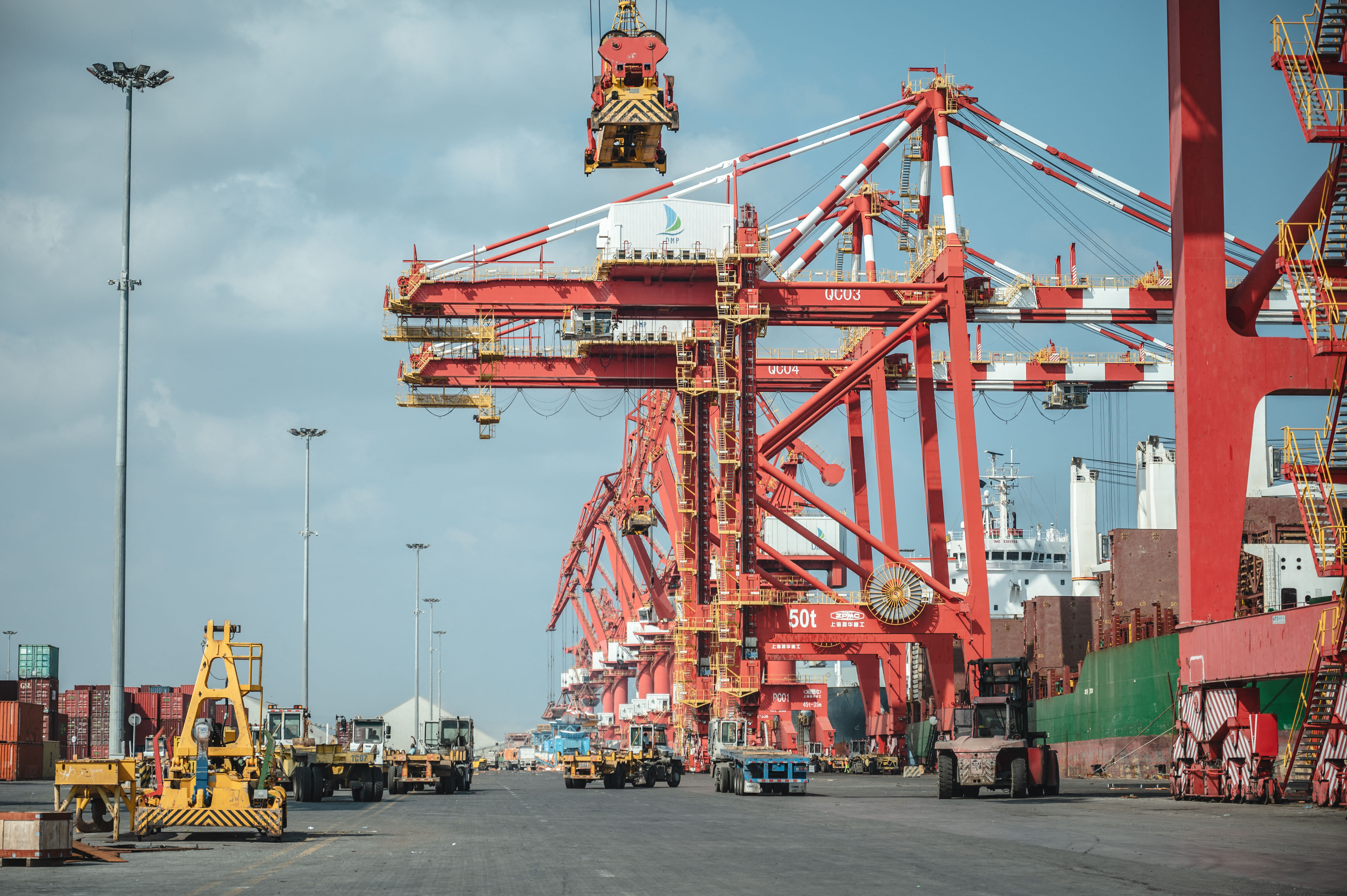
The Doraleh multipurpose port, built by Chinese companies and opened in 2017, has improved competitiveness and cargo handling revenues in Djibouti.
Xinhua News Agency.all Rights Reserved
Switzerland, since its neutrality prevents it from participating in any military intervention, could find new ways to strengthen its position in the region and make Switzerland more visible through science diplomacy and the Transnational Red Sea Center, he said.
However, the options fur using science diplomacy to advance foreign policy interests are limited, according to Jasmina Saric of the Swiss Tropical and Public Health Institute, which as part of its work carries out research on Swiss science diplomacy in Africa. “It cannot be expected of a scientific project that it is suddenly going to solve all tensions and challenges in a very complex region,” she said.
There are, nonetheless, positive examples from other regions of Africa, she said. In Kenya, Switzerland has been working successfully with the government in the areas of food security, natural resource management and biosecurity, Saric explained. “Where long-term scientific partnerships and projects are given a chance, there turns out to be room for common efforts or bilateral cooperation in other areas, even if the diplomatic channels are blocked.”
Edited by Giannis Mavris. Adapted from German by Terence MacNamee/gw
More