


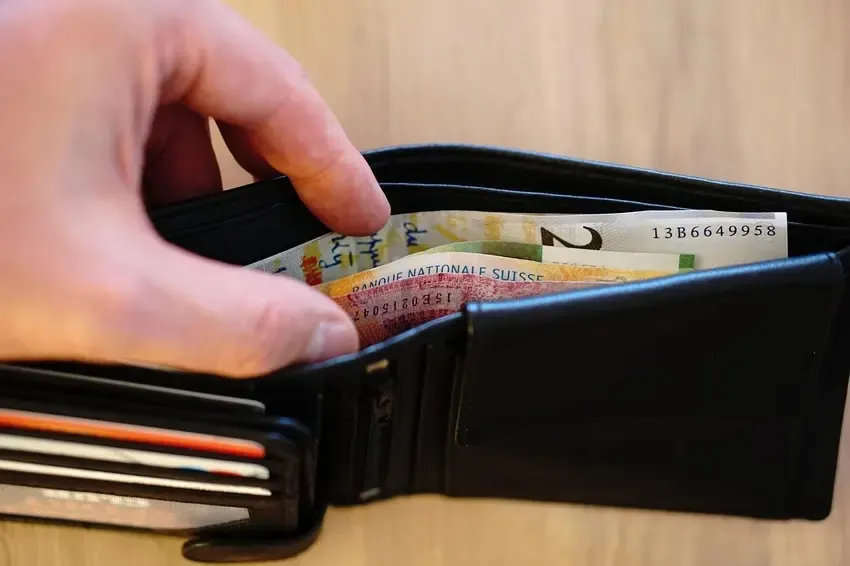
Switzerland has held a dubious ‘honour’ of being Europe’s priciest nation in a number of studies. But it is no longer the case.
This title now belongs to Iceland, according to a new Eurostat price index, which is based on average prices of more than 2,000 products and services – including healthcare and education.
The defined basket of goods was then indexed to the EU average price of €100.
Iceland achieved a value of 183.7, with Switzerland trailing only slightly behind, with the score of 181; looking at these figures from another angle, Iceland is 83.7 percent more expensive than the EU average, and Switzerland 81 percent. (Paradoxically though, neither Switzerland nor Iceland are part of the European Union).
However, these numbers should be put into relevant contexts, Euronews reported.
“The figures should always be read together with earnings. What matters for living standards is not whether prices are high but what a local wage buys locally — purchasing power, not the price tag alone.”
It pointed out that “Switzerland looks expensive, but Swiss wages are high enough that purchasing power there is among Europe’s strongest; the same price level on a much lower wage would feel very different.”
Though Swiss consumers may not feel like their money goes very far, other studies and financial analyses have reached the same conclusion as the Eurostat one.
For instance, a study carried out by a market research company, NIQ-GfK, which surveyed the disposable incomes of residents of DACH countries — a German acronym for Germany, Austria, and Switzerland — found that the per-capita purchasing power of the Swiss population is quite a bit higher than in the two other German-speaking states.
It shows that, on average, Switzerland’s per-capita purchasing power is 49,724 francs (53,011 euros) — a significantly higher amount compared to Austria (29,852 euros — 28,000 francs) and Germany (29,566 euros —27,732 francs).
Additionally, Switzerland recorded the strongest growth in purchasing power compared to the previous year: the population’s net disposable income increased by 2.3 percent in 2025, while the rate of increase in Austria and Germany was 2 percent.
Why, given Switzerland’s high cost of living, is its purchasing power higher that in neighbour states?
The reason could be that salaries are lower in those countries, while the inflation rate has been higher than in Switzerland.
So it is official: despite its high cost of living, Switzerland boasts the highest purchasing power partiy in Europe.
But wait…
This is the general picture, but there are nuances.
Just how much spending power you have depends on where in Switzerland you happen to live.
Residents have an above-average spending potential in Zug – 85,506 francs in purchasing power, Schwyz (75,293), and Nidwalden (62,978), NIQ-GfK‘s regional analysis of purchasing power in Switzerland reveals.
On the other hand, Ticino and Valais are, along with Jura, the ‘poorest’ cantons as far as purchasing power goes.
READ MORE: Where in Switzerland will your money go the furthest?


