


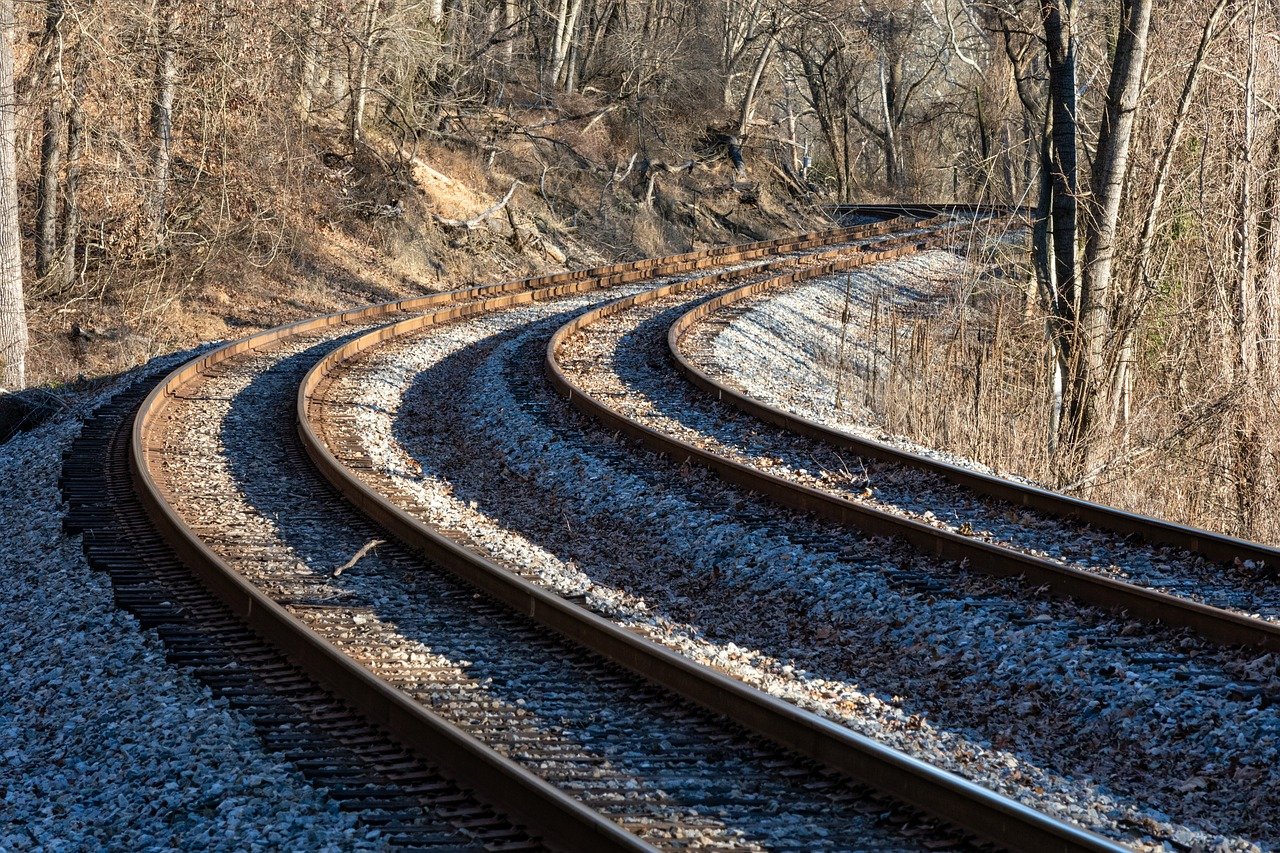
Though Switzerland’s rail network is known for its punctuality and efficiency, in terms of speed its trains trail behind the rest of Europe. Why is that, and will it change?
In many parts of the country, the average train speed is 100 km per hour, while the speed of 200 or even 300 km per hour has long been the norm elsewhere in Europe.
Only three lines allow Swiss trains to reach a speed of 200 km per hour: between Olten and Bern, in the Lötschberg base tunnel, and on the Alpine crossroads under the Gotthard and Monte Ceneri.
Why aren’t Swiss trains faster?
You may want to chalk it up to the fact that things in Switzerland generally move at a snail’s pace, but that’s not the main reason.
Rather, being fast is not a top priority for the national railway company (SBB) or the Federal Office of Transport (FOT), both of which favour reliability and quality of service over speed.
And there is another reason as well: according to FOT, Switzerland is not adapted to speedy trains because the country opted to focus instead on developing a dense network that covers all regions.
For instance, making frequent stops at all stations along a given line means a train can’t travel fast.
And while there have been moves to speed up the train travel in Switzerland, “this increase would encourage urban sprawl and energy consumption,” FOT pointed out.
“This is why increasing the number of high-speed lines is neither wise nor feasible,” it said.
Advertisement
But this stance is changing
SBB now wants to reorganise its network to improve train speed and flow of rail traffic.
The idea is to prioritise major lines by reducing service to smaller stations, while still offering a means of transportation within a 15-minute radius.
The reason for this approach, according to Monika Ribar, chairperson of the SBB Board of Directors, is that the network, as it is now, has reached its limits.
“The slowest train determines the speed of the entire system, she pointed out in an interviewwith public broadcaster RTS ,” In other words, regional trains, due to their frequent stops, slow down all rail traffic.”
To address this, the SBB is considering a long-term strategy aimed at reducing stops at certain small stations, while offering alternatives such as buses on these stretches to ensure transport between residential areas and main stations.


