


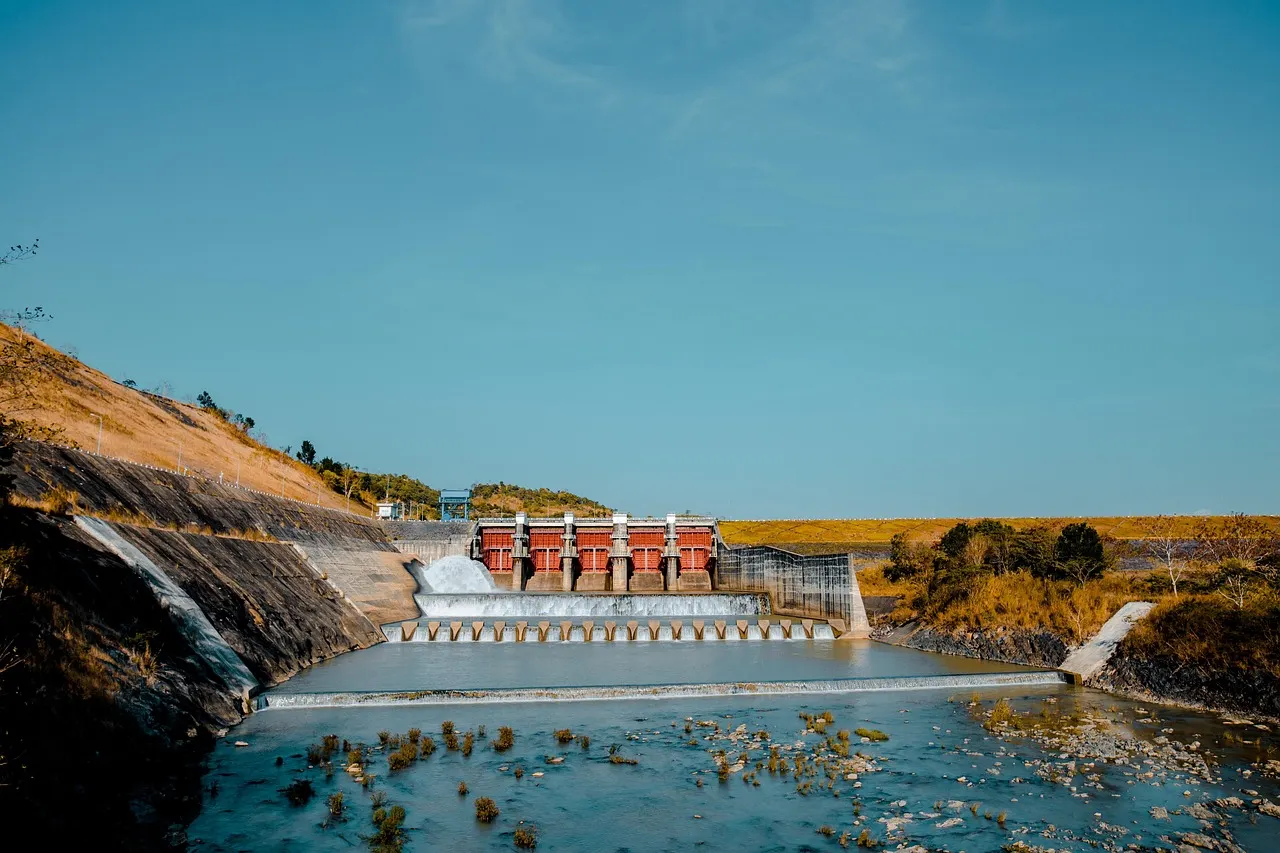
Weeks of heatwaves and drought have impacted Switzerland’s waterways and, in turn, its dams as well. Just how dire is the current situation?
Switzerland may be a landlocked country, but it has about 1,500 lakes and 61,000 km of rivers and streams.
Now, however, many of them are suffering from ‘exceptionally low’ water levels, according to the Federal Office of Energy (BFE).
Consequently, dams, which are considered critical infrastructure because they are sources of water supply, are filled only to less than half of their capacity – 46 percent – after weeks of heat and absence of rain.
This is the lowest level in two decades, the BFE reported.
What happens if lakes, rivers and dams continue to run dry?
The most obvious fallout is water supply shortages for households and agriculture.
READ MORE: Will your water supply be affected if Switzerland’s drought persists?
But that’s not all.
Dams also play a key role in electricity production: the water they store feeds turbines to generate electricity.
The higher their water level, the greater their production potential – and vice-versa.
Does this mean that our electricity supply will be affected?
According to Andreas Jöckel, spokesperson for the Federal Electricity Commission (ElCom), “it is still too early to make forecasts, as rainfall in the coming months will be decisive.”
There is one possible solution, but…
Exceptionally high temperatures have accelerated the melting of glaciers, with water flowing into the waterways.
However, this is obviously not good, or sustainable, in the long-term.
“There is no model capable of guaranteeing a sustainable electricity supply,” said glaciologist Matthias Huss.
“In 10, 20, or 30 years, during heatwaves similar to those of today, we will have much less water available from glaciers,” he pointed out. “The situation could then become critical.


