


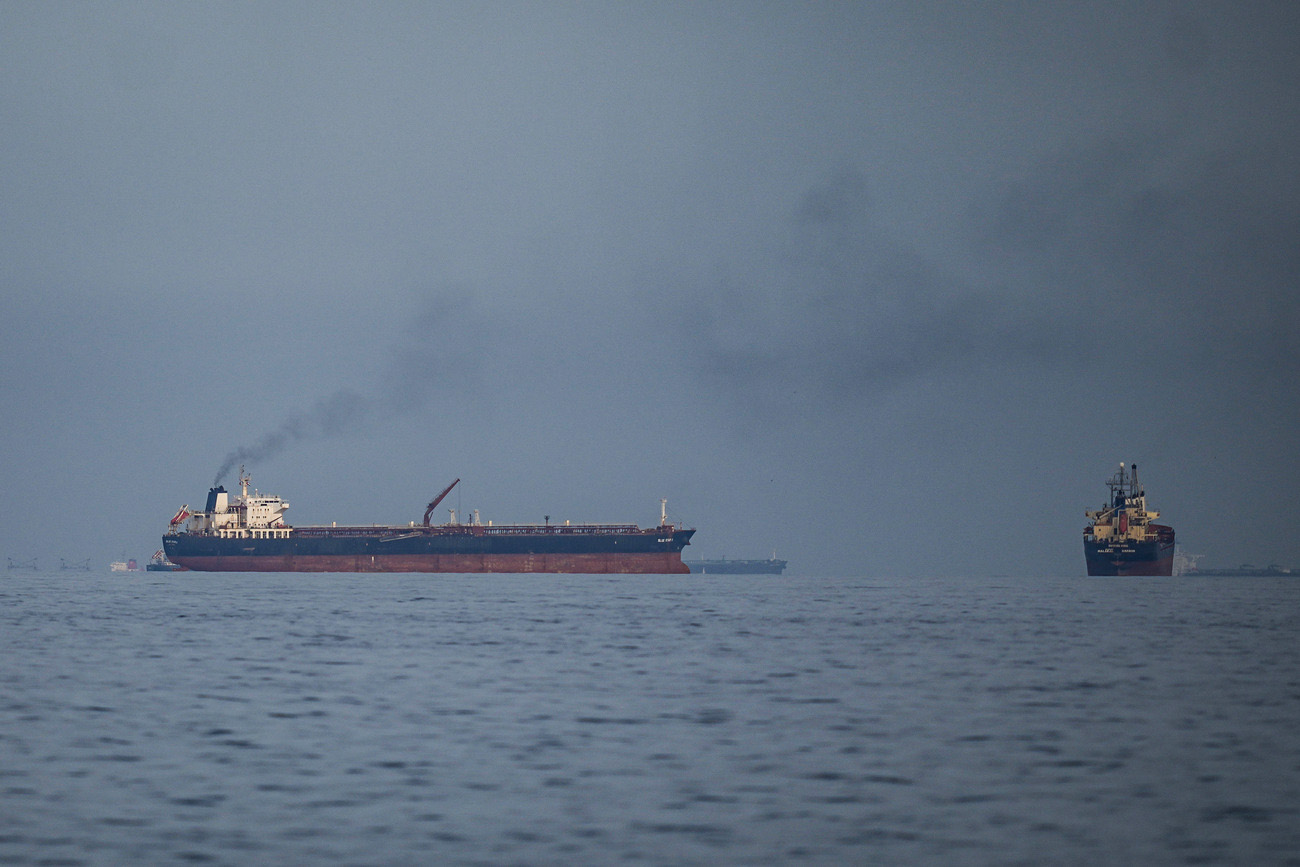
Oil tankers and cargo ships stranded in the Strait of Hormuz, on March 11, 2026.
Keystone / AP
The Iran war and subsequent blockade of the Strait of Hormuz are driving up energy prices. Oil traders shared insider insights at their annual meeting in Lausanne.
Energy supplies are becoming less secure due to the war in Iran and the blockage of shipping in the Strait of Hormuz. At the centre of this geopolitically sensitive business are major oil traders, a secretive industry that reveals little about its strategy. They provided rare insights at the FT Commodities Global Summit in Lausanne held between April 20-22.
For example, the commodities trader Trafigura, headquartered in Geneva, is directly affected by the war, said CEO Richard Holtum. The company controls a large fleet of tankers. Nine ships are blocked in the Persian Gulf. Only one had been able to pass through the Strait of Hormuz.
Geneva-based competitor Mercuria, on the other hand, was able to extricate all its tankers, explained CEO Marco Dunand. He remained silent about how the company pulled it of and at what price. “There are ways,” he simply said.
More
More
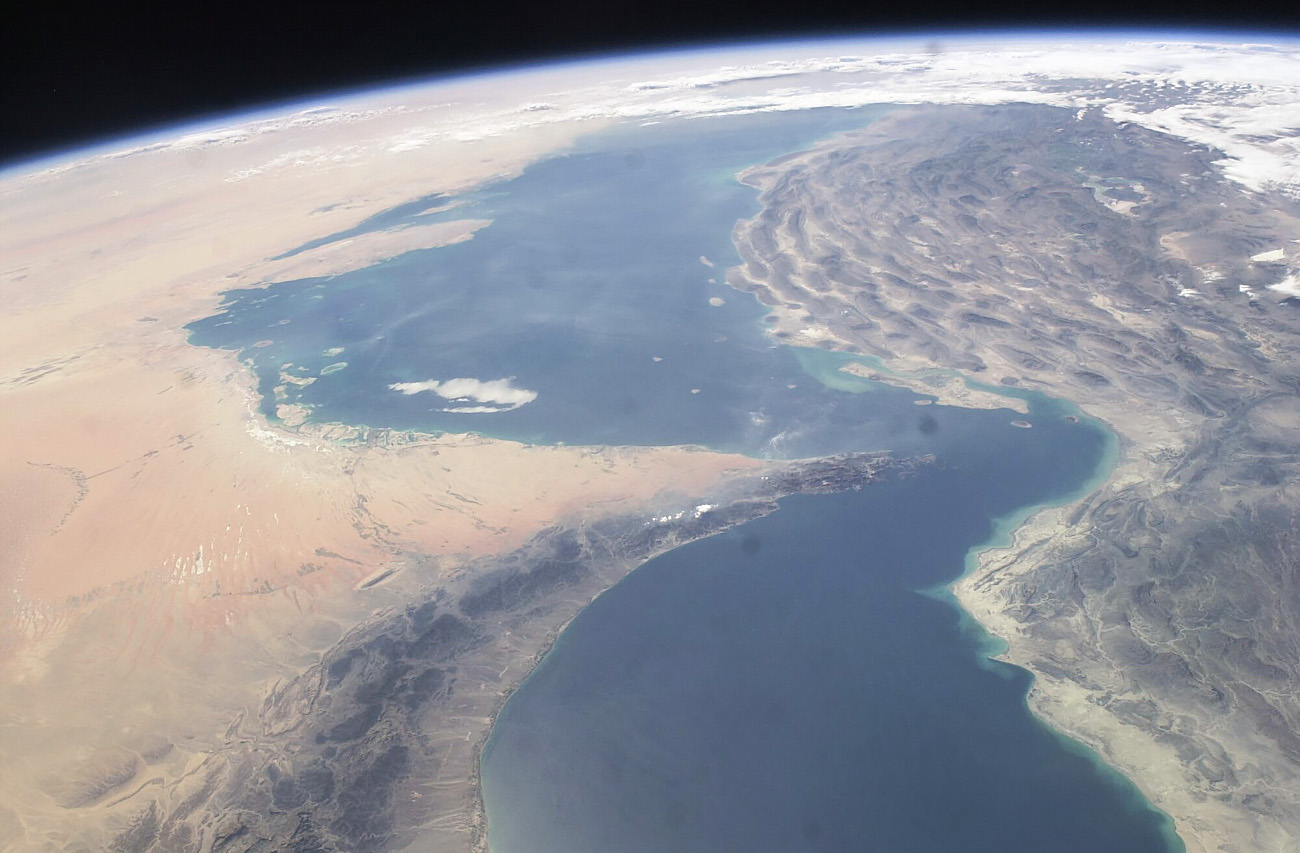
Iran-US: the stakes of disruption at Hormuz for Switzerland
Supply shortages and rising prices in Asia
The world’s largest oil trader Vitol, also based in Geneva, has extensive operations in the Gulf States. CEO Russell Hardy confirmed that the infrastructure in the region had suffered major damage. The consequences: higher prices or rationing. And this is currently being felt above all in Asia. In the West, the effects will likely be felt with a time lag.
The price of oil is higher than reference prices such as Brent or WTI would suggest, added Holtum from Trafigura. These mainly reflect the trade in “paper oil” and not oil on ships. With real oil, you have to pay for the certainty that the goods will be delivered. And not in two months’ time, but now.
Volatile prices enable oil traders to make huge profits with their bets. This has probably also been the case in recent weeks and months. Holtum did not want to confirm this. All he was willing to says was that he is satisfied.
More
More
Where Switzerland stands on the Iran war
Direct line to the US government
Gary Pedersen struck a similar tone. The new head of the Geneva-based oil trader Gunvor is American. Like his competitors, he has a direct line to the White House. The US government is looking for solutions to secure raw materials and Gunvor can provide them.
There was a consensus among the CEOs that the US government is very active in securing itself against China. Europe, too, needs to pursue a consistent energy policy, says Russell Hardy from Vitol. With a twinkle in his eye, the Brit added that one doesn’t have to invade a country to achieve this.
Adapted from German using AI/rg
We use automatic translation tools, such as DeepL and Google Translate, for some content.
Each translated article is carefully reviewed by a journalist for accuracy. Using translation tools gives us the time for more in-depth articles.
Learn more here about how we work with AI.
More

More


