


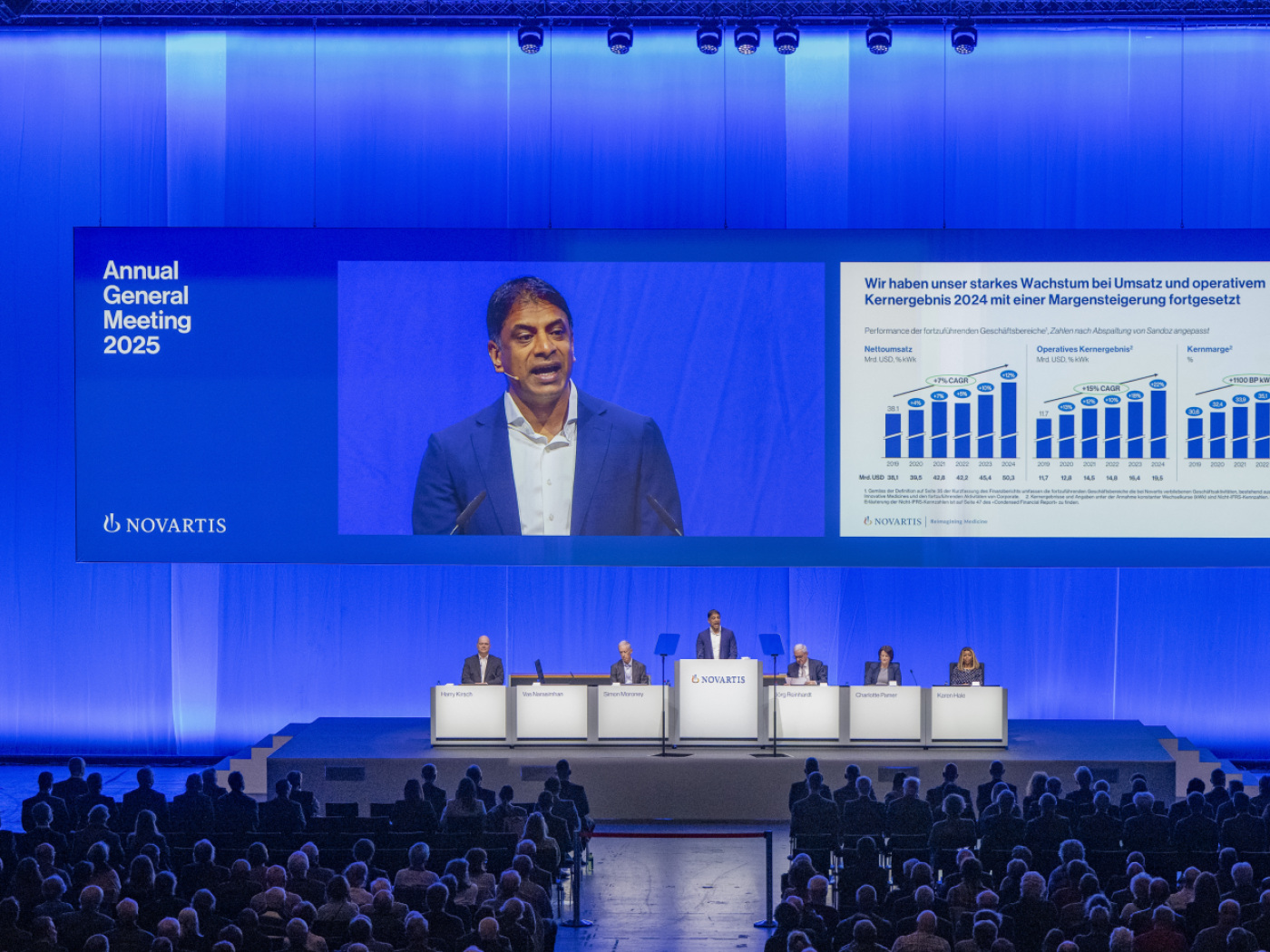
Shareholders’ meetings at large companies: investor pressure is making itself felt
Keystone-SDA
Shareholders are intensifying pressure on boards of directors and senior management at large Swiss companies.
But the 2026 season of annual general meetings (AGMs) at major Swiss companies avoided any major upsets, according to analysis by Swipra, a Zurich-based consultancy specialising in corporate governance and sustainability, on the top 100 companies in the SPI Swiss stock market’s index.
The most striking finding concerns the role of key shareholders such as families, founders or public investors. Without their support, as many as 97 agenda items would have been rejected. This represents a significant jump from the 37 cases in the previous year, signalling growing dissent amongst minority shareholders.
The study highlights how shareholders’ criticisms are becoming “more targeted and less generalised”. The main targets are board chairs, remuneration committees and external auditors. While the median proportion of ‘no’ votes for board member elections remained stable, in the 10% of the most contested votes, opposition reached an average of 47%.
More

More
Activist takes on Swatch maverick as Omega empire falters
The real flashpoint remains remuneration policy for executives. At the most contentious AGMs regarding remuneration, votes against rose to an average of 54%.
Investors are viewing long-term share-based remuneration plans with growing scepticism, deeming them too complex, and are beginning to shift their focus from the transparency of reports – now considered acceptable – to the absolute level of salaries.
The figures confirm this: for the 20 companies included in the SMI (the stock exchange’s main index), the median total remuneration of CEOs rose by 6.1% to CHF8.2 million, driven mainly by long-term variable components.
Swipra’s analysis also identifies an emerging area of conflict: the independence of external auditors. Votes against their re-election, in the most contested cases, have more than doubled, rising from 22% to 41%.
Shareholders are concerned about the length of auditors’ terms of office, which are often very long: over a fifth of SPI-listed companies have been using the same auditor for more than 20 years.
More

More
Swiss firms face greater shareholder opposition
Tensions are also rising over environmental, social and governance issues. Around 10% of minority shareholders voted against sustainability reports, double the percentage recorded two years ago.
Finally, Swipra has raised concerns about the predictability of general meetings, due to so-called ‘split voting’: in fact, an increasing number of asset managers are allowing their institutional clients to issue independent voting instructions for indirectly held shareholdings, making voting outcomes less predictable and further fragmenting the investor base.
+ How we produce English news
Translated from German, reviewed by an English Department journalist.


