

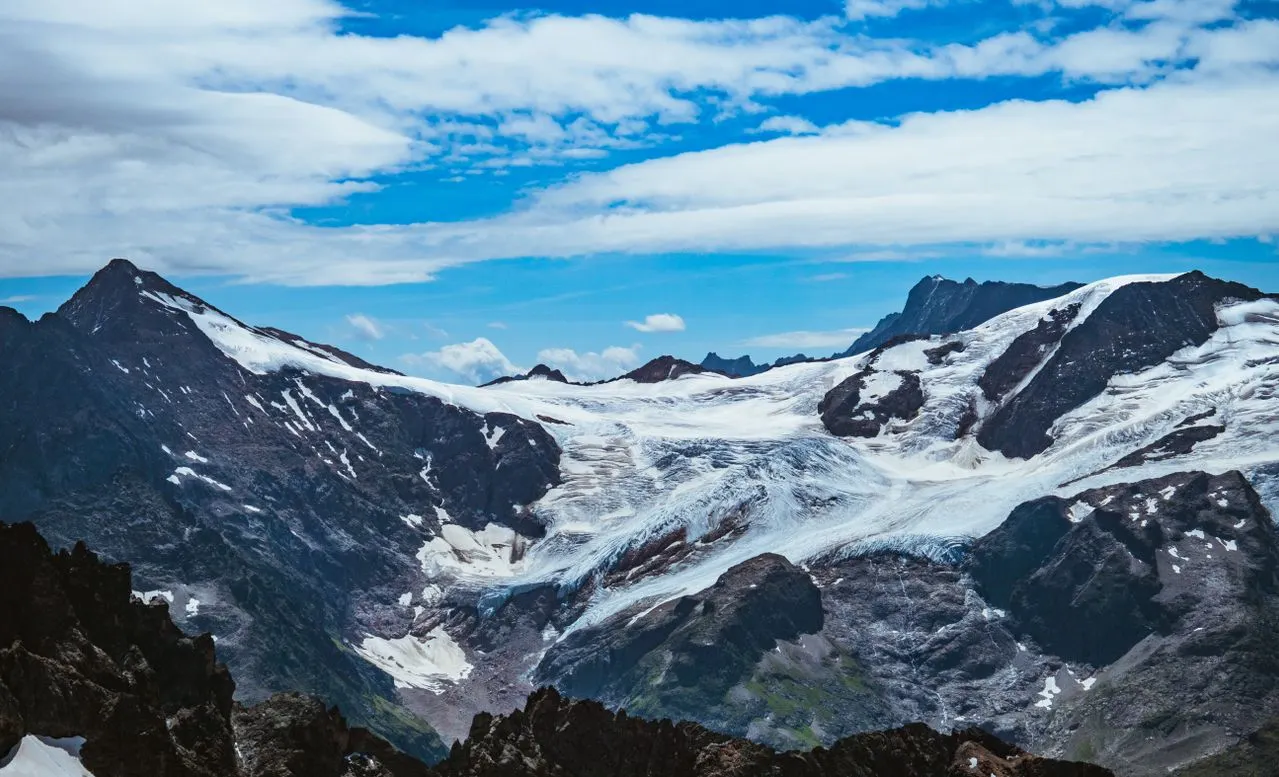
Switzerland’s Weisshorn glacier, located at an altitude of 4,505 metres near Zermat in Valais, is breaking off piece by piece, which could fall down into the town below.
So far, the broken debris are still hanging on the lower glacier plateau, but authorities in the town of Randa, which lies at the Weisshorn’s foot, have alerted its residents to the risk of the broken fragments falling off, calling the mountain ‘unstable.’
The area is now closed to the public.
“Over the next few days, ruptures are possible,” local authorities warned.
“The situation is being closely monitored to determine whether the increased risk persists or eases,” they said, adding that a “specially installed interferometric radar is among the equipment being used for monitoring and assessing the situation.”
Not the first time
Unfortunately, unstable glaciers are becoming more common as the climate warms up.
In May 2025, for instance, the village of Blatten, also in Valais, was wiped out by a dramatic glacier collapse, after the 300 residents were evacuated to safety.
So far, however, there are no signs that the glacier debris will reach Rando and no evacuation orders are in place.
In general, Swiss glaciers are melting at an alarming speed, losing 400 cubic metres of water per second.
“Prolonged heatwaves are the worst-case scenario for glaciers,” according to Matthias Huss, head of the Swiss Glacier Monitoring Network (GLAMOS).
But though glaciers are melting all over the world due to climate change, Swiss ones, like the Weisshorn, are affected more than others: since the early 1970s, more than 1,100 of Switzerland’s glaciers have disappeared completely, GLAMOS found.
READ MORE: Melting Swiss glaciers face worst-case scenario
And the situation will get even worse: experts agree that heatwaves will become more frequent, hotter and last longer in the future, due to climate change caused by the burning of fossil fuels.
