


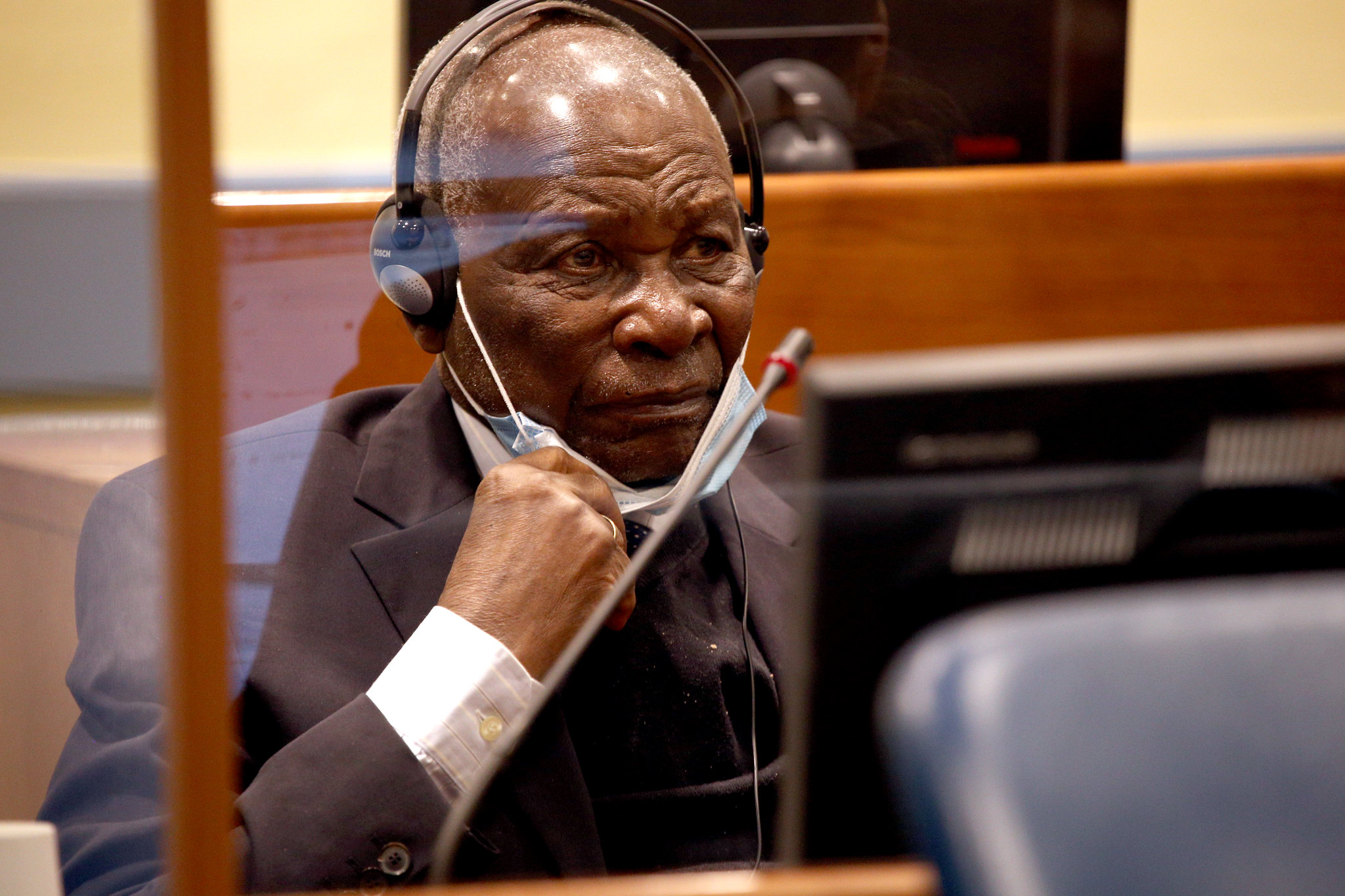
Félicien Kabuga died in May 2026 in The Hague. More than 800,000 people, most of them Tutsi, died during the genocide in Rwanda.
Keystone-SDA
Switzerland should not have admitted Félicien Kabuga in the country in 1994. The entry visa granted to one of the alleged masterminds behind the genocide of the Tutsis in Rwanda was the result of an “arbitrary decision” by the authorities which was “non-compliant”, according to the Swiss government.
Born in 1935, according to the International Criminal Tribunal for Rwanda, Kabuga was able to enter Switzerland legally on July 22, 1994. The previous month, on June 9, while the genocide in Rwanda was underway, the director of the Federal Office for Foreigners (OFE) – now the State Secretariat for Migration (SEM) – had issued him with a visa to enter Switzerland, as well as to eight members of his family.
This was despite the fact that the Swiss foreign ministry had intervened on several occasions to have the visas cancelled or to prevent these individuals from entering the country.
More
More
How Switzerland let an alleged mastermind of the genocide in Rwanda slip away
“More thorough investigations would very likely have led to the visa application being rejected,” says the government, commenting on a study carried out by historians at the University of Basel and presented on Thursday by the SEM.
Kabuga and his family were subsequently deported on August 18, 1994, a decision that the study authors say was “lawful and justifiable”. The arrest of the Rwandan national had been considered at the time. However, a lack of evidence would have meant that criminal proceedings would have failed, which would have allowed Kabuga to remain freely in Switzerland, the authorities believed. They also feared a public backlash in such a scenario.
They therefore opted for deportation. An administrative inquiry was subsequently carried out in 1994, leading to the departure of the head of the OFE at the end of that same year.
A ‘understandable’ decision
In 2024, the Swiss parliament requested a further report on the case from the Federal Council. The Federal Council deemed the decision taken at the time to be “understandable in its historical context”, even though another option might have been possible.
It considers that lessons must be learnt from this “negligence on the part of the authorities and the lack of clarity regarding the division of their powers”. The foreign policy dimension must be given greater consideration in future decisions with implications under international law.
Kabuga died in May 2026 in The Hague. More than 800,000 people, most of them Tutsi, died during the genocide in Rwanda.


