Switzerland’s biggest emissions drops were recorded in the industrial and building sectors.
Keystone-SDA
Generated with artificial intelligence.
Switzerland emitted 40.8 million tonnes of CO2 equivalents in 2023, 1 million tonnes less than the previous year. Overall, greenhouse gas emissions were 26% lower than in 1990. The Alpine nation has committed to reducing its emissions by half compared with 1990 levels by 2030.
The biggest drop was recorded in the industrial sector, followed by the building sector, the Federal Office for the Environment (FOEN) said on Tuesday. These two sectors each account for around 22% of Switzerland’s emissions.
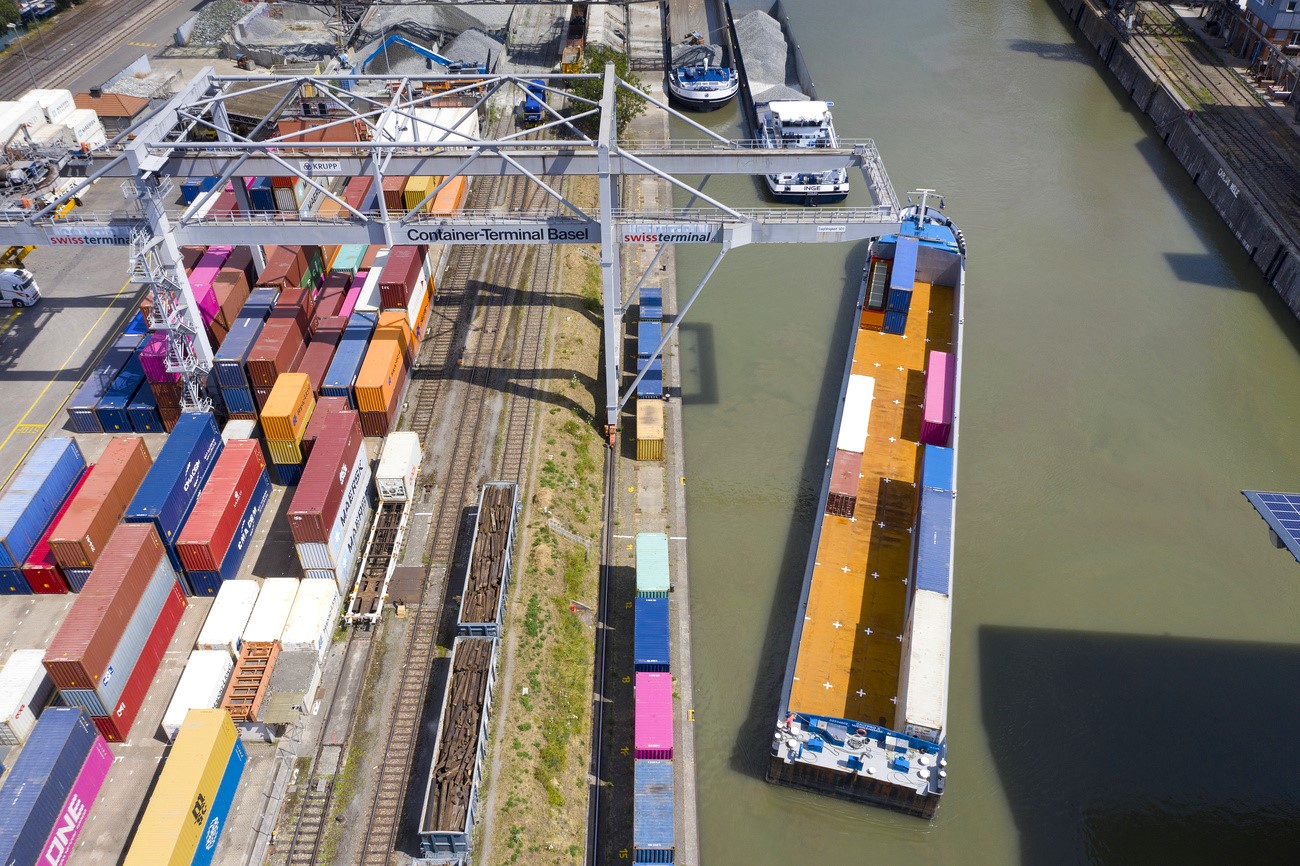
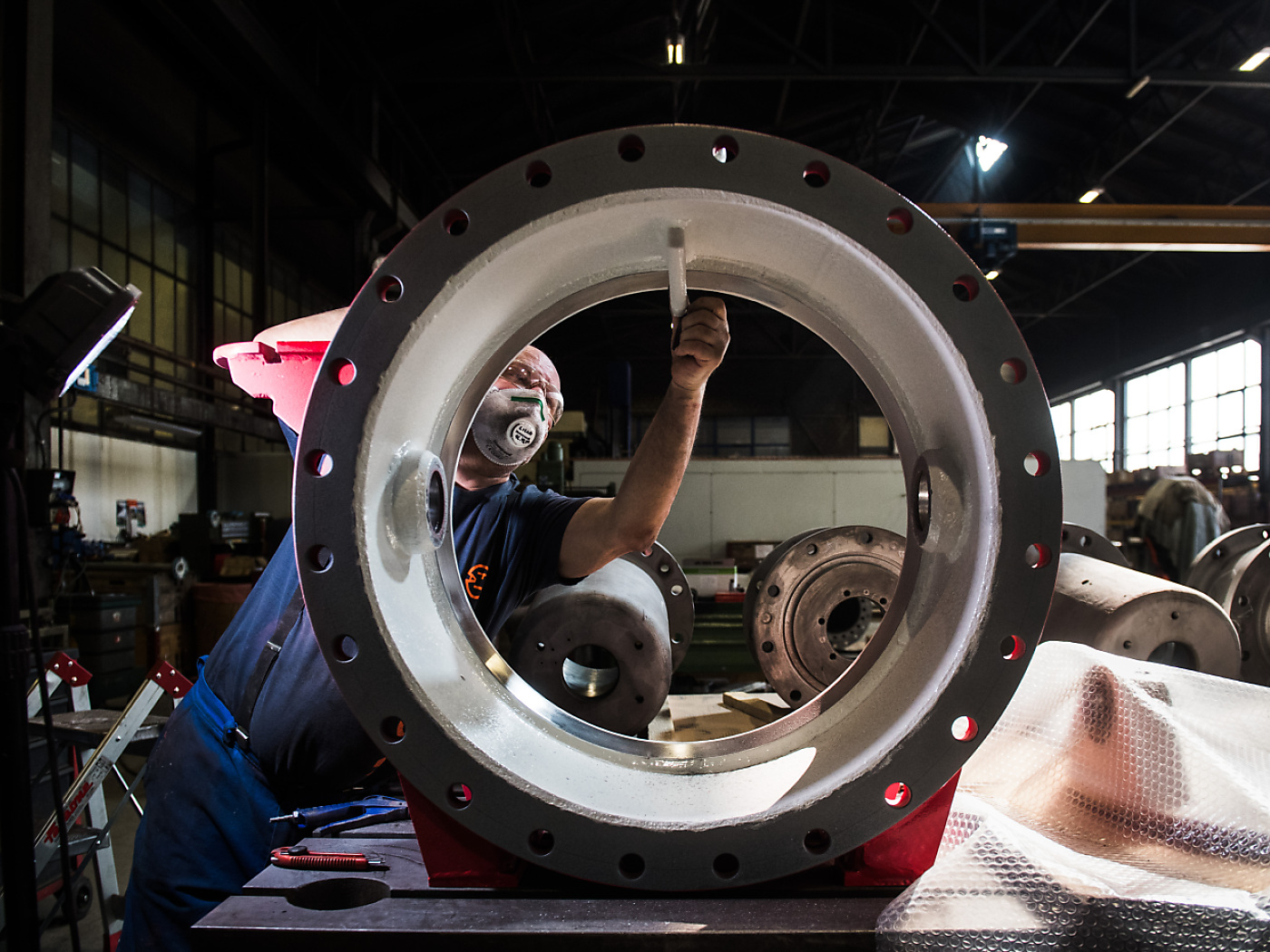
Industry emitted 9.1 million tonnes of CO2 equivalents, or 0.7 million tonnes less than in 2022. According to the FOEN, this was mainly due to a reduction in cement production. Compared with 1990, emissions in this sector are 32% lower.
The building sector also emitted 9.1 million tonnes of CO2 equivalents (-0.3 million tonnes). Despite a cooler winter, consumption of gas and heating oil fell, said the FOEN. This is explained by the increase in the number of heat pumps installed up to 2023. Since 1990, the building sector has reduced its emissions by 46%.
More
More
Why Switzerland’s carbon footprint is bigger than you think
This content was published on
Per capita CO2 emissions in Switzerland are lower than the world average. But the picture changes radically when you consider the emissions related to products imported from abroad.
Emissions in the transport and agriculture sectors have remained unchanged since 2022. Emissions from the transport sector in 2023 (13.7 million tonnes of CO2 equivalents) were 8% lower than in 1990.
However, these figures do not include greenhouse gas emissions generated by international air transport and shipping, which are presented separately, said the FOEN. The additional emissions generated by international flights in 2023 amounted to 5.05 million tonnes of CO2 equivalents.
More
More
As private jet flights soar in Switzerland, so do their CO2 emissions
This content was published on
Private jet flights and their emissions have soared in recent years, and Switzerland is one of the top destinations for the heavy-polluting planes.
Emissions from agriculture remained virtually unchanged at 6.5 million tonnes in 2023. Emissions of synthetic greenhouse gases, such as those released by refrigerants, were also similar to those in 2022.
Paris Agreement
In April, the FOEN will submit the Swiss greenhouse gas inventory to the United Nations Climate Change Secretariat. This inventory provides a complete picture of greenhouse gas emissions covered by the Paris Climate Agreement.
Under the Paris Agreement, Switzerland has committed to reducing its greenhouse gas emissions by half compared with 1990 levels by 2030. Furthermore, it aims to achieve net-zero emissions by 2050, following popular approval of the Climate Protection Act in June 2024.
More
More
Switzerland’s new 2035 climate goals disappoint
This content was published on
The Swiss government has set new 2035 greenhouse gas emissions targets as part of its commitment to combat climate change. But environmental groups are unimpressed.
We select the most relevant news for an international audience and use automatic translation tools such as DeepL to translate them into English. An editor then briefly reviews the translation for clarity and accuracy before publication. Providing you with automatically translated news gives us the time to write more in-depth articles. The news stories we select have been written and carefully fact-checked by an external editorial team from news agencies such as Bloomberg or Keystone.
Around 50 caravans belonging to members of a travelling community attempting to enter canton Valais in southern Switzerland without prior warning were blocked by police.
Swiss consumer spending rises in March despite tariff uncertainties
This content was published on
Global financial turmoil and uncertainties surrounding trade tariffs have not yet had an impact on consumer behaviour in Switzerland, where spending rose strongly in March.
Swiss soldiers take part in military exercise in Austria
This content was published on
The Swiss army has organised a military exercise in Austria, involving 1,000 militia soldiers. The aim is to strengthen the country’s defence capability.
Switzerland records below-average number of avalanche deaths
This content was published on
Ten people died in avalanches in the Swiss Alps last winter, according to the WSL Institute for Snow and Avalanche Research (SLF). This is below the average for the past 20 years.
The Swiss population is expected to grow to 10.5 million by 2055, mainly due to immigration, according to the latest forecast by the Federal Statistical Office (FSO).
Trump tariffs: 95% of Swiss SMEs don’t plan to move to US
This content was published on
According to a survey, 95% of small and medium-sized industrial companies (SMEs) in Switzerland are not planning to relocate to the United States in the near future.