

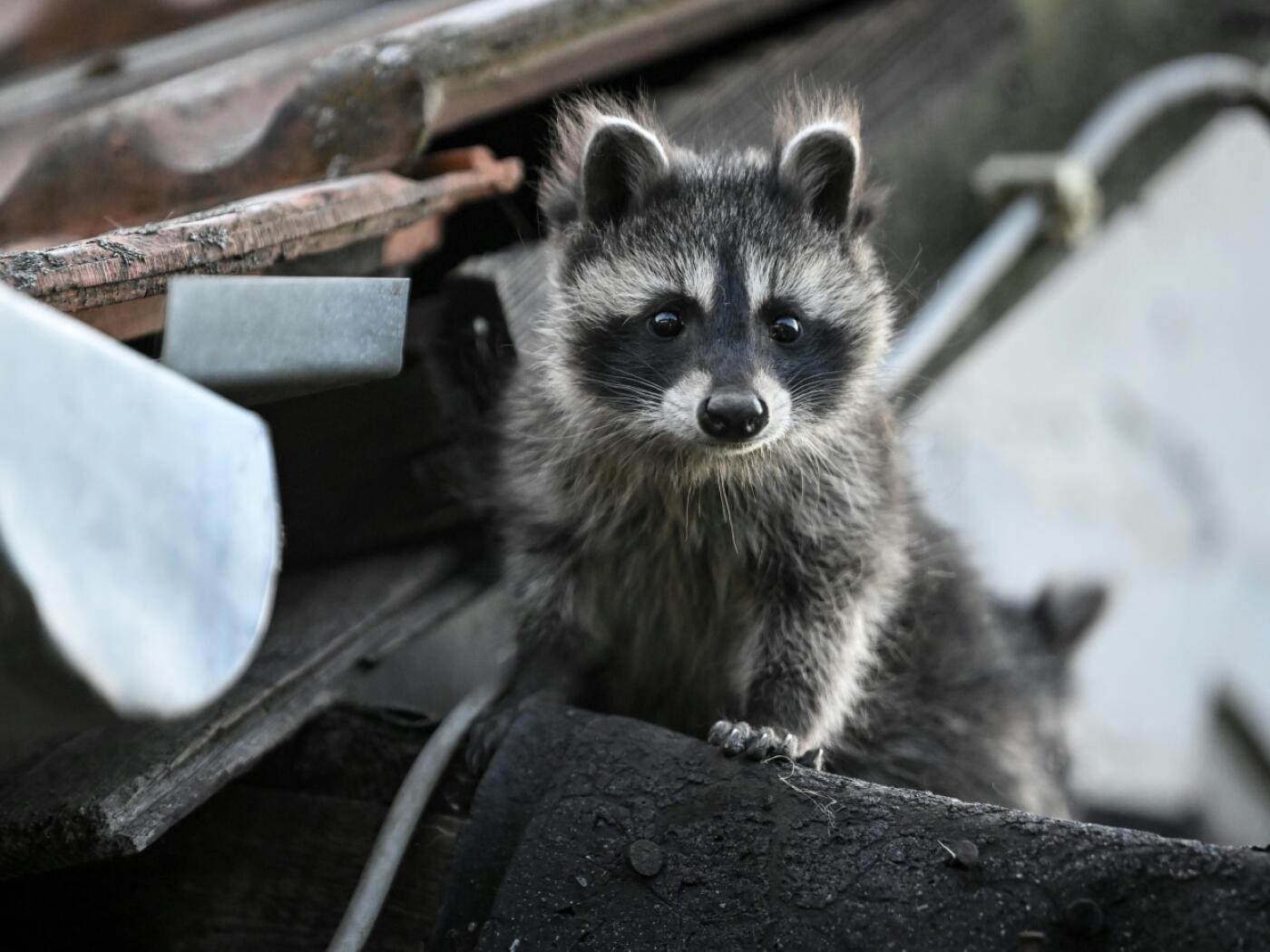
The canton of Aargau wants to slow the spread of raccoons
Keystone-SDA
The canton of Aargau in northern Switzerland wants to slow down the further spread of raccoons. However, it is virtually impossible to halt the growth of the population, according to the authorities. Last year, 60 raccoons were shot or recovered as roadkill in Aargau.
Aargau, together with neighbouring canton Basel Country, lies on the “southern expansion front of the raccoon”, the cantonal government wrote on Friday in its response to an interpellation tabled by members of the Social Democrats, Swiss People’s Party, Centre Party and Greens.
To tackle the issue, the cantonal government is relying primarily on raising public awareness and on the support of the hunting community. The Neobiota specialist unit has produced an information leaflet setting out specific protective measures for residential buildings.
According to the leaflet, people should not leave food scraps or animal feed out in the open. Compost should also be covered, and access to houses via cat flaps should be prevented. Anyone who spots a raccoon should report it to the hunting authorities.
More

More
Cute but invasive: raccoons spotted in northwestern Switzerland
For the targeted capture of raccoons, the cantonal hunting and fisheries department provides hunting societies with 11 specially developed box traps for permanent use, as stated in the response.
A carpenter from Aargau manufactures these traps, complete with a catch basket, for around CHF800 ($980) each. The box trap design was developed by the hunting and fisheries department. As setting such traps is considered a hunting activity, their use is restricted to hunters.
Population continues to rise
According to the canton’s figures, the first raccoon was recorded in the hunting statistics ten years ago. There had previously been reports of raccoons being shot or killed in accidents in 1999 and 2001.
Since 2019, hunters have bagged raccoons every year. Last year, 60 raccoons were shot or recovered as roadkill. The response states that this trend is expected to continue.
The raccoon, which originates from North America, was brought to Germany in the 1930s for fur production and was later released into the wild. In the wild, their population has grown significantly over the past 20 years. According to experts, this adaptable, predatory omnivore poses a threat to native wildlife.
More

More
How Switzerland is battling invasive species
+ How we produce news in English
Translated from German, reviewed by an English Department journalist.
