


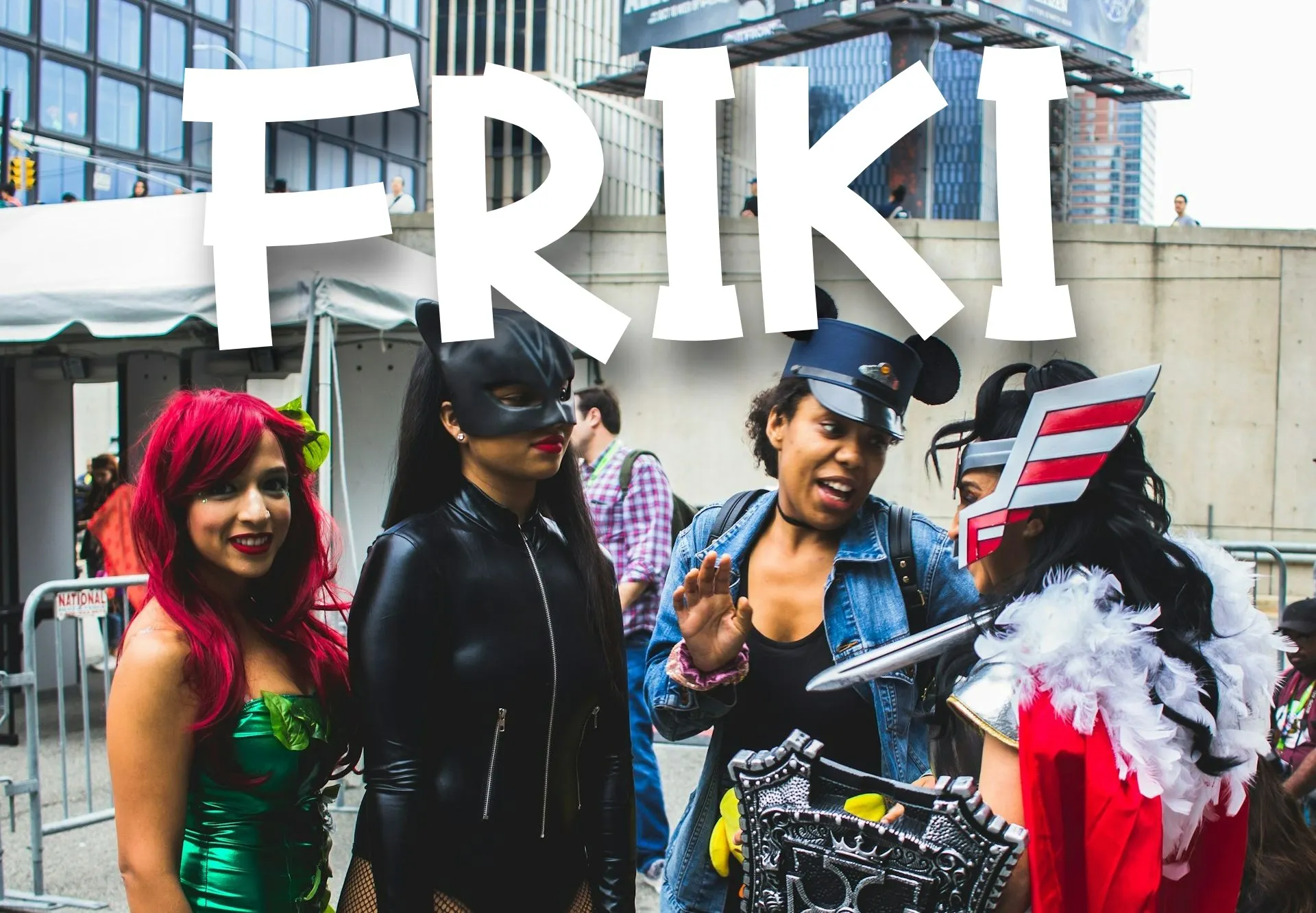
Here’s an example of an anglicism that Spaniards have twisted to give it its own meaning.
Friki is an adjective or noun in Spanish used to describe someone who is extravagant, odd, or eccentric.
It can also be used to describe a person who practices a hobby excessively and obsessively.
As you may have noticed, this word doesn’t sound or look very Spanish, and that’s because it’s derived from the English word ‘freaky’ or ‘freak’.
It doesn’t have quite the same connotation, as in English ‘freaky’ can imply that something is odd but usually in a frightening way.
In Spanish, however, friki implies oddity in a more geeky, oddball kind of way. But not in a scary sense.
In fact, if you wanted to refer to someone as a geek or nerd in Spanish, you’d probably call them un friki.
Advertisement
So the protagonists in the American comedy show Big Bang Theory would be called frikis in Spain, and the people who dress up as superheroes and go to Comic Con would also be dubbed frikis.
El mundo friki (the friki world) is a bit like saying the fandom in English.
If someone had a weird obsession or hobby, for example collecting serviettes from the 1980s, you’d refer to it as una frikada.
Then again, you don’t always have to have a very bizarre pastime to be dubbed a friki, you just have to do it obsessively. More often than not though, it will be associated with the stay-at-home or geek subculture.
For example, if you’re un friki de los videojuegos it means you’re a gamer who spends a lot of time playing videogames, or if you’re una friki de la lectura, you’re a bookworm.
Spain’s main language body, the Royal Academy of Spanish or RAE, officially added friki to the dictionary in 2012.
The term started to become popular in the early 2000s to describe some extravagant and slightly grotesque characters on late night Spanish TV, before its meaning turned more towards geekism.
Spain even has El Día del Orgullo Friki (Geek Pride Day) a ‘celebration’ on May 25th which exists internationally.
Interestingly, friki is a colloquial word which doesn’t really have negative connotations anymore, not in the same way that ‘freak’ does in English.
Examples:
Juan es un friki del manga, le apasiona la cultura japonesa.
Juan is a huge manga fan, he’s really into Japanese culture.
El Comic Con de Málaga estaba lleno de frikis disfrazados a los cosplay.
Málaga’s Comic Con was full of geeks dressed up cosplay-style.
No hay nada de malo en ser un poco friki.
There’s nothing wrong with being a bit excentric.


