


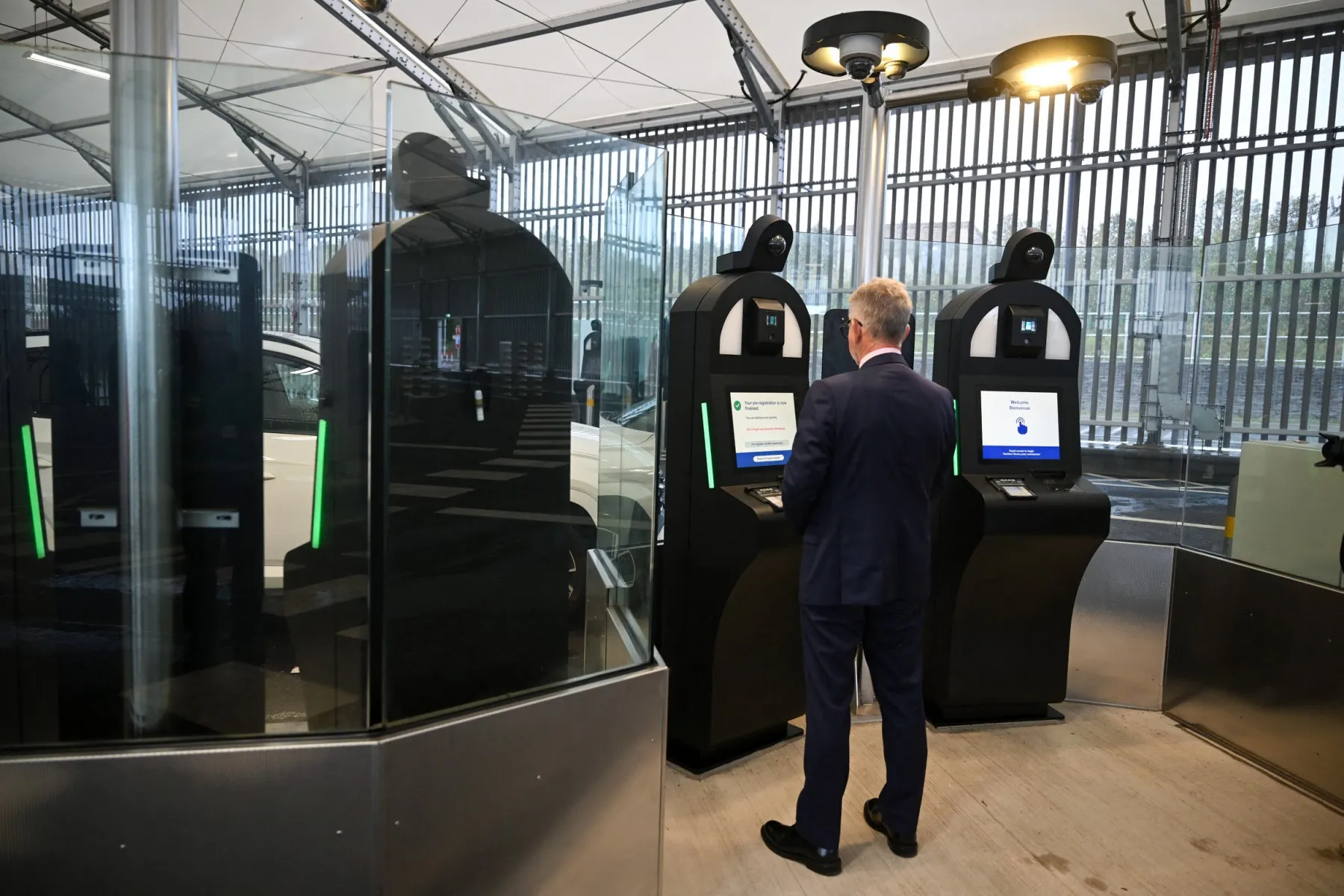
Following the rollout in Spanish airports, the Port of Valencia has now implemented new biometric border checks in line with new Schengen Area rules.
Valencia Port is now the first in Spain with border controls up to standard with the new European Entry/Exit System, known as EES.
This new biometric border system, installed by the Port Authority of Valencia (APV), bolsters identity verification procedures and better allows control of arrival flows.
READ ALSO: What will new EES border checks mean for non-EU residents in Europe?
According to a statement from the APV: “Its launch is in line with the APV’s goal of actively collaborating with the Ministry of the Interior and European institutions to improve the management of external borders. Furthermore, this initiative helps advance efforts to prevent, detect, and investigate acts related to terrorism and other serious crimes.”
The Entry/Exit System (EES), which replaces the manual stamping of passports with digital records held in a EU-wide database, has been gradually introduced since 12 October 2025 with the full roll out beginning on April 10th 2026.
It has already been progressively rolled out at Spanish airports.
EES rules mean that biometric data such as a finger print must be taken during the first entry in the Schengen area. It was created to better record entry and exit data, as well as flagging denied entry and other outstanding travel bans for non-EU travellers entering via the external borders of Member States.
Valencia Port, one of the biggest industrial ports in Europe, also welcomes over 300,000 passengers per year on ferry and cruise services, with the most frequent services coming from the Balearic Islands and internationally from Algeria.
Cruise ship passengers in particular can often be non-EU nations, especially from the UK and US, who will need to use the EES infrastructure if they haven’t already entered the Schengen Zone.
The implementation of EES infrastructure has caused confusion and delays at travel hubs across Europe so farrow with tourism bosses sounding the alarm of possible summer holiday disruption.
You can read The Local’s coverage of EES implementation across Europe here.
READ ALSO: Full rollout of new EU border checks hit by delays and disruption


