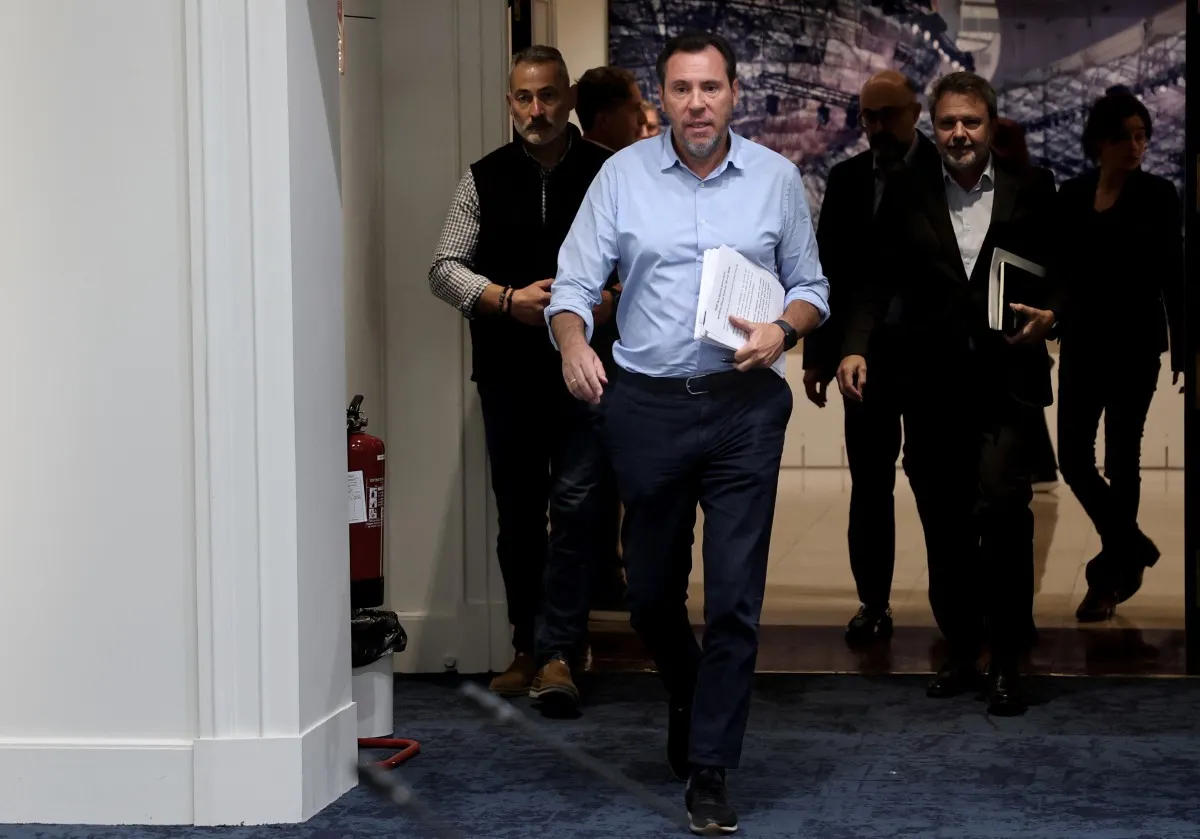
Following the devastating Toledo train collision, Spain’s Minister of Transport has announced several measures to strengthen safety on the Spanish rail network, as well as confirming that he will resign from his post.
Transport Minister Óscar Puente, who told a press conference on Tuesday that he will step down from his post following Spain’s second fatal rail crash in nine months, announced numerous key measures designed to “reinforce Spaniards’ confidence in the rail system” before his departure.
This plan includes technological improvements with new software for control centres, the use of AI to monitor system operations, and the completion of the European Rail Traffic Management System on the Madrid-Seville line.
READ ALSO: Spain’s train drivers call more strike days following crash
System review
There will be a review of the rail system regulations and operations, along with a technical study by experts that will assess the implementation of additional safety measures in train cars. One example of this is redesigning the luggage spaces to create enclosed compartments, like those on airplanes. This will prevent objects from flying around the car in case of sudden braking or impact.
Change in management protocols
The ministry wants to modify management protocols to introduce cross-validation mechanisms. This means that from now on there will be a ‘double check’ in place on all decisions made in a control centre. Essentially, all decisions must be validated by at least one other human controller.
Creation of an AI agent
An AI agent will be created to monitor system operations, anticipate scenarios, detect anomalies, and monitor conversations between train drivers and controllers across the network.
READ ALSO: Why have there been several deadly rail crashes in Spain this year?
Reduction of frequencies on the Madrid-Andalusia line
Puente explained that they will rebuild the section of the track damaged in the recent Urda accident and has confirmed that he expects the Madrid-Andalusia line to be operational within a maximum of 10 days. He cautioned, however, that there will be “reduced frequency compared to what was offered before the accident” in order “to build user confidence”. The reduced frequency is to remain in place until the remodelling work is complete, which is expected by the beginning of 2027.
New software for control centres
New software will be created for control centres, which will feature automatic alerts, electronic telephone logs, checklists, and improved visual ergonomics. This will allow for a better understanding of train locations and track conditions.
According to Puente, there are “no known examples of other railway systems with this technology”, meaning that if everything is implemented as above, Spain’s rail system would be unique.
He also stated that international organisations rank the Spanish railway system among the safest in the world, but admitted that recent accidents demonstrate the “need to reinforce it,” and acknowledged the “seriousness” of the situation.
In addition to these measures, the government plans to implement a plan to improve the working conditions of traffic controllers, as well as to increase the number of train drivers.
In the same press conference, Puente also announced aid for families and survivors of the Urda rail disaster. He said that the government has allocated €30 million for this purpose, the same amount as the fatal Adamuz train accident in January.
Direct compensation of just over €72,121 will be given to the families of each of the deceased. For those who were injured, compensation will range from €2,400 to €84,100, depending on the extent of them.
The aid will be compatible with compensation from mandatory and civil liability insurance, will be tax-exempt and act as an advance on accident insurance compensation.