

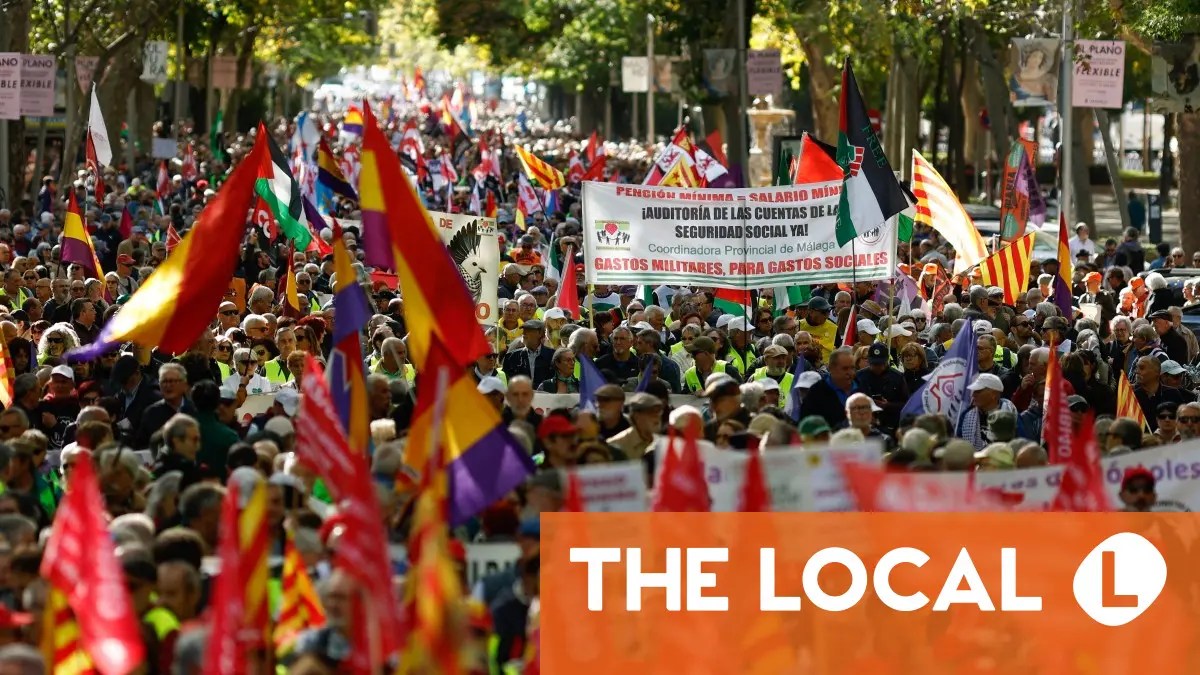
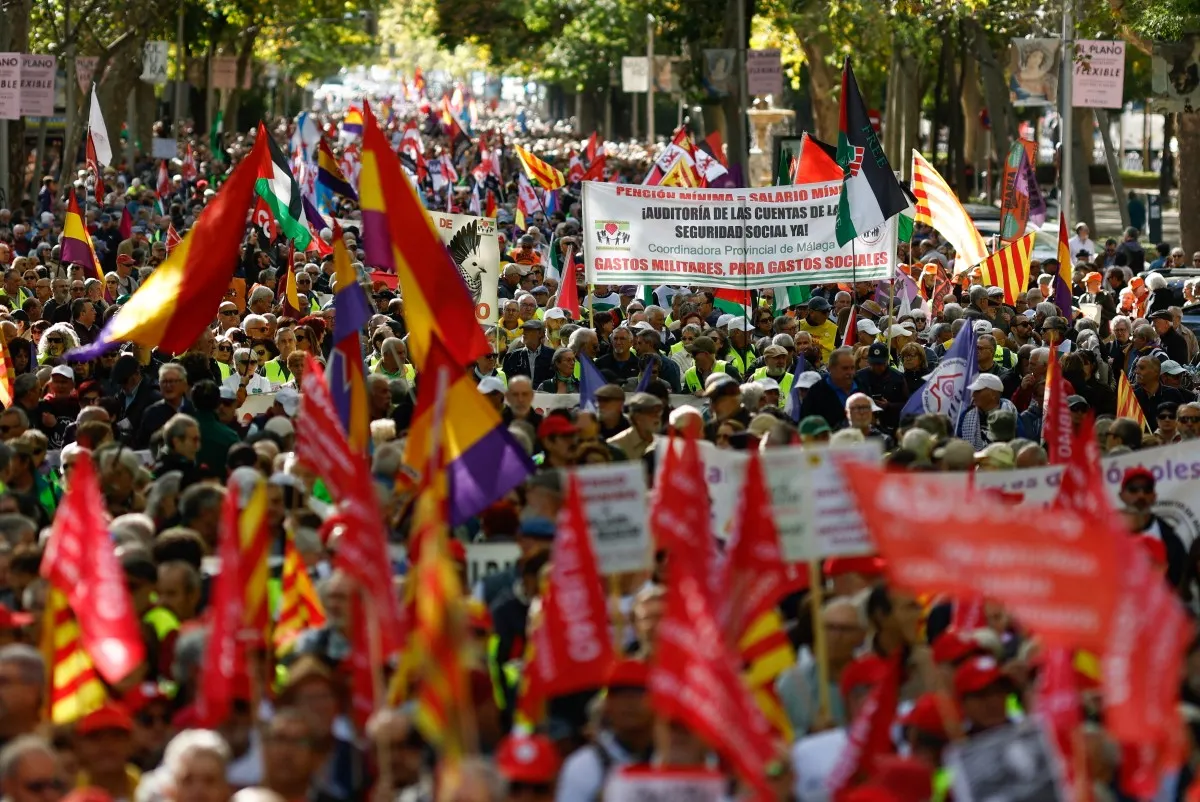
Spain faces a general strike on Wednesday November 11th over its housing crisis, with workers also demanding greater purchasing power ahead of a snap general election at the end of the month.
The strike, the first nationwide 24-hour stoppage jointly backed by Spain’s two largest unions since 2012, will be closely watched for its impact on industry and services, particularly public transport, where minimum service levels have been set.
The size of demonstrations planned in Madrid and Barcelona will also be seen as a measure of public discontent less than three weeks before the election in the eurozone’s fourth-largest economy.
The strike was called following a wave of protests over access to housing, sparked by the forced eviction in September of an 87-year-old Madrid pensioner, Maricarmen Abascal, who died days later.
READ ALSO: What rights do workers in Spain have ahead of the general strike?
“It’s a strike of the people. I think it’s the first time in a very long time that the call has come from the streets themselves,” Valeria Racu, spokeswoman for the Tenants’ Union, a key group behind the mobilisation, told public radio on Sunday.
The protests included a five-week occupation of Madrid’s central Puerta del Sol square, where hundreds of tents were pitched.
They helped trigger the decision to bring forward elections originally scheduled for 2027 to November 29th.
Socialist Prime Minister Pedro Sánchez called the snap election after his minority government failed to secure parliamentary approval for a package of housing measures proposed in response to the protests.
“This is not a strike against anyone, but rather one in favour of a common response from all levels of government to a real problem, which is access to housing,” he said in an interview published Sunday in daily newspaper La Vanguardia.
In a video message posted on X on Monday, Sánchez said public healthcare, the eight-hour working day, pensions and other benefits had all been won through collective action, including protests and strikes.
“None of this was handed to us,” he said, urging voters to defend these hard-won rights amid warnings from his Socialist Party that the right could roll them back.
READ ALSO: What to expect from Spain’s general strike on November 11th
‘Serious mistake’
The strike has been rejected by business groups, which have described it as an election-related protest, and criticised by the conservative opposition Popular Party (PP) and far-right Vox.
PP leader Alberto Núñez Feijóo warned that unions risked being linked to Sánchez “forever” if they went ahead with the strike in the run up to the election.
“You didn’t do it during his eight years in governement. Don’t do it now,” he said at a rally last week.
Feijóo, whose party leads opinion polls, said going ahead with the strike was a “serious mistake” following a high-speed train collision last month in central Spain that killed 69 people.
Union leaders have defended the walkout as an exceptional measure intended to generate broad social pressure for action on housing.
Spain’s average gross monthly salary is about €2,460, while renting a 50-square-metre apartment in Madrid cost an average of €1,170 a month in October, according to property portal Idealista.
That amounts to nearly half the average gross salary, well above the 30 percent share commonly recommended by housing experts and public institutions.
READ ALSO: What you need to know about Spain’s November doctor strikes


