


The accident comes nearly ten years after the aircraft, developed by Bertrand Piccard and André Borschberg, completed a landmark round‑the‑world flight without fuel.
Keystone-SDA
Solar Impulse 2, a solar‑powered aircraft built in Switzerland that completed a landmark round‑the‑world flight in 2016, has been destroyed after crashing in the Gulf of Mexico. No one was on board.
+Get the most important news from Switzerland in your inbox
Sold in 2019 to a Spanish‑American company and later tested by the US Navy, the aircraft went down on Monday, according to a safety report released by US authorities, confirming information reported by Swiss broadcaster RTS on Friday.
The US National Transportation Safety Board (NTSB) said the aircraft suffered a loss of power before crashing into the ocean. It was completely destroyed. No one was on board and no injuries were reported.
According to the NTSB’s preliminary findings, the aircraft took off at dawn on Monday, 4 May, from Stennis International Airport in Mississippi. It crashed in international waters in St Louis Bay, in the Gulf of Mexico. The investigation is ongoing, and a final report will be published at a later date.
Ten years after historic journey
The accident comes nearly ten years after the aircraft, developed by Bertrand Piccard and André Borschberg, completed a landmark round‑the‑world flight without fuel, landing in Abu Dhabi on 26 July 2016.
More
More
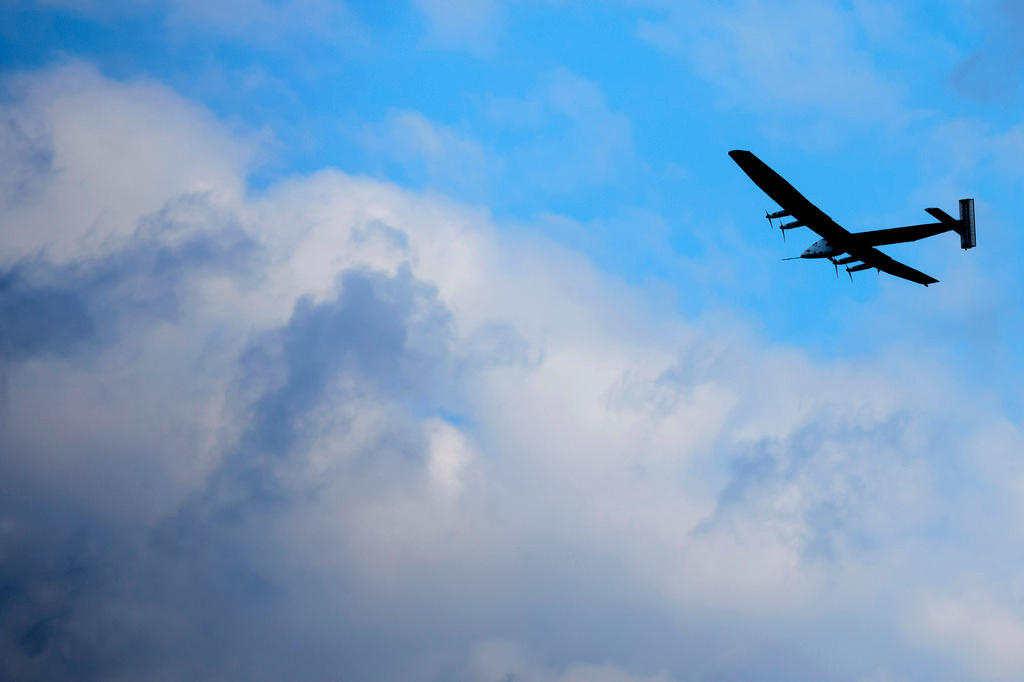
Swiss solar plane ends round-the-world tour
Solar Impulse 2 had departed from the same city on 9 March 2015 and travelled 42,000 kilometres in 17 stages, crossing four continents. Flying at an average speed of around 80 km/h and reaching altitudes of more than 8,500 metres, the pilots took turns in the single‑seat cockpit to limit weight.
Despite weighing just 1.5 tonnes, the aircraft had the wingspan of a Boeing 747. Its batteries were powered by around 17,000 photovoltaic cells mounted on the wings.
The project cost nearly CHF170 million and was backed by sponsors including Omega, ABB and Google, as well as receiving support from the Swiss government.
More
More
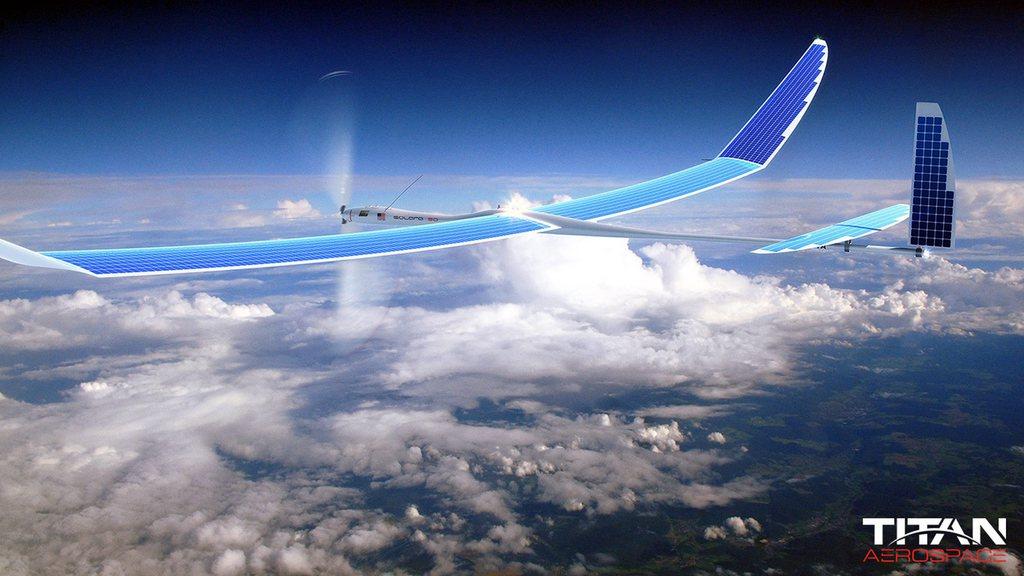
Solar Impulse may turn into stratospheric drone
Military testing and failed return home
In 2019, Solar Impulse SA sold the aircraft to the start‑up Skydweller, in a deal whose value was never disclosed. The Spanish‑American company aimed to build on Solar Impulse’s technology to develop autonomous, unmanned solar‑powered aircraft for environmental monitoring, industrial use and telecommunications.
An RTS investigation later revealed that the aircraft had become part of a project with potential military applications.
More
More
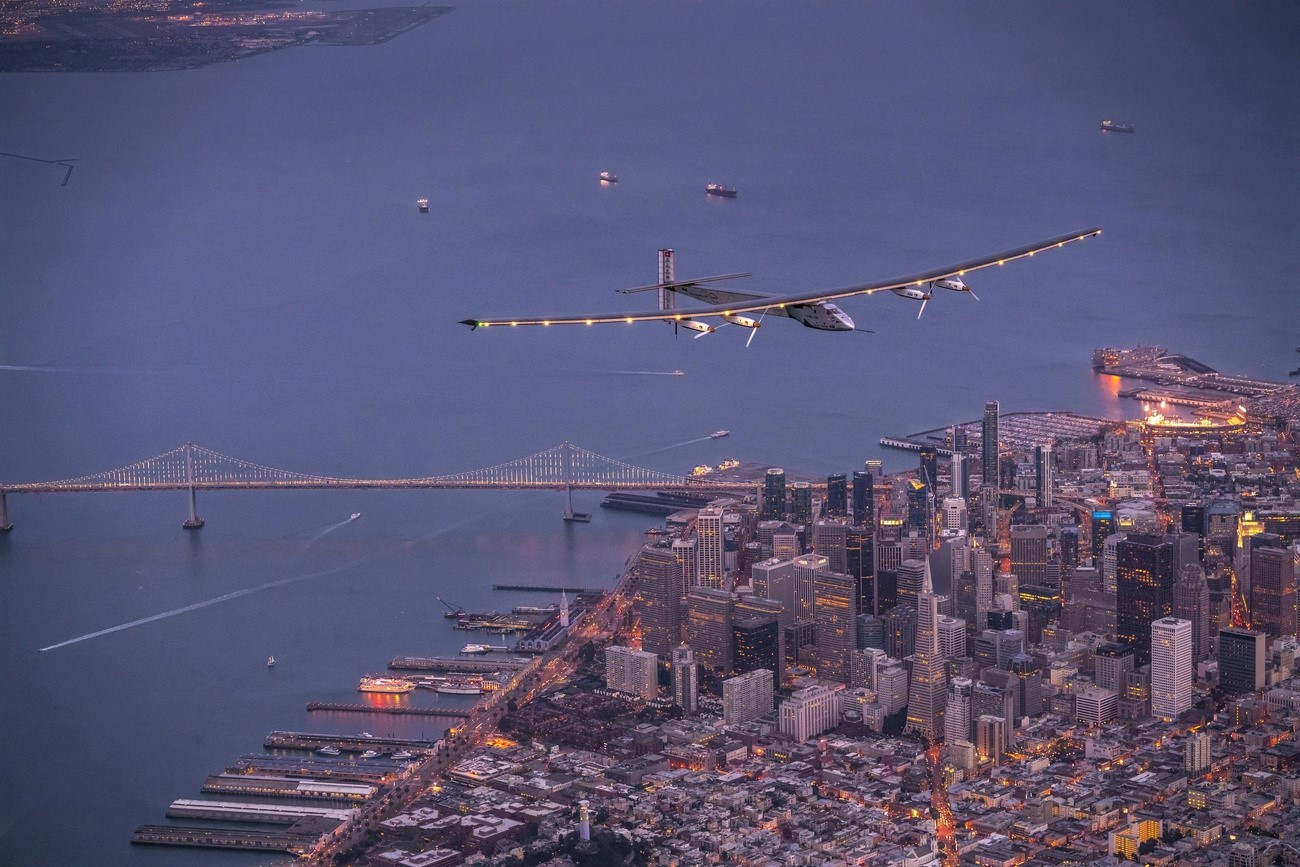
Solar Impulse to be reborn as a military-linked project
In July 2025, the US Navy announced tests to explore its use for maritime intelligence, surveillance and reconnaissance.
Under the sale agreement, the aircraft was to return to Switzerland to be exhibited at the Swiss Museum of Transport in Lucerne. That plan will now go unfulfilled.
Adapted from French by AI/sb
We select the most relevant news for an international audience and use automatic translation tools to translate them into English. A journalist then reviews the translation for clarity and accuracy before publication.
Providing you with automatically translated news gives us the time to write more in-depth articles. The news stories we select have been written and carefully fact-checked by an external editorial team from news agencies such as Bloomberg or Keystone.
If you have any questions about how we work, write to us at english@swissinfo.ch.


