


Right-wingers blast the new Swiss-EU agreements, and the government is digitalising internal naturalisation procedures – these are among the news that The Local reported this week. Catch up on everything in this weekly roundup.
Right-wing party blasts new Swiss-EU agreements
The Swiss People’s Party (SVP) this week claimed that the new package of treaties between Bern and Brussels will “cause crime to explode in Switzerland.”
They argued that ratifying the agreements would mean foreign criminals would enter the country “without hindrance, carry out their crimes, and leave a few hours later, as systematic border checks are prohibited by order of Brussels.”
READ MORE: Swiss hard-right claims EU treaties represent ‘free rein for thieves and other criminals’
Switzerland is digitalising internal naturalisation procedures
In the past – and still currently – the federal government and cantonal migration authorities mostly communicated by post when it came to naturalisation applications.
In the future, however, “communication between the responsible cantonal authorities and the State Secretariat for Migration (SEM) can take place digitally instead of by mail,” the government said.
“After reviewing naturalisation applications, cantons will now be able to forward them to SEM via the Central Migration Information System, using a new interface. In turn, the SEM will also be able to communicate its decision to grant or refuse federal naturalisation authorisation to the cantonal authorities through the same channel.”
READ MORE: Switzerland set to begin digital citizenship application
Zurich’s open-air drug scene growing during summer months
The number of drug users and dealers on Zurich’s streets has risen during the summer, prompting authorities to introduce new measures to combat the trend from spreading to other parts of the Swiss city.
The areas particularly affected are around Bäckeranlage, the barracks area, the main train station on Platform 3, as well as the Schanzengraben.
Local authorities have deployed more police and social workers. Concrete measures include increased car and foot patrols, more systematic identity checks and dispersal orders.
READ MORE: Zurich steps up fight against growing open-air drug use
MP seeks to introduce alternate traffic days in Geneva
Local deputy Julien Nicolet-dit-Félix argues that the heavy traffic increases the effects of heatwaves, and he has a plan to remedy this situation.
He has submitted a motion proposing to alternate traffic in Geneva during heatwaves.
Concretely, his proposal is calling for vehicles with even-numbered license plates to circulate on even-numbered days, and those with odd-numbered plates to only be permitted on the road on odd-numbered days.
By halving traffic, the local population will “feel the benefits of a drop in ambient temperature,” he wrote in his proposal.
READ MORE: Swiss MP seeks to change traffic patterns during heatwaves
Drought is affecting water level in lakes and rivers
Weeks of heatwaves and drought have impacted Switzerland’s waterways and, in turn, its dams as well.
Many of them are suffering from ‘exceptionally low’ water levels, according to the Federal Office of Energy (BFE).
Consequently, dams, which are considered critical infrastructure because they are sources of water supply, are filled only to less than half of their capacity – 46 percent – after weeks of heat and absence of rain.
This is the lowest level in two decades, the BFE reported.
READ MORE: Swiss rivers and lakes at lowest levels in 20 years
Climbing mountains during drought increases risks of accidents
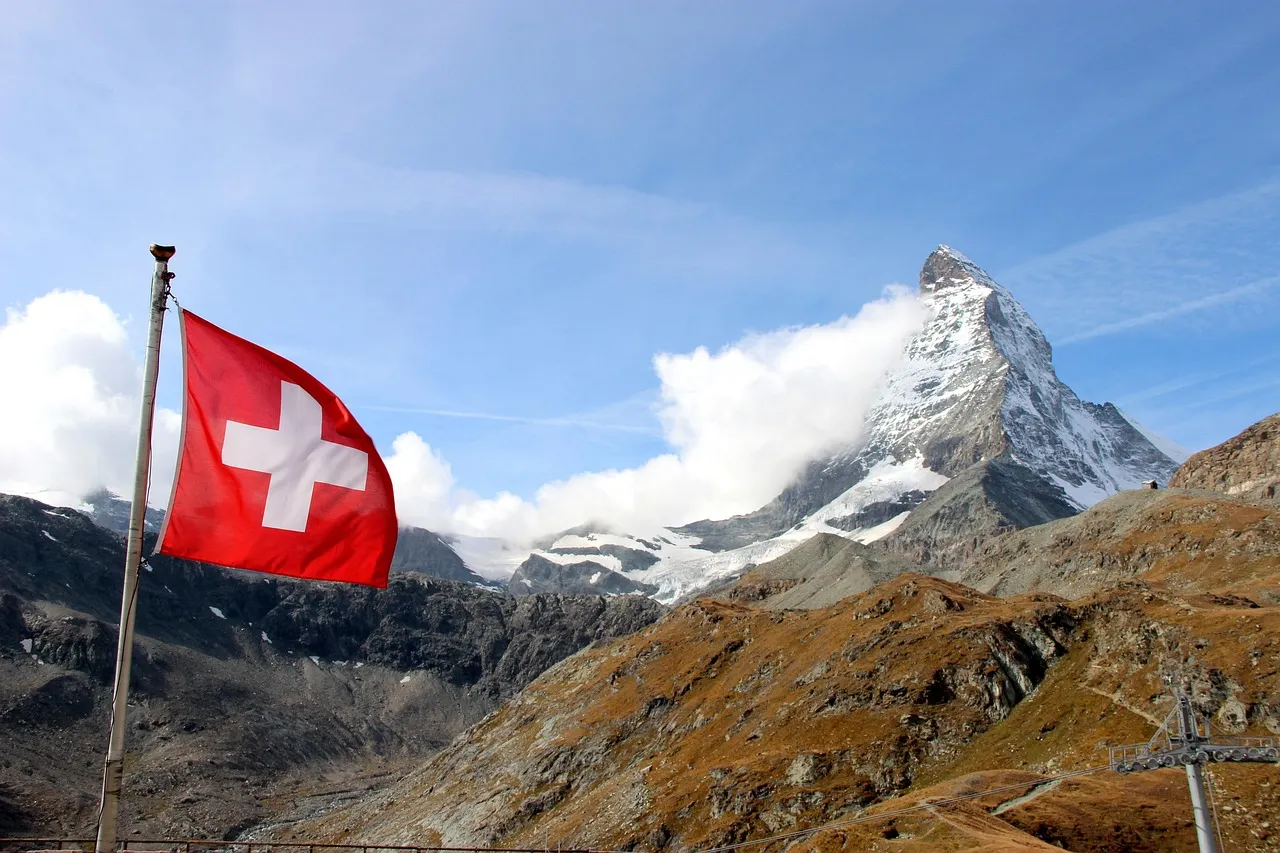
Earlier in July, mountain guides warned against climbing the iconic Matterhorn because the heatwave has significantly deteriorated conditions there, increasing the risk to climbers due to rockfalls, black ice, and thawing permafrost.
According to the Swiss Alpine Club (SAC), due to the consequences of extremely high temperatures this summer, “classic high-mountain climbs may therefore be more difficult than in previous years.”
“Crevasses are now exposed and some access routes have been altered, so choosing the correct route can be challenging,” SAC pointed out. “Some climbs are therefore currently discouraged.”
READ MORE: How hot weather makes climbing Swiss Alps ‘extremely dangerous’


