


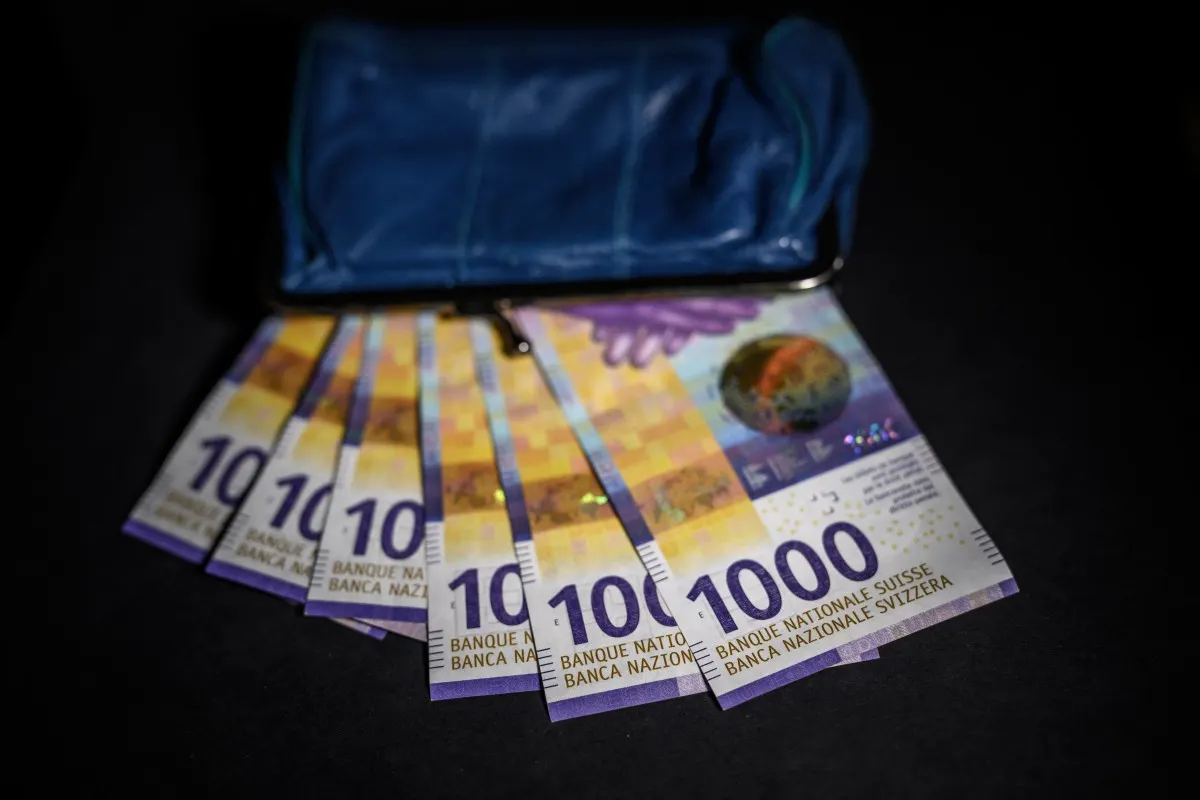
The wealthy in Switzerland can pretty much choose where they settle – these are the places top earners in the country tend to live.
Regardless of how they made their money and how large their fortunes are, Switzerland’s rich share one thing in common: they opt to live in areas with low tax rates.
This is according to findings from analysis carried out by Blick newspaper among 7,666 individuals earning at least 1 million francs a year.
In total, however, there are over 940,000 millionaires in Switzerland – roughly 13 percent of the population.
The newspaper based its analysis on data from the Federal Tax Administration.
The difference between this analysis and some other similar rankings is that Blick’s counted people who earned their wealth via salary, rather than those who merely inherited the money.
Location, location, location
This is what the study found: of the 2,100 municipalities in Switzerland, 239 have at least five residents who pay taxes on incomes exceeding 1 million francs.
And here’s where another pattern becomes clear: nine out of top 10 ‘millionaire’ communities are all located in the German-speaking part of Switzerland.
According to Blick’s findings, they are:
Zurich: 482 millionnaires
Zug: 431
Geneva: 272 (the only French-speaking city on the top-10 list)
Freienbach (Schwyz): 251
Wollerau (Schwyz): 208
Küsnacht (Zurich): 194
Basel: 164
Zollikon (Zurich): 149
Feusisberg (Schwyz): 131
Baar (Zug): 125
What about cantons?
Here too, Zurich leads with 2,013 people earning at least 1 million francs a year, followed by Geneva (883), Zug (860), Schwyz (774), and Vaud (673).
How do these people choose where to live?
You would have to search long and hard to find a place in Switzerland that is not at least somewhat pretty, so is unlikely to be a millionaires’ sole criteria when looking for a residence.
Therefore, the super-wealthy don’t necessarily choose cantons or towns based on how picturesque they are but, instead, where either the taxes are lowest, or where they can work out a favourable lump-sum taxation with local authorities.
In other words, for them, pragmatism outweighs aesthetics.
However, there is one important point: the wealthy don’t necessarily live in ‘enclaves’ reserved just for them.
Unlike some other countries, Switzerland doesn’t have ‘poor’ districts where only disadvantaged people live or, even less so, slums.
Switzerland is somewhat more democratic in this regard.
Most major cities, however, do have neighbourhoods where rents are lower or social housing exists, so less wealthy residents tend to move there.
For instance, Kreis 4 between the Hauptbanhof and Langstrasse in Zurich, Paquis in Geneva, and Renens in Lausanne are such neighbourhoods.
This doesn’t mean that everyone residing in these areas falls below the poverty level, but this is where large numbers of these people live.


