

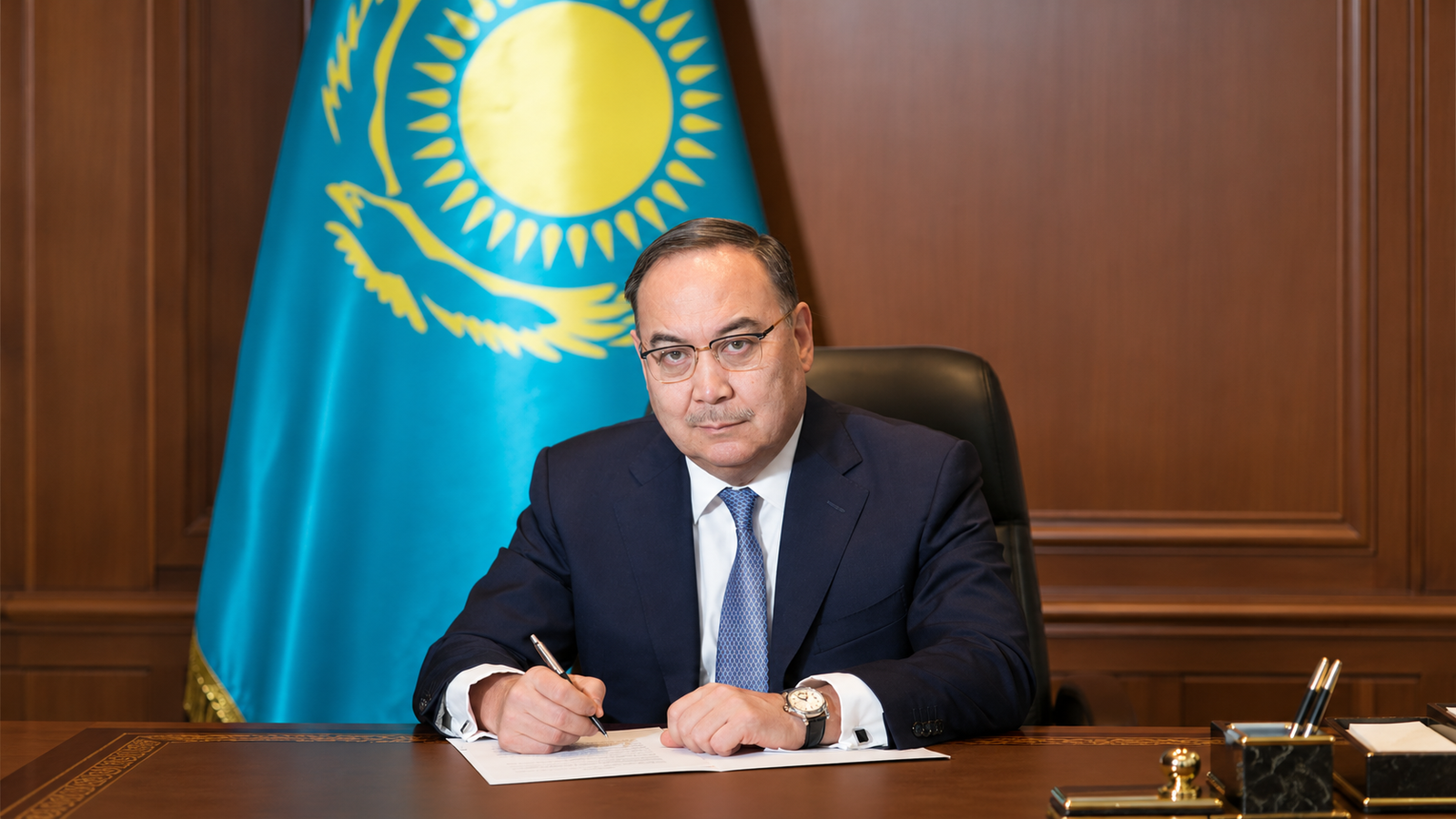
By Erzhan Kazykhan, Permanent Representative of the Republic of Kazakhstan to the UN Office and Other International Organizations in Geneva
Water is becoming one of the defining issues of the twenty-first century. Access to and the sustainable management of water resources underpin public health, food and energy security, economic development, biodiversity conservation and climate resilience. Yet water does not recognize national borders. Rivers and aquifers connect countries and regions, while droughts, floods, pollution and water scarcity increasingly transcend national boundaries, affecting entire economies and societies.
Despite the growing importance of this issue, the international architecture for water governance remains institutionally fragmented.
More than 30 United Nations entities are involved, to varying degrees, in water and sanitation-related activities. Their mandates span a wide range of areas, from public health and agriculture to climate policy, ecosystems, sustainable development and transboundary cooperation. UN-Water plays an important coordinating role. However, the UN system still lacks a dedicated organization with a comprehensive mandate focused specifically on global water issues.
For decades, this arrangement reflected the cross-cutting nature of water. Today, however, as the scale and complexity of water-related challenges continue to grow, a legitimate question arises: is the existing model of coordination sufficient, or does the international community need a more consolidated institutional framework?
I believe it is time to address this question in a more substantive manner.
The ongoing reform of the United Nations makes this discussion particularly timely. The UN80 Initiative has placed greater efficiency, mandate review, institutional rationalization and the elimination of duplication at the centre of efforts to strengthen the Organization. It encourages Member States and UN entities to take a critical look at the existing distribution of responsibilities, the use of resources and the effectiveness of international coordination.
In my view, water governance should be an integral part of this discussion.
The objective should not be to create another bureaucratic layer within the United Nations system. Rather, the current reform process provides an opportunity to reassess the existing architecture of global water governance and consider how accumulated expertise, institutional knowledge and operational capacities can be brought together to deliver more tangible results.
This is precisely the rationale behind the proposal put forward by President of Kazakhstan Kassym-Jomart Tokayev to establish an International Water Organization within the United Nations system.
President Tokayev first introduced this initiative in December 2025 and further elaborated on it at the Regional Ecological Summit in Astana in April 2026.
The proposal is based on a fundamental understanding: global water challenges have outgrown the capacity of the current fragmented institutional model. The international community should therefore consider whether a more coherent structure could strengthen coordination, improve institutional continuity and enhance the implementation of international commitments.
It is important to emphasize that Kazakhstan’s initiative is not intended to replace existing organizations or duplicate their functions. On the contrary, it seeks to build upon the considerable expertise and institutional capacities that already exist.
UNESCO, the United Nations Economic Commission for Europe (UNECE), the World Meteorological Organization (WMO), the Food and Agriculture Organization of the United Nations (FAO), the World Health Organization (WHO), the United Nations Environment Programme (UNEP), the United Nations Development Programme (UNDP), the World Bank and other institutions have accumulated substantial knowledge and operational experience across different aspects of water management.
However, these capabilities remain distributed across separate institutional mandates. In our view, the challenge is to ensure that this existing potential can be mobilized in a more coherent, consistent and results-oriented manner.
A future International Water Organization could provide the institutional platform to achieve this objective.
Its potential areas of responsibility could include supporting the implementation of international water commitments, strengthening global policy coordination, facilitating the exchange of data and knowledge, promoting transboundary cooperation, supporting the mobilization of financial resources and accelerating progress towards Sustainable Development Goal 6 (SDG 6).
Equally important, it could serve as a permanent intergovernmental platform for addressing water issues at the highest political level.
I am convinced that water must increasingly be regarded not simply as one component of the environmental or socio-economic agenda, but as an independent strategic factor in international security and sustainable development.
Water cannot be confined to a single policy area. Agricultural policies directly influence water consumption. Energy choices affect river systems. Climate change transforms precipitation patterns, glaciers and groundwater resources. Unsustainable water management has consequences for public health, ecosystem stability and economic productivity.
Decisions taken in one sector inevitably affect others. Effective water governance therefore requires an integrated approach capable of ensuring greater coherence between policy decisions and practical action.
For Kazakhstan, this issue has particular significance, shaped by both geographical realities and historical experience.
A substantial share of our country’s major rivers originates beyond its national borders. This means that water security cannot be ensured through domestic measures alone. It requires sustained dialogue, mutual trust and effective cooperation with neighbouring countries.
Central Asia provides one of the clearest examples of how closely water resources are linked to the environmental, economic and social sustainability of an entire region.
The tragedy of the Aral Sea remains a stark reminder of the long-term consequences of unsustainable management of shared water resources. At the same time, the region’s experience demonstrates another important dimension of water cooperation: shared rivers and water resources can become not only a source of challenges, but also a foundation for confidence-building, good-neighbourly relations and practical cooperation among states.
Kazakhstan has consistently advocated stronger international cooperation and a more prominent global water agenda.
In December 2024, Kazakhstan, France and the World Bank, in partnership with Saudi Arabia, convened the One Water Summit in Riyadh. The Summit helped maintain high-level political attention to water issues, accelerate efforts towards SDG 6 and contribute to preparations for the 2026 United Nations Water Conference.
Today, the proposal for an International Water Organization seeks to take this discussion a step further. The question is no longer only what additional measures the international community should undertake to address global water challenges, but also whether the institutional system responsible for addressing them is organized in the most effective way.
Kazakhstan’s initiative has already moved into the practical phase of international consultations.
The first round of consultations on the proposed International Water Organization was held in Astana in April 2026 on the margins of the Regional Ecological Summit. Participants included representatives of governments, international organizations, the scientific community and expert circles, including senior representatives of the UN Department of Economic and Social Affairs, the UN Secretary-General’s Special Envoy on Water, UNECE, UNESCO and UN-Water.
UN Under-Secretary-General for Economic and Social Affairs Li Junhua welcomed President Tokayev’s call for a dedicated international organization on water and encouraged further deliberations among Member States.
The discussion continued in New York in July 2026 during the High-Level Political Forum on Sustainable Development. Kazakhstan presented its proposal as a basis for open, inclusive and constructive international dialogue.
We consider it essential that further deliberations follow this approach, with the broad participation of Member States, international organizations, the scientific community and other relevant stakeholders.
Establishing a new international structure requires careful consideration of a number of important questions. What should its mandate be? How should its governance and financing arrangements be designed? How should it interact with existing UN entities? Which functions should remain within current organizations, and which could benefit from greater institutional consolidation?
All these questions should be addressed through substantive consultations among Member States.
At the same time, one fundamental principle must guide the process: any institutional reform must deliver genuine practical added value. It should reduce fragmentation rather than create new duplication, make existing expertise more accessible, strengthen the link between international policy commitments and their implementation, and ensure more effective use of available resources.
This is precisely the underlying logic of the UN80 reform initiative.
Reforming an international organization should not be limited to administrative streamlining or cost reduction. Its broader purpose is to ensure that existing institutions remain relevant to contemporary global realities and capable of responding effectively to emerging challenges.
Where mandates established at different points in history have become dispersed or overlapping, reform should provide an opportunity to identify more effective ways of bringing them together.
Water is one of the most compelling examples of an area where such reassessment is necessary.
The international community already possesses considerable scientific knowledge, technical expertise and practical experience. The question is whether these resources are organized effectively enough to ensure coherent action, sustained political attention and measurable results.
An International Water Organization could potentially provide the institutional foundation needed to address this challenge.
The 2026 United Nations Water Conference, scheduled to take place in Abu Dhabi from 8 to 10 December, will be particularly important in this regard.
The Conference will rightly focus on accelerating the implementation of SDG 6 and strengthening practical action on water and sanitation. At the same time, we believe it offers a unique opportunity to move beyond the discussion of individual programmes and projects and address a more fundamental question: how should global water cooperation be organized in the decades ahead?
In this context, several key issues deserve particular attention.
How can international commitments be implemented more consistently? How can scientific knowledge and data be better integrated into political decision-making? How can cooperation among countries on shared water resources be strengthened? How can international financing be mobilized more effectively? And, ultimately, how can the existing expertise and capacities of the UN system be brought together without creating additional bureaucracy?
These may appear to be institutional questions. Yet their ultimate purpose is practical: to improve the effectiveness of international efforts to address water challenges and enhance people’s quality of life.
Of course, no international organization can independently eliminate water scarcity, build the necessary infrastructure or resolve all competing demands for water resources. Primary responsibility for water management will continue to rest with national governments and local authorities.
Nevertheless, today’s global challenges require effective mechanisms for international cooperation.
A stronger and more coherent institutional framework could ensure continuity in international efforts, improve coordination, support countries in fulfilling their commitments, facilitate access to knowledge and financial resources, and maintain sustained international political attention to water issues.
The current debate, therefore, goes far beyond the question of establishing a new international organization.
At its core, it concerns whether the institutional architecture developed over previous decades is adequate to meet the realities and challenges of the twenty-first century.
As water becomes increasingly interconnected with climate resilience, food and energy security, ecosystem preservation and economic development, maintaining a fragmented approach to its governance is becoming progressively less effective.
The international community now has an opportunity not merely to acknowledge existing challenges, but to take meaningful steps towards improving the mechanisms through which they are addressed.
The UN80 process provides a favourable environment for this discussion. It is important that global water governance becomes an integral part of the broader reform agenda.
President Kassym-Jomart Tokayev’s proposal to establish an International Water Organization represents Kazakhstan’s concrete contribution to this process. It does not claim to offer ready-made answers to every institutional question, nor should it be viewed as a predetermined organizational blueprint. Its principal value lies in initiating a substantive international dialogue on how to make global water governance more coherent, effective and results-oriented.
I am convinced that the time has come to move beyond recognizing the fundamental importance of water and towards building more effective mechanisms for international cooperation in this area.
Ultimately, the question is not simply whether the international community needs a new organization. It is whether we are collectively prepared to adapt our institutions to the challenges of our time and ensure that one of humanity’s most essential resources receives the political attention and institutional support it truly deserves.


