


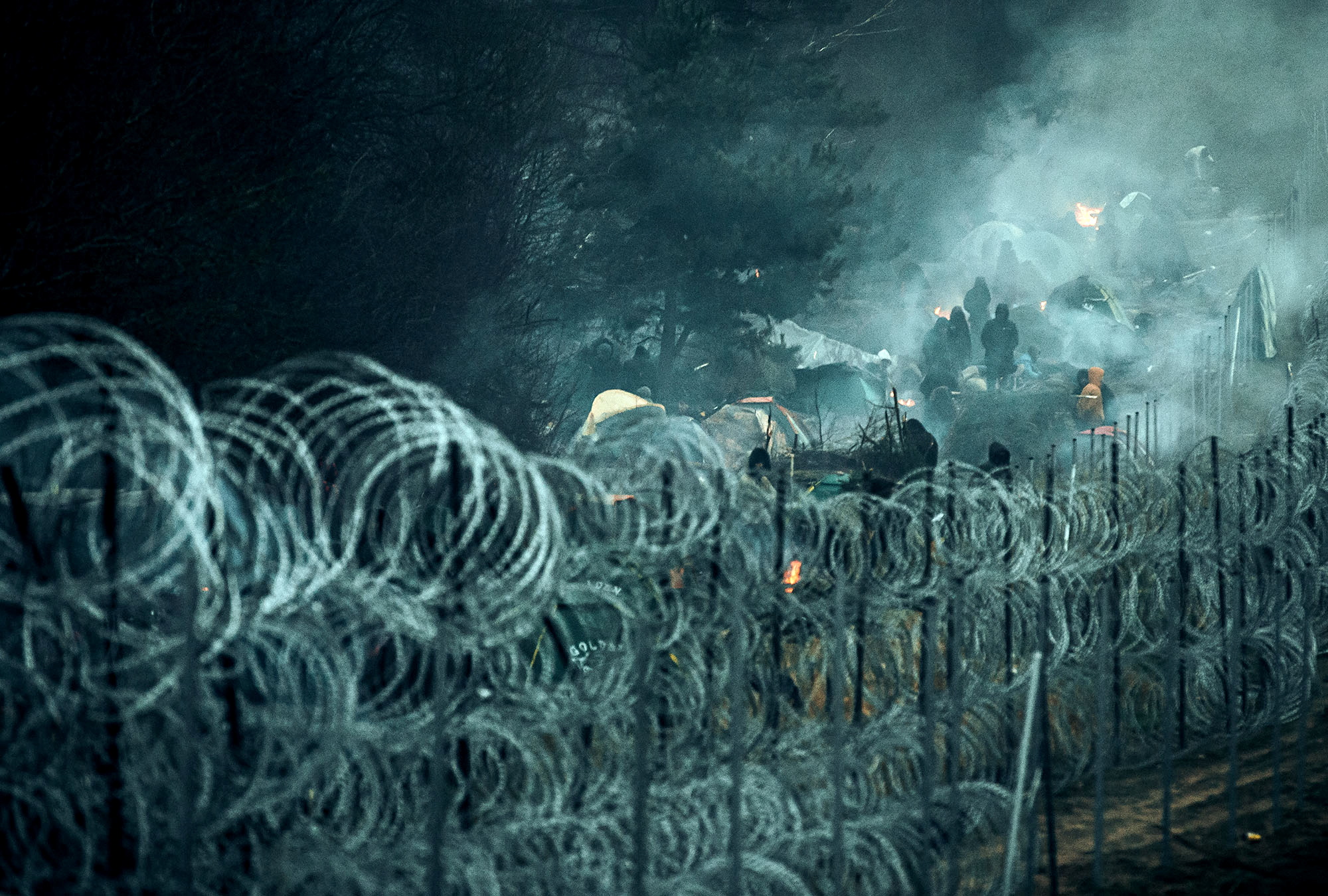
Migrants on the Belarus side of the border with Poland near Kuznica, Poland, November 2021.
Irek Dorozanski / Reuters
Did Switzerland co-finance illegal pushbacks at the EU’s external borders? An independent report has found no evidence to suggest a direct connection.
For refugees seeking protection who arrive at the outer borders of the European Union (EU), the right to access a fair asylum procedure is repeatedly flouted.
So-called pushbacks are an example of this: migrants are violently forced back at the border, an action which violates the European Convention on Human Rights.
Switzerland is not an EU member, but it contributes funds for the protection of the EU’s external borders. Now, independent experts, commissioned by the government, have investigated whether Swiss money was also involved in alleged rights violations.
Ultimately the expert report does not establish a direct link between Swiss funds and human rights violations.
But a connection cannot be ruled out: through contributions of over CHF300 million ($336 million), Switzerland has co-financed vehicles, drones and thermal imaging cameras – including in countries where pushbacks have occurred, such as Croatia, Greece and Poland.
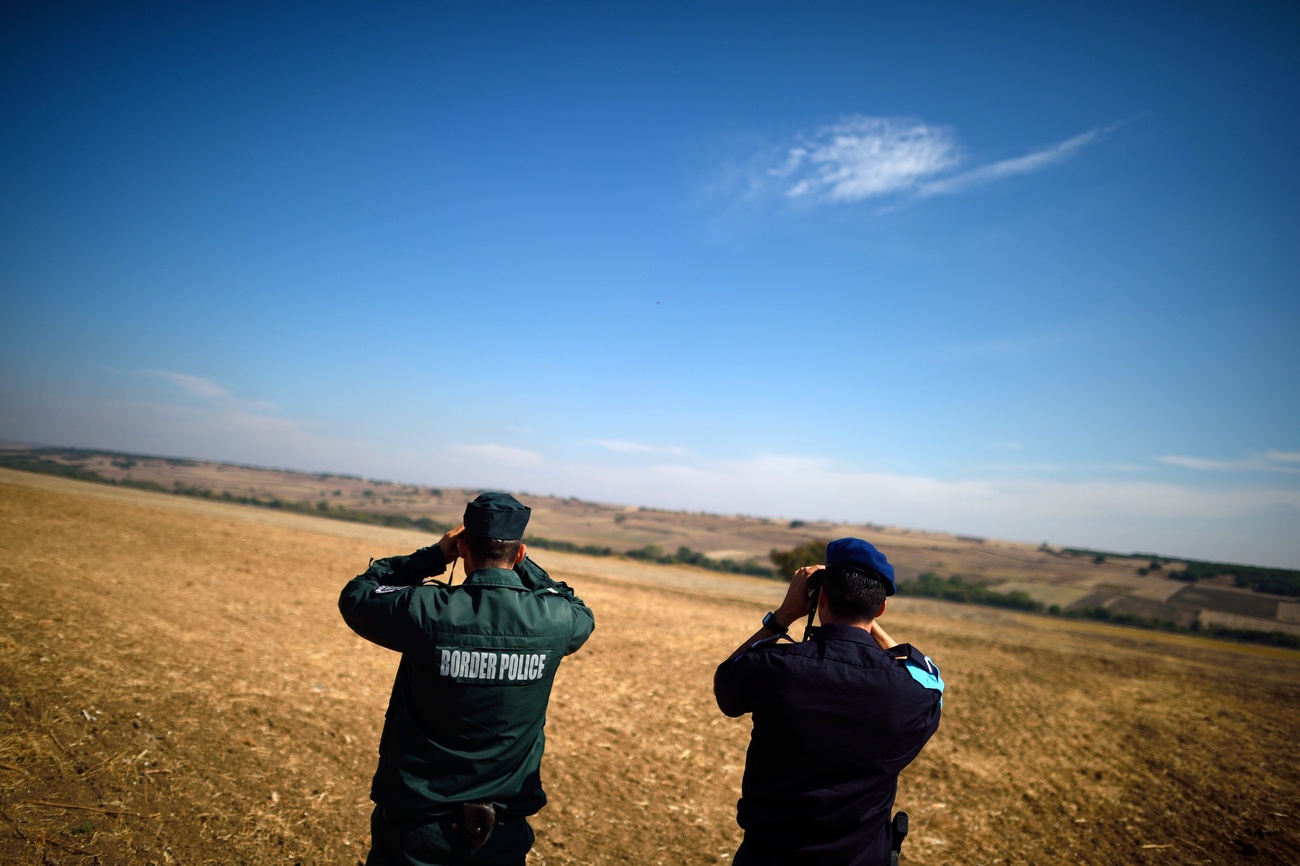
>> In 2022, Swiss voters boosted funds for Frontex, the EU’s external border agency – but with some reservations:
More
More
EU border agency remains under scrutiny
Difficult to prove
The expert report came after a demand made in parliament by the left-wing Social Democrats, who are sharply critical of alleged human rights violations at the EU’s external borders.
For Lionel Walter, a spokesperson for the Swiss Refugee Council, the fact that the report now shows no direct link between Swiss funds and pushbacks is not a surprise. Walter puts this down to the systemic situation as well as missing information – the available data does not allow for a clear attribution of documented violations.
For that to happen, each case would have to be examined on site. The Refugee Council says Switzerland should now better assume its responsibilities by “advocating for the introduction of independent monitoring structures and oversight instruments in connection with such funds”, Walter says.
Independent oversight
The idea of independent oversight to monitor pushbacks is also proposed in the expert report; for the government, better oversight and controls is also desirable, as it wrote in its assessment.
Yet Pascal Schmid, a parliamentarian responsible for migration and asylum policy in the right-wing Swiss People’s Party, reckons independent oversight would achieve nothing. “Even with an expensive bureaucratic apparatus, you’re not going to be able to get a handle on what happens with these millions in Swiss taxes,” says Schmid.
The money should be used in Switzerland instead of being sent to Brussels, where it is impossible to control what ultimately happens to it and what individual states do with it, Schmid added.
Although Switzerland also receives a contribution from the EU fund, the People’s Party would prefer to stop paying into it. With left-wing parties also critical of methods which violate human rights, such as pushbacks, the Swiss contribution to protecting the EU’s external borders remains a hot political topic.
Translated from German, sub-edited by Domhnall O’Sullivan
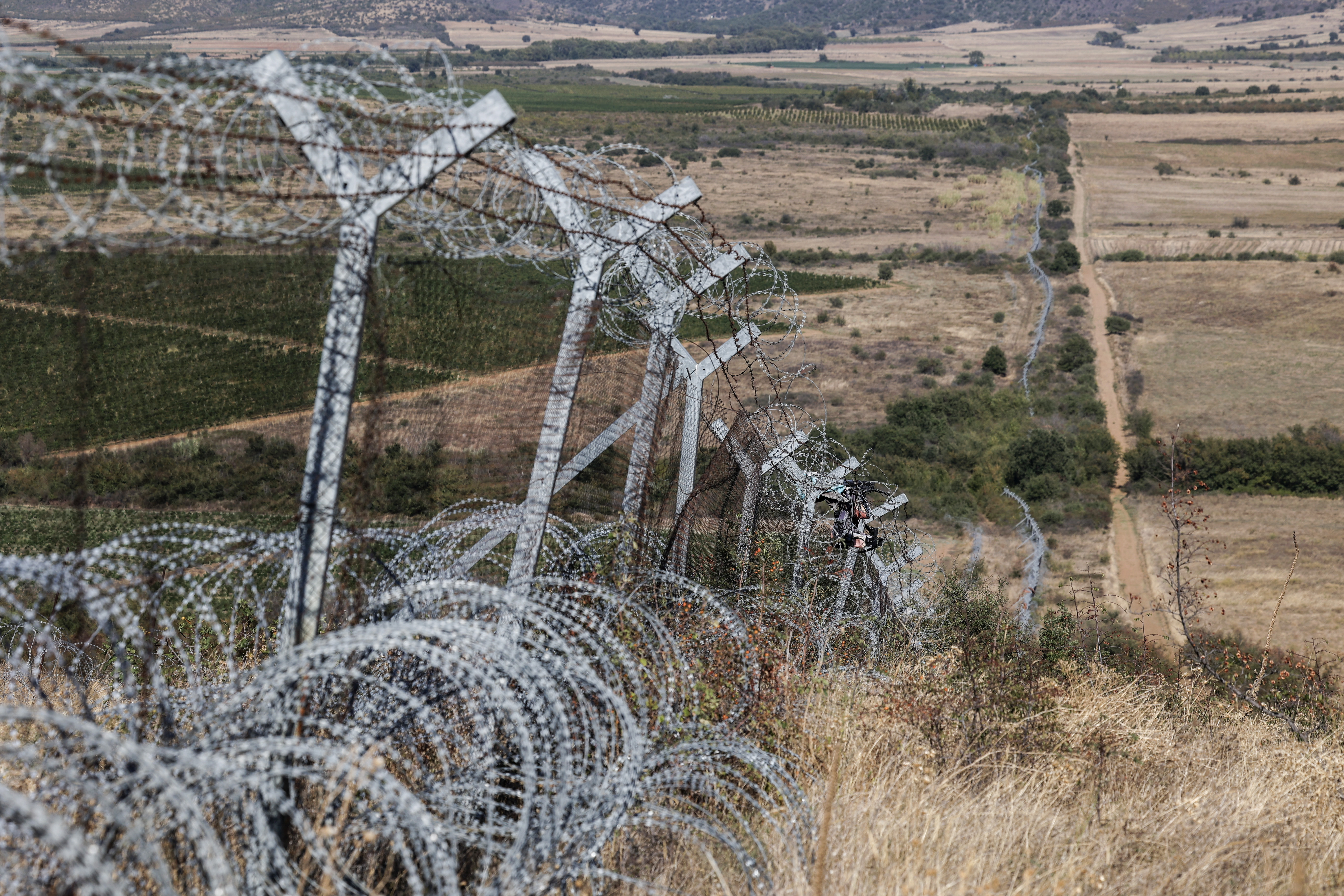
>> Swiss research institutes also make money in the protection of the EU’s borders:
More
More
AI is big business at Europe’s borders
More

More


