


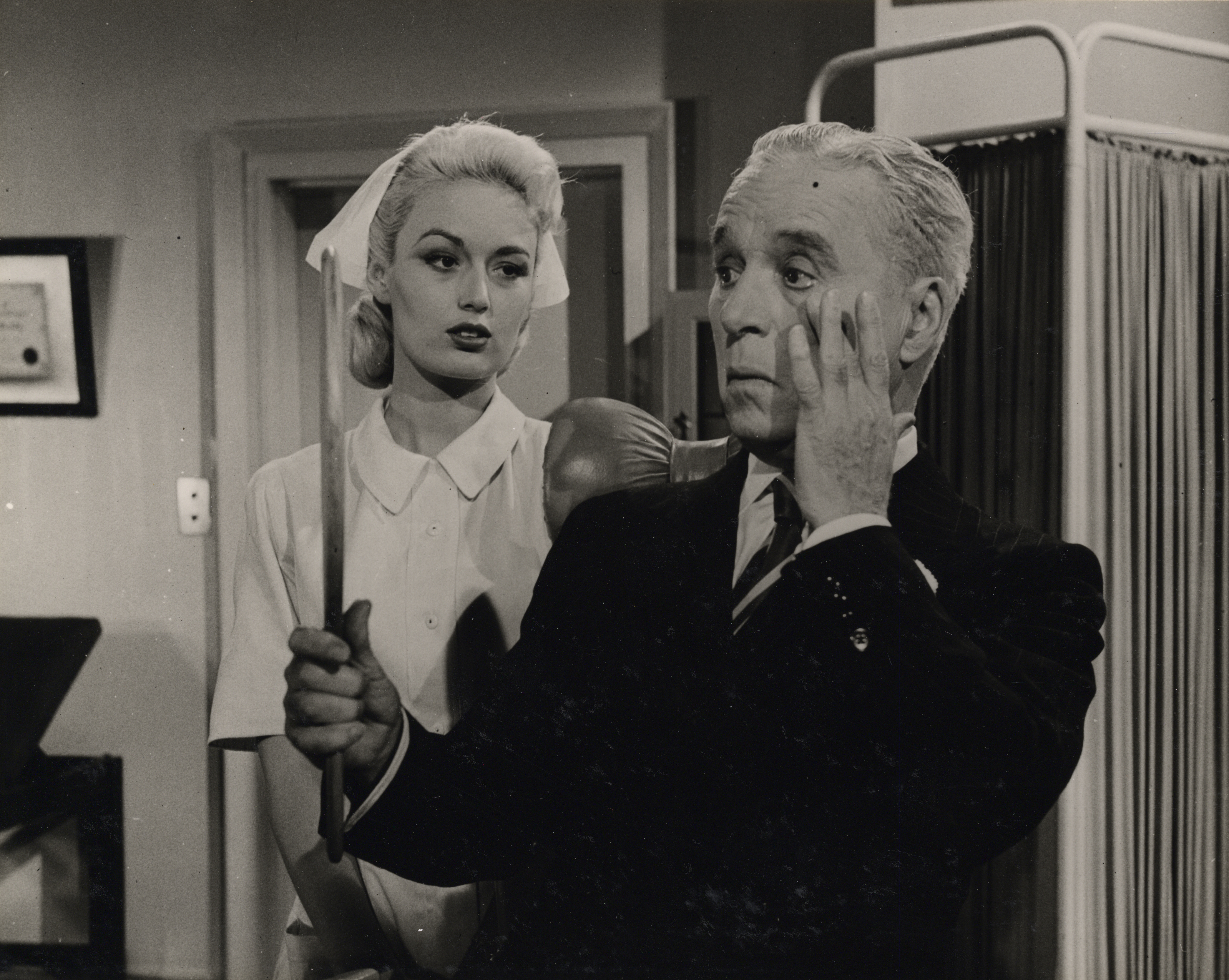
Charlie Chaplin was probably the most famous target of the House Un-American Activities Committee. His anti‑McCarthyism masterpiece, “A King in New York” (1957), made during his exile in the UK, remained unreleased in the United States for 20 years.
©Roy Export SAS
The Locarno Film Festival’s major retrospective explores the work of left-wing filmmakers targeted during the McCarthy era, revealing a body of cinema whose critiques of nationalism, careerism and conformity resonate strongly today.
There are many ironies about staging an ambitious retrospective section at a large contemporary film festival. Novelty is the base currency of the movie industry, and a celebration of films made by dead people nearly a century ago provides scarce opportunity for the distribution of business cards.
The Locarno Film Festival retrospective section, housed primarily in the historic Gran Rex theatre, must therefore provide a kind of micro-environment within the festival, talking back to the main slate and making a case for an alternative mode of relating to the cinema.
This year’s retrospective topic, “Red and Black: Hollywood Left and the Blacklist”, speaks to the tumultuous present in a few ways. Members of the “Hollywood Left” were censored by the House Un-American Activities Committee (HUAC) throughout the 1950s, accused of having ties to Communism.
Though censorship of left sentiment in popular media has long been a facet of American life – whether tied to criticism of Israel, trans advocacy, or critical race theory – this trend has been exaggerated since the start of the second term of President Donald Trump, who even branded the milquetoast TV host Jimmy Kimmel a dangerous revolutionary.
Challenging the Blacklist history
Ehsan Khoshbakht, who has curated the Locarno retrospective section since 2024, and additionally co-directs the Il Cinema Ritrovato festival of film history in Bologna each year, intends to challenge the history of the Blacklist as it has typically been told.
“I’m very critical of the American approach to the question of the Blacklist,” Khoshbakht told Swissinfo, “because they tend to disregard one central fact: that these people were, in many cases, devoted Communists. Some were even Stalinists, and they made very analytical films dissecting their society.”
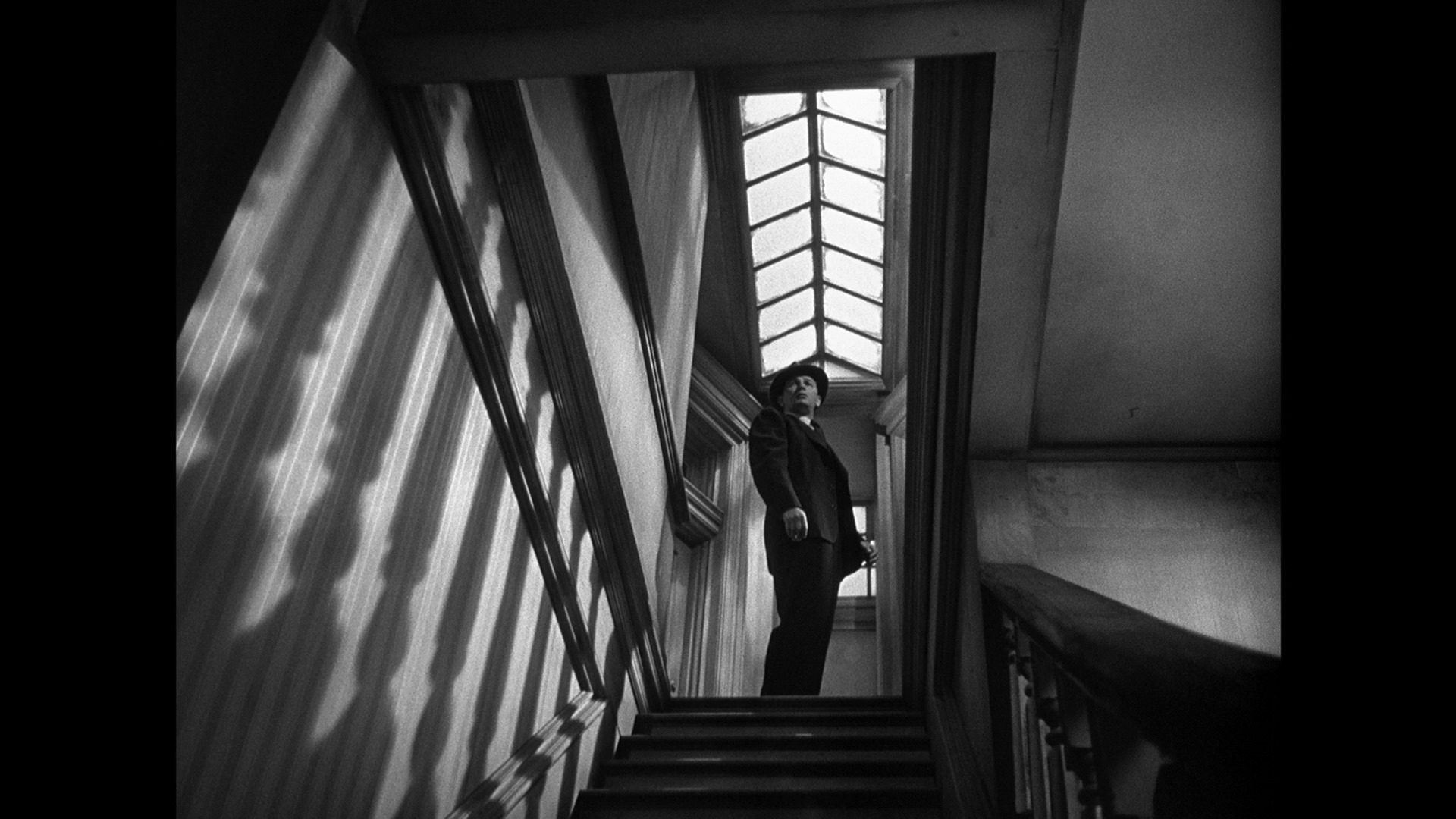
Scene of Abraham Polonsky’s “Force of Evil” (1948): finding rot at every level.
Courtesy Of Park Circus-Paramount
Take, for example, Abraham Polonsky’s Force of Evil from 1948. John Garfield (who, like Polonsky, was blacklisted for refusing to cooperate with HUAC in 1951) stars as Joe Morse, a crooked lawyer working to monopolise and legitimise the “numbers racket”, a popular and unauthorised lottery system before such contests were legal in the United States. Morse’s relatively innocent brother is himself a small-time crook in this racket, and his even more innocent secretary, Doris, is seduced without too much trouble into this bright, guilty world.

Film maker and scriptwriter Abraham Polonsky in a scene from “Dangerous Citizen” (2026), a documentary about his life and work.
Courtesy Of Black Pool Productions
Bearing out Khoshbakht’s sentiments, in his vivisection of American society, Polonsky finds rot at every level. His anti-nationalist sentiment is clear from the jump: Morse’s cadre’s big scam relies on rigging the numbers to come up “1776” on July 4, the number bet by every patriotic rube in America.
Careerism in America
A common thread in many of the retrospective films is a suspicion of the twin American virtues of ambition and careerism. Edgar G. Ulmer’s Ruthless (1948), with a script featuring contributions from the blacklisted writers Alvah Bessie and Gordon Kahn, tells the cautionary tale of Horace Vendig (Zachary Scott), a rags-to-riches philanthropist who steps over friends, wives and lovers to make it to the top.

Vintage poster of “Ruthless” (1948).
Reproduction
The film plays something like Citizen Kane (1942) in a slightly harder emotional register, with Orson Welles’ psychological complexity replaced with something a little closer to pure hatred. “You’re the only friend I have,” Vendig tells his childhood friend Vic (Louis Hayward), after he has betrayed everyone else. “And I hate your insides,” Vic responds, as if the writers were speaking directly to their informants.
These filmmakers and writers – Bessie, Kahn, Polonsky, and so many more – were stolen from audiences at the peak of their powers, along with their vision of a popular American cinema that could dissent from national consensus. Khoshbakht carries something of this anger with him.
“It’s such a waste,” Khoshbakht tells Swissinfo. “It’s really painful, to this day, when you think of how this flow of talent, ideas, imagination, commitment, was stopped in its tracks. We are still catching up.”
In the Blacklist era, the filmmakers of the Hollywood Left were forced to make a choice between their careers or their principles. Those who named names for HUAC continued, in many cases, onto long and successful careers in America, while those who refused had their livelihoods ruined, and are only now being properly celebrated. The films of the Hollywood Left, made before and after the Blacklist, turned their scorn to this prevailing culture of every man for himself.
The Intimate Stranger (1956), made by blacklisted director Joseph Losey, sets its sights on a film industry where ruthlessness is the order of the day. Exiled from Hollywood, like Losey, film editor Reggie Wilson (Richard Basehart) moves to England, where he weds a major film producer’s daughter and assumes a head post at the company. His motives are only further called into question when a woman from his past claims that he dropped her in order to get ahead in the industry with his new wife.
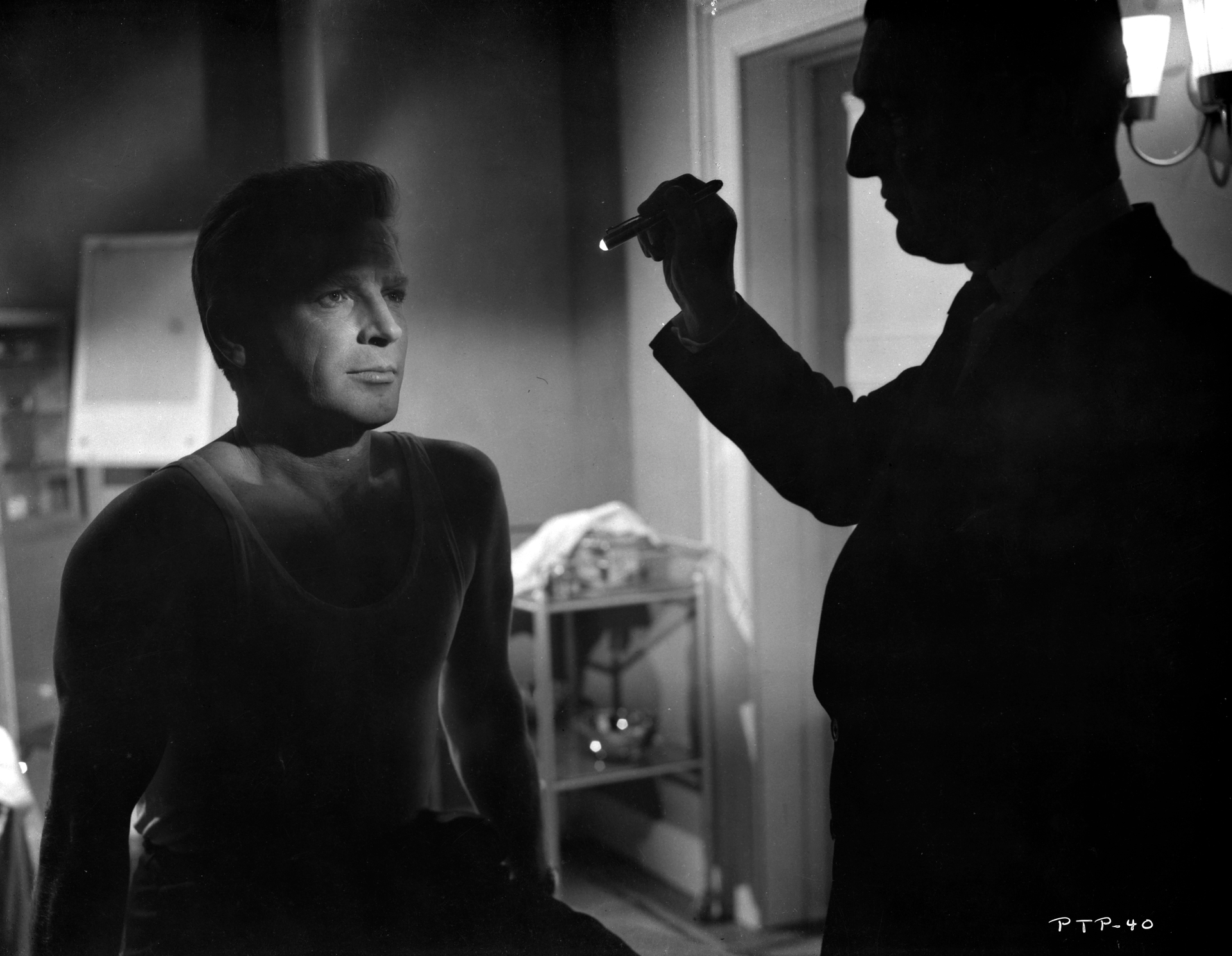
Richard Basehart in a scene of “The Intimate Stranger”. The film was a way for director Joseph Losey, in his UK exile, to come to terms with the terror he was subjected to in the United States.
©Courtesy of Park CircusWarner Bros
When asked if he hoped the retrospective might impart something of this anti-careerist bent to the rest of the festival, Khoshbakht demurs. “I can’t know how the retrospective corresponds with the contemporary film programming,” Khoshbakht says. “That’s a question for the audience.”
The fruits of careerism are on display everywhere in modern society – children, some observers noteExternal link, can no longer identify ambition as a “fatal flaw” in Shakespeare (Macbeth). It’s tempting to hope that these films of the Hollywood Left are able to raise their voices to chastise the ruthless ambition that has continued apace in the film industry since the days of the Blacklist. But it’s not a problem a film, even a retrospective, can solve, and so Khoshbakht defines a more modest aim.
“I just find it gratifying when someone who is in Locarno to watch new films gets tired of too many digital images, randomly enters a retrospective film and is blown away by it,” he said.
Dylan Adamson is a film critic and curator based in Toronto, Canada. His writing can be found at the Globe and Mail, The Toronto Star, Filmmaker Magazine, Senses of Cinema, among other outlets. His curated programs have played at TIFF Cinematheque, Anthology Film Archives, and the San Francisco Cinematheque.
Edited by Catherine Hickley and Eduardo Simantob/ts


