

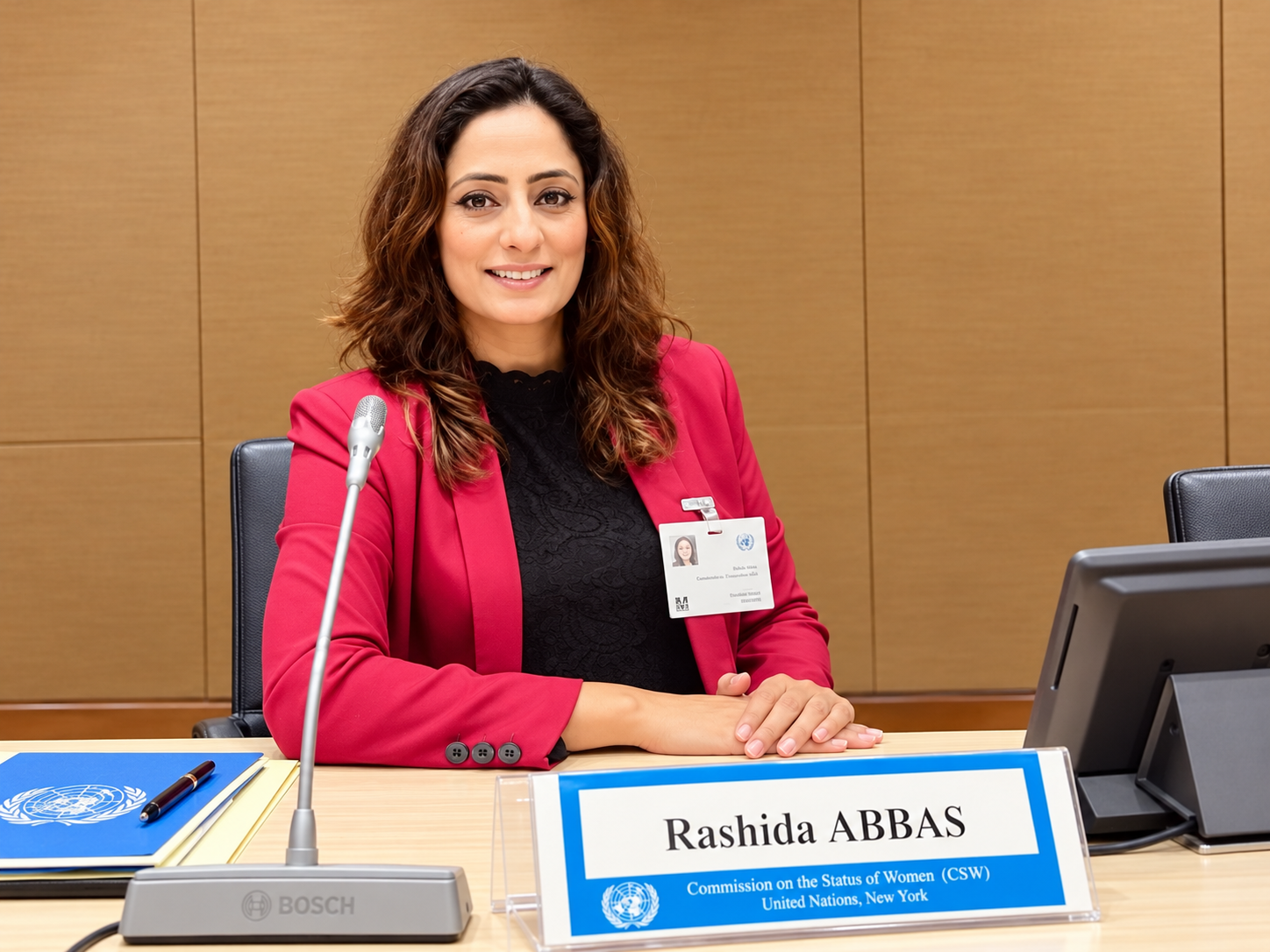
A fellowship led by the University of Geneva researcher seeks to bring young scholars from Pakistan and around the world into international debates on water law, climate and human rights.
Pakistani legal scholar Rashida Abbas is leading an effort to bring young researchers, from Pakistan and across the globe, into international discussions on water security, climate change and transboundary river disputes. These issues have become increasingly prominent in international law and in regional cooperation.
The vehicle for that effort is the Hydro-Justice Student Research & Policy Fellowship 2026. Abbas, a lawyer and PhD researcher in International Law at the University of Geneva, leads the programme. It is intended to equip law students and emerging researchers, in Pakistan and internationally, with the knowledge and practical skills required to address complex questions of water governance, environmental protection and human rights.
The fellowship also seeks to connect participants with international experts, legal practitioners and policymakers. In doing so, it offers young scholars a means of contributing to the global debate on water justice and international cooperation.
Water Security Beyond National Borders
Pakistan’s own circumstances illustrate why the subject cannot be confined within national borders. Its water challenges extend well beyond domestic resource management. The Indus Basin, on which the country depends for agriculture, livelihoods, energy and food security, is central to discussions of transboundary water governance, environmental protection and regional stability.
The fellowship encourages research into international water law, the equitable use of water, climate-related risks, dispute resolution and the protection of communities that rely on shared rivers. Its scope extends to groundwater depletion, pollution, flood and drought management, and access to safe drinking water and sanitation, as well as the links between water security and human rights.
Underpinning the programme is a broader conception of water. The fellowship approaches it not simply as a natural resource, but as a question bound up with justice, sustainable development, public health and peace.
Preparing a New Generation of Researchers
A principal objective is to provide young researchers with structured, practical training that may otherwise be difficult to obtain.
Participants are expected to attend expert-led online sessions, work through case studies and guided discussions, and carry out collaborative research with the support of mentors. They will also prepare research papers, legal analyses, policy briefs and advocacy materials addressing water challenges at both the national and international levels.
The Indus Waters Treaty receives particular attention. So do the broader principles that govern shared rivers, the obligations of states under international law, and the peaceful settlement of disputes.
By encouraging participants to examine real-world cases and to formulate evidence-based policy recommendations, the initiative aims to strengthen the contribution of young researchers to debates on water governance.
Geneva Engagement and International Dialogue
Abbas is also active in international discussions in Geneva. She is associated with a United Nations side event on 27 October 2026 that will address access to food and water, human security and the right to development.
Two days later, on Thursday, 29 October 2026, she is scheduled to moderate a high-level online webinar titled “Water Justice, International Law and Transboundary Cooperation.”
The panel is expected to draw experts from Pakistan and the wider international community. Among them:
- Professor Dr Zafar Nawaz Jaspal
- Syed Muhammad Mehar Ali Shah, Pakistan’s Commissioner for Indus Waters
- Dr Mara Tignino of the University of Geneva and the Geneva Water Hub
- Ramona Maria Grewan, a South African legal scholar
- Pedro Arrojo-Agudo, the United Nations Special Rapporteur on the human rights to safe drinking water and sanitation
The discussion is expected to examine the Indus Waters Treaty, international legal obligations, regional security and the peaceful resolution of disputes. The protection of communities that depend on shared water resources will also be addressed.
Linking Law, Climate Justice and Human Rights
The fellowship forms part of a wider effort to bring legal research, environmental protection and public policy closer together.
Its proposed research areas range from transboundary water disputes, arbitration and hydropower to climate change in the Indus Basin, environmental flows and groundwater governance. Gender equity and food security are also included.
Planned outputs include a student research compendium, policy briefs, legal explainers and a set of recommendations for national and international stakeholders.
For Abbas, the initiative provides emerging researchers with a platform to engage with complex questions of water, and to develop the analytical skills that future policy discussions will require.
Water scarcity, climate pressures and competing claims on shared resources continue to test governments and communities alike. Against that backdrop, initiatives that link academic research with international legal dialogue offer one way of exploring cooperative, rights-based approaches to water governance.
The Hydro-Justice Fellowship 2026 is founded on a clear premise: that young researchers should be more than observers of these debates. Its aim is to equip them to take part in shaping them.


