


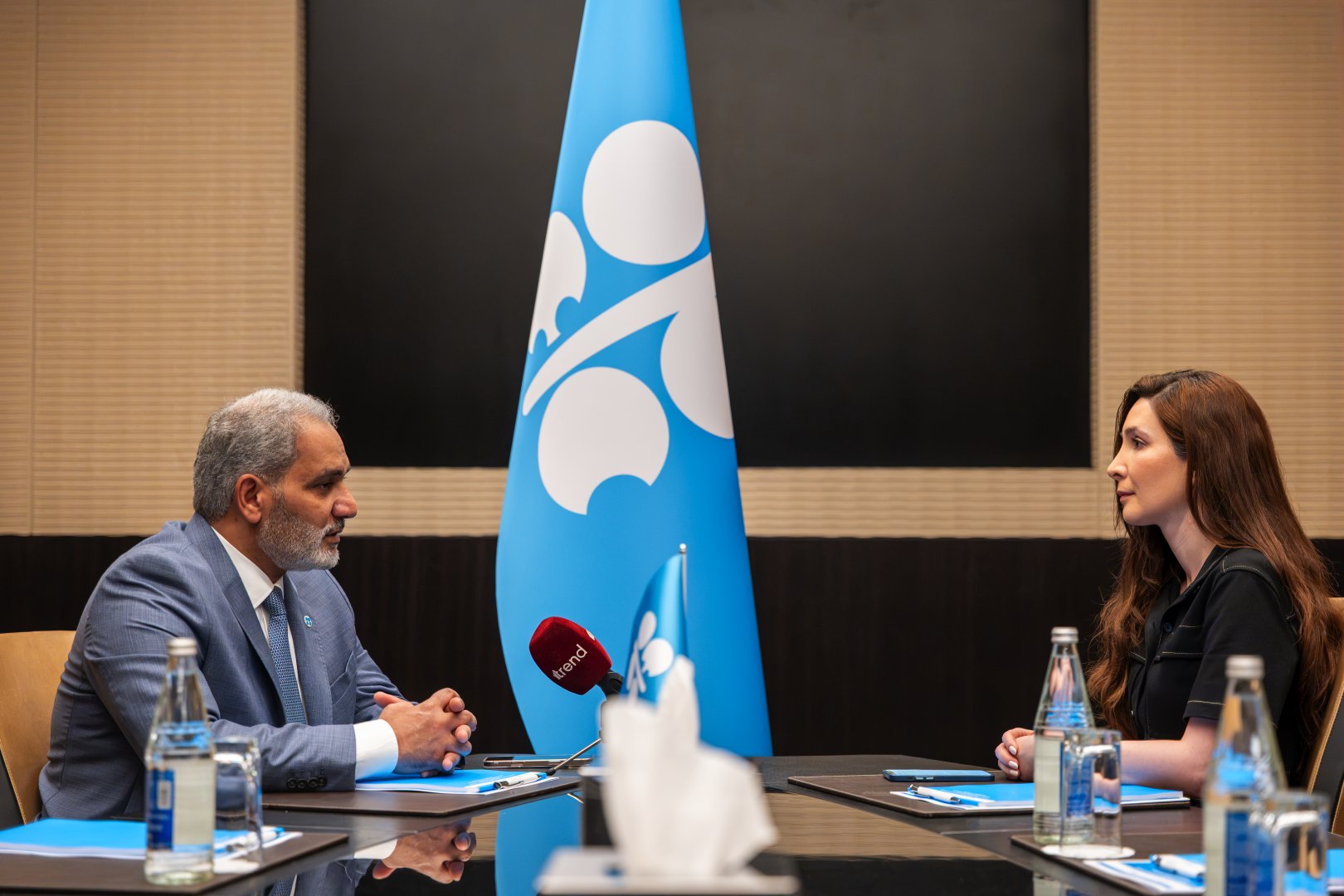
BAKU, Azerbaijan, July 15. OPEC cautions
against using the energy transition as a means to pushing for
another agenda, which is abandoning oil and gas, Secretary General
of the Organization of the Petroleum Exporting Countries (OPEC)
Haitham Al Ghais said in an exclusive interview with Trend.
He made the remarks on the sidelines of the inaugural Technical
Committee Meeting of the OPEC+ Charter of Cooperation in Baku.
Haitham Al Ghais said OPEC’s message has always been that oil
will remain a fundamental aspect and a fundamental pillar to the
global economy.
“It has been for so many years and decades, and it will continue
to be. We just launched our updated World Oil Outlook to 2050,
which shows clearly that oil will still remain dominant in the
energy mix until 2050, at around 30% of the energy mix. When you
add gas to that equation, we are talking about oil and gas combined
accounting for nearly 55% of the global energy mix. Again, this
brings me back to the point I said about all these people talking
about energy transition for many years, almost equating energy
transition with abandoning oil and gas. We at OPEC talk about
energy transitions and energy addition, because energy consumption
in the world will grow at such a significant rate. We believe it
will grow by around 23% from now to 2050. Of course, oil will be a
major component of that. In addition to the growth we will see in
renewables, we will see growth in gas. But it should not be
interpreted as if this will replace oil and gas. We see the only
source of energy that will be on the decline is coal due to climate
and environmental concerns. That’s why we at OPEC believe in the
importance of continuing to invest in oil and in gas, and as well
in renewables,” said OPEC’s secretary general.
Noting that not all of OPEC member countries are investing in
all sources of energy, he said OPEC doesn’t target or exclude any
form of energy under the name of climate change or trying to deal
with climate matters.
‘The whole Paris Agreement is actually centered on dealing with
emissions from all sources, not just from oil and gas. So again, we
caution against using the energy transition as a means to pushing
for another agenda, which is abandoning oil and gas. It should not
be the case. Oil is fundamental. You see it in every single aspect
of our daily lives, be it transportation, clothing, flights,
shipping, packaging, sports equipment. Since we’re talking about
the World Cup these days, everything you see, even the football
they play with is made of petrochemical derivatives. It is in every
aspect in our daily lives that people cannot even imagine. That’s
why it’s important to support this commodity, to make sure that
it’s a stable commodity, because it impacts the daily lives of
people all around and the livelihood of people. That’s what we try
to do through the OPEC+ cooperation, making sure that we have a
stable market to support the global economy through this oil,
because 30% of global energy consumption is from oil,” he
explained.


