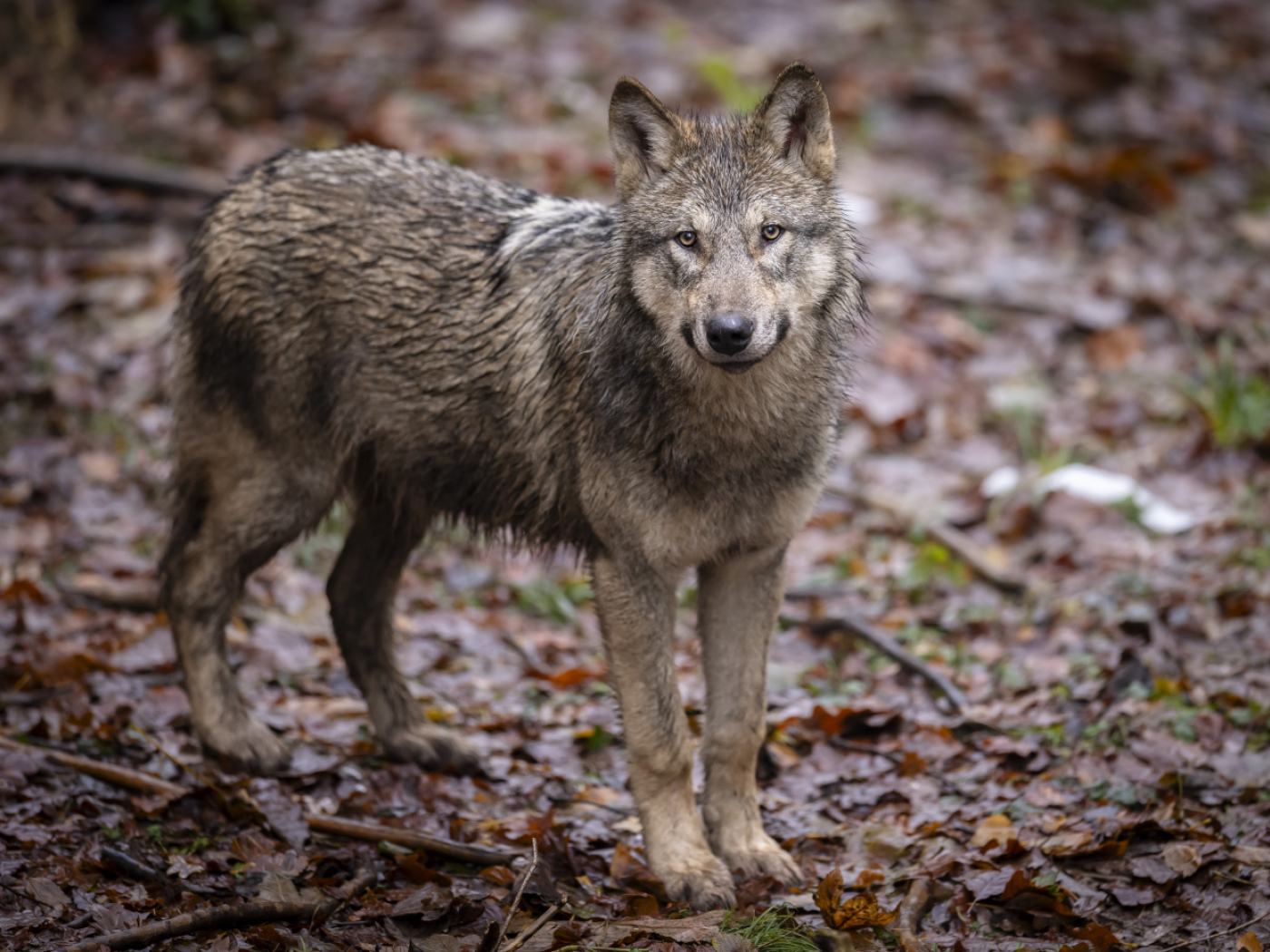
Earlier this week, the canton of Neuchâtel authorised the shooting of four wolves, that is, half the pack.
Keystone-SDA
Generated with artificial intelligence.
In the columns of Le Matin Dimanche, wolf expert Jean-Marc Landry believes that Swiss Environment Minister Albert Rösti’s decision to rely entirely on shooting is short-sighted. For the expert, this solution can nevertheless be justified in certain cases.
Landry spoke to Le Matin Dimanche on the wolf pack in the Brévine valley, western Switzerland. In this case, he believes that “shooting to regulate the population is the wrong solution, because it doesn’t solve the problem in the long term. Depending on the individual eliminated, we run the risk of destructuring the pack, which can encourage dispersal and increase depredation elsewhere,” he said.
Earlier this week, the canton of Neuchâtel authorised the shooting of four wolves, that is, half the pack.
More
More
More than 100 wolves shot in Switzerland last year
This content was published on
Swiss hunters legally killed 101 wolves between February 1, 2024, and the end of January 2025. A further six died in accidents or from natural causes.
“From now on, priority should be given to scare shots to educate a wolf rather than systematically favouring lethal shots, which are difficult to carry out in an environment made up of wooded pastures and forests,” said Landry. “The shooting window is narrower there than in the Alps, where the presence of land means that shots can be fired from a greater distance.”
‘The wolf is here and we’ll have to deal with it’
In a more general context, the expert on the large predator does not believe in the pure and simple eradication of the wolf in Switzerland: “If that were the case, neighbouring countries such as Italy and Germany would have to decide the same thing. The wolf is here, and we will have to deal with it,” Landry said.
More
More
Swiss Politics
Wolves in Switzerland: cull or protect?
This content was published on
While farmers were relieved by the Federal Council decision on preventive culling, the announcement also met with criticism. Join the discussion.
“Rösti’s decision to rely entirely on shooting is short-sighted. When the wolf first attacked Switzerland, in the Val Ferret in 1995, [canton] Valais made it clear that it did not want to tolerate the presence of the wolf. Thirty years later, the wolf is still there,” the expert added.
With attacks on cattle on the increase in the Jura region, the expert believes that it is up to politicians to intervene to help farmers: “It’s a question of deciding where you want to put the resources. In Switzerland, cattle are considered unprotectable, so there’s no federal funding involved”.
“Farmers are on their own when it comes to the problem,” he said.
For Landry, lethal shooting is part of a package of protection measures, but is not the solution on its own: “Instead of focusing everything on eliminating wolves, we could fit more of them with GPS collars to understand the relationship and interaction between wolves and cattle”.
Translated from French with DeepL/gw
We select the most relevant news for an international audience and use automatic translation tools to translate them into English. A journalist then reviews the translation for clarity and accuracy before publication.
Providing you with automatically translated news gives us the time to write more in-depth articles. The news stories we select have been written and carefully fact-checked by an external editorial team from news agencies such as Bloomberg or Keystone.
If you have any questions about how we work, write to us at english@swissinfo.ch.
More
Foreign Affairs
US says Switzerland can order fewer fighter jets amid cost hike
This content was published on
According to the American authorities, a possible reduction in the number of F-35 fighter jets ordered by Switzerland is possible to cushion the unexpected cost increase.
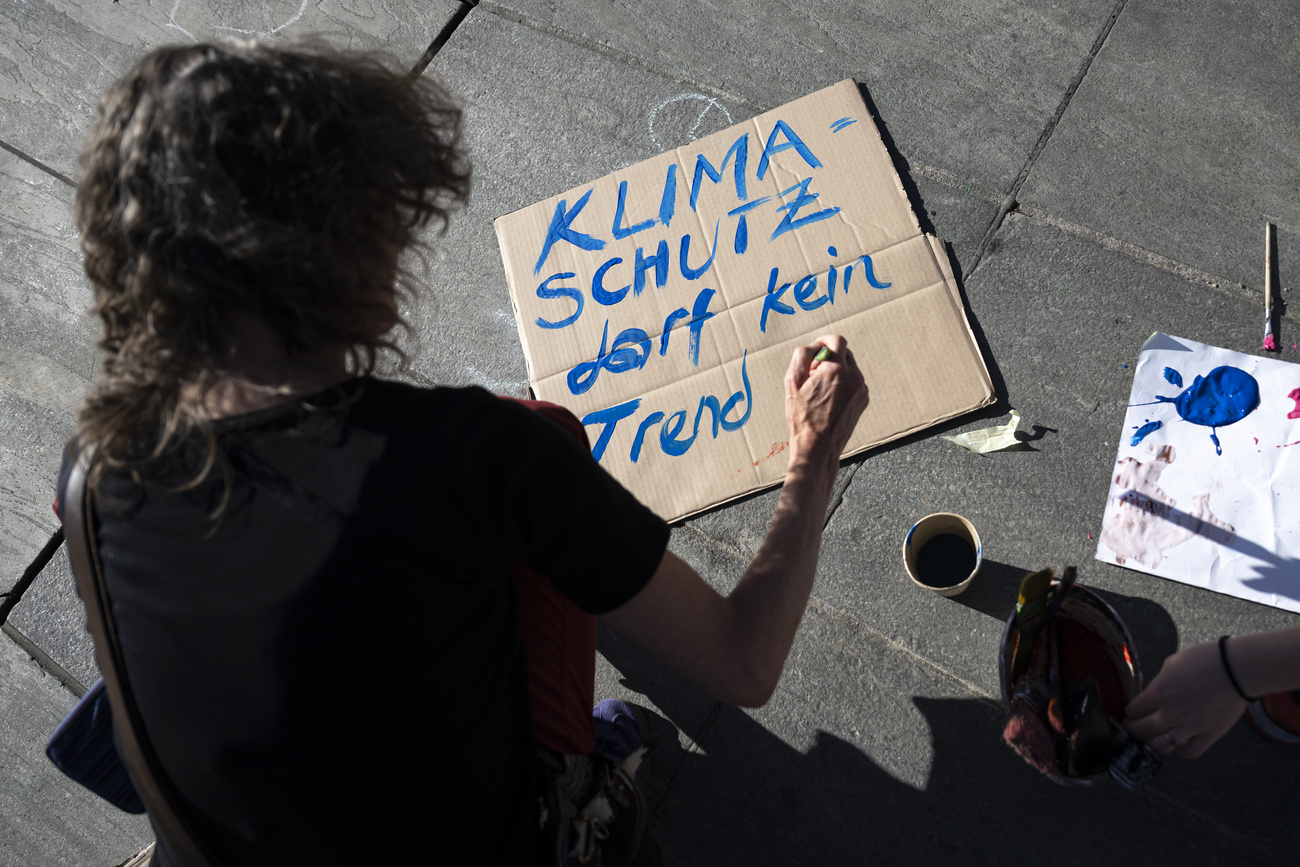
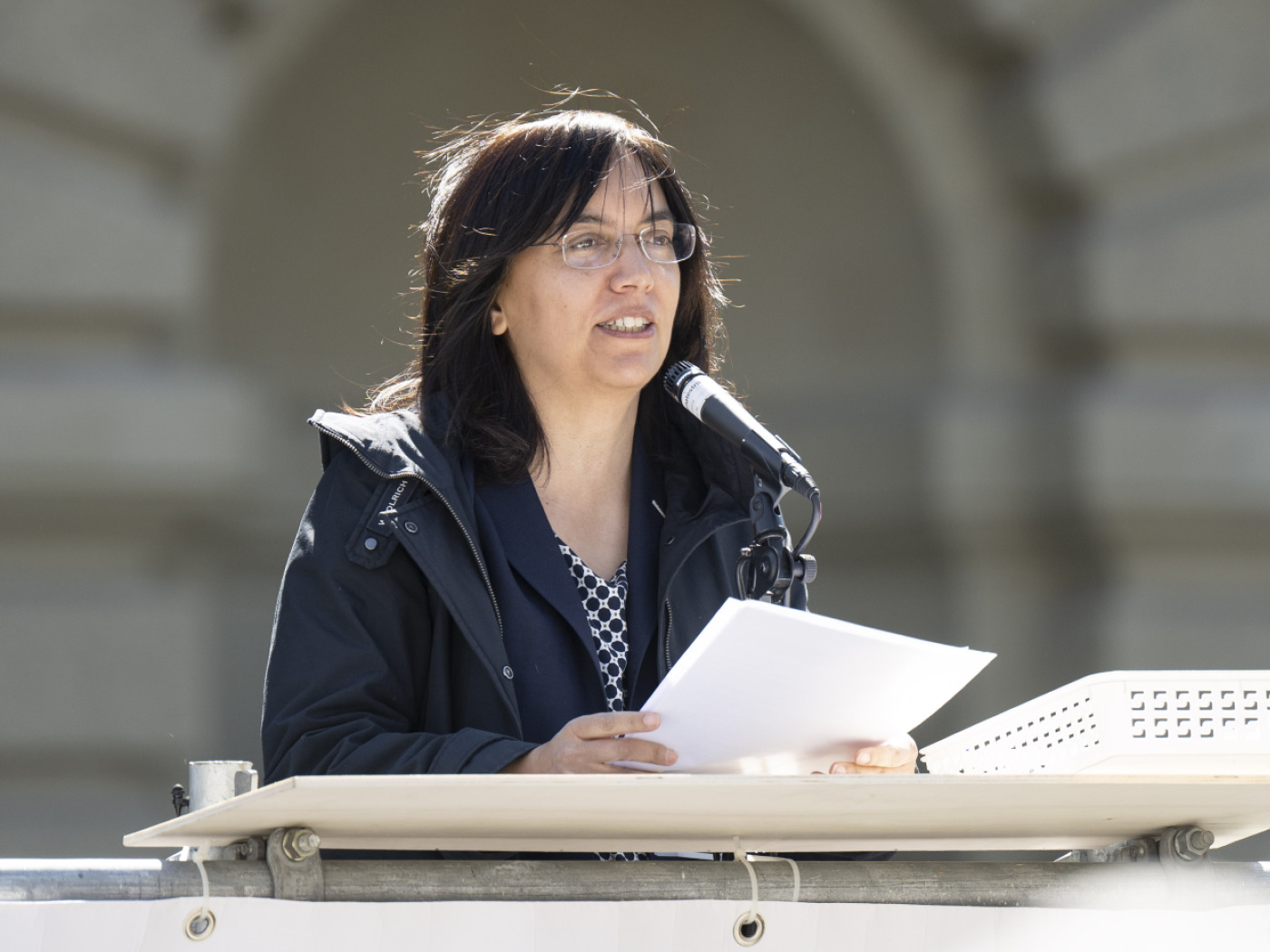
A thousand demonstrators in Swiss capital demand climate justice
This content was published on
The climate crisis is exacerbating injustice around the world, and the current economic system benefits from colonial and patriarchal oppression, said one of the speakers.
Russian drones in Poland have ‘no impact’ on Switzerland: defence minister
This content was published on
According to Swiss Defence Minister Martin Pfister, the intrusion of Russian drones into Polish airspace “shows how unstable the situation in Europe is.”
E-cars account for 10.5% of new registrations in the canton of Zug
This content was published on
Nowhere else in Switzerland are electric cars as popular as in Zug. Currently, 10.5 per cent of cars registered in the canton of Zug are purely electric, as new data from the online platform Energie Reporter and Energie Schweiz and Geoimpact show.
ETH climate researcher honoured with the German Environmental Award
This content was published on
Swiss climate researcher Sonia Isabelle Seneviratne from ETH Zurich receives the German Environmental Award 2025. She shares the prize, endowed with 500,000 euros, with the management duo of the steel galvanising company Zinq.
Police end attempted occupation of Zurich’s Platzspitz square
This content was published on
A large contingent of police prevented an attempted occupation of the Platzspitz area behind the National Museum in Zurich on Friday afternoon. They checked over 200 people and ordered them away. The group of occupiers cited anti-capitalist motives as the reason for the action.