


For more than four years, the inhabitants of Omsk, a Siberian city more than 2,250 kilometers east of Moscow, have watched the war against Ukraine from afar. This week they got a close-up view that has left many in shock.
Omsk was the target of Ukrainian air strikes on July 6, the first time the city has been targeted since President Vladimir Putin launched his full-scale invasion of its neighbor in February 2022.
The attack on an Omsk oil refinery, the largest in Russia, was the furthest strike from the Ukrainian front line — in a city which local media had repeatedly stated was safe from attack.
The first explosions were heard at 3:15 p.m. local time on July 6, on two streets where the refinery’s main processing facilities are located.
‘The House Shook’
“There was such a loud bang that I thought the balcony windows were going to shatter. At first, my son and I huddled in the doorway, but the explosions didn’t stop,” one local mother said. “It went on for more than an hour.”
The woman lives near to the city’s industrial zone. Like other people interviewed for this article, she cannot be named for safety reasons. RFE/RL is designated an “undesirable organization” by the Russian authorities, making it a criminal offense to speak to RFE/RL journalists.
“With every new blast, the house literally shook. The most terrifying thing is that you see one black column of smoke outside the window, then another, but you have absolutely no idea what’s going on,” she said.
“The emergency sirens were silent. The mobile Internet started to freeze up. It felt like being completely cut off under the bombs.”
Only after one hour did this resident, and others, receive a curt text message from local emergency services informing them of a “drone alert” in the city. This was followed by cellphone networks warning of possible service disruptions.
Meanwhile, the huge plume of smoke was visible across the city.
“The smoke hung over the city from 3:30 p.m. I saw it from outside the House of Tourism, right in the city center, which is a completely different district. My friend saw the black cloud from the airport, on the opposite bank of the Irtysh River,” a male resident said.
There were no reports of casualties in the attack, part of Ukraine’s ongoing offensive against Russia’s oil industry — which generates vital revenues for the country’s full-scale invasion of Ukraine.
Nothing To See Here
People soon began posting photos and videos of the attack. But then began taking them down again.
“I only realized what was going on from amateur videos on local online chatrooms,” the man said. “But after an hour of two, people suddenly started deleting them. My friend, who posted a video of a strike, got a phone call from the police.
“They demanded he immediately take down his video, saying that it was showing ‘the work of air defense.’ He’s now afraid he’ll get charged with a misdemeanor or even a crime. First the drones scared him, now the police are harassing him.”
An hour after the attack, Omsk regional governor Vitaly Khotsenko posted a statement on social media warning people not to post photos or videos of the attack or its aftermath.
Neither Khotsenko nor other officials used the word “fire.” But locals could see it.
“The flames were raging right in the industrial area. It was stupid to deny the obvious. They had definitely hit the plant,” said a man who lives in the Sovyetsky District, where the refinery is located.
“At first, we didn’t know exactly where it had been hit. But by the evening of July 6, it became clear that production had been halted because gasoline sales in the city had virtually come to a standstill.”
Digital displays at gas stations near the refinery showed rows of zeros instead of prices. The Sovyetsky resident said he saw long lines of cars. These were also visible on videos posted online.
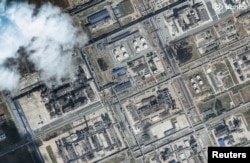
A satellite image taken after the attack shows damage at the Omsk oil refinery
By chance, that morning the local authorities had lifted a ban on sales of gasoline in canisters, part of a patchwork of restrictions on sales across Russia as a result of shortages caused by Ukraine’s ongoing attacks on oil infrastructure.
The shortages had also led Russia to introduce a ban on exports of gasoline and aviation fuel. On July 8, the ban was expanded to include diesel fuel.
“The oil refinery in Omsk isn’t just a major employer in the oil industry. It has also sponsored many bloggers and media outlets, and until July 6, they were all paid by the refinery to claim that Omsk was safe and that [drones] would never reach Omsk,” Daniil Chebykhin, a former opposition activist in the city, told Current Time.
“Many people were vacationing on the banks of the Irtysh. The refinery is right on the banks. So, when the drones flew over the Irtysh in a tight formation, it came as a huge shock,” he said.
Chebykhin, who founded the Omsk branch of the national organization led by the late anti-corruption campaigner Aleksei Navalny, now lives in exile. He said many local people were left in “cognitive dissonance” and had lost trust in the authorities.
“We’re noticing a huge amount of interest in independent sources of information. Residents can see that official sources, including the governor,…are all lying,” he added.


